Have you ever been in a room with friends and somebody says something that crosses the line, but the room laughs anyway? Not because it was clean, but because it was just clever enough, just familiar enough, just close enough to land. And yet, somewhere in that same space, or just outside of it, somebody else is not laughing at all, deciding whether what was said went too far.
That is the ecosystem of comedy. Especially the kind rooted in social and political commentary. It is rarely universal and often divided. And it almost always reveals more about the audience than the joke itself.
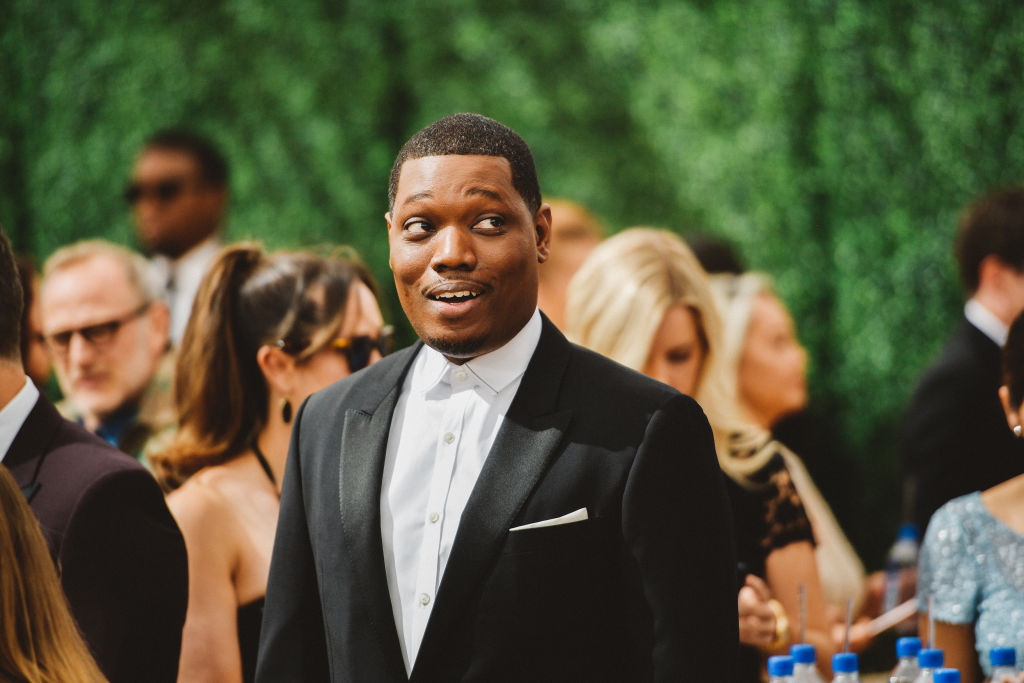
The tension resurfaced at the center of a recent episode of Saturday Night Live (SNL) when comedian Michael Che delivered a line during the show’s “Weekend Update” segment that has since sparked widespread backlash.
The Joke That Sparked Controversy
The setup was routine. The topic was familiar. Donald Trump had attended the opening night of Chicago at the John F. Kennedy Center for the Performing Arts. Che framed it like any other observational joke.
“President Trump attended the opening night of Chicago at the Kennedy Center, and I think that’s cool,” Che said as he set up the joke. “The president is going to the theater, I mean, what’s the worst that can happen?”
Inside the studio, the audience erupted in laughter. Outside of it, the response has been more of a mixed bag.
One user on X admitted the layered nature of the punchline, writing, “President in a theater… it took a min but I got it,” followed by laughing emojis.
The delayed recognition is part of what made the joke travel the way it did. It was not immediate for everyone, but once it clicked, it carried weight.
Why Viewers Connected the Joke to Abraham Lincoln
Critics were quick to connect the remark to one of the most symbolically loaded moments in American history: the assassination of Abraham Lincoln. On April 14, 1865, Lincoln was shot by John Wilkes Booth while attending a performance at Ford’s Theatre.
That historical echo is what transformed Che’s line from a throwaway punchline into something heavier. It is also what exposed a deeper fracture in how comedy is received in this moment.
One user on X did not mince words, writing, “Seriously sick folks! I’m not surprised though. Haven’t watched SNL since the beginning of Baldwin’s BS.”
Audience Divide: Why Some Laughed, and Others Were Offended
Because the real story here is not simply that a joke offended people. It is that the joke did two very different things at the same time.
It landed, and it unsettled.
Saturday Night Live has always been calibrated to a particular audience. Its humor reflects a specific cultural literacy, a shared set of references, and a political sensibility that leans progressive, skeptical, and at times irreverent toward power.
In that space, the joke reads as dark humor – a historical callback that winks at the absurdity of American political theater, where spectacle and governance blur into each other.
And for some viewers, that is exactly how it landed. As one user on X put it plainly, “Solid joke to be honest.”
However, for many, particularly supporters of Trump and those already wary of media institutions, the joke does not read as clever. It reads as careless or worse, as suggestive of violence.
That tension shows up even among those who are not aligned with Trump. Another user on X captured that discomfort, writing, “Not a fan of the guy at all, but that joke about Trump at a theater and the audience cheering was not cool.”
Comedy, Context, and the Limits of Free Speech
This is where the conversation often gets flattened into something less useful. When a comedian has presumably crossed the line, humor becomes a binary. Either comedy is protected, or it has gone too far.
That framing misses the point because comedy has always tested boundaries. From Richard Pryor to Dave Chappelle, the tradition of pushing discomfort is not new.
What has changed is the environment in which that discomfort circulates. We no longer experience comedy in contained spaces. There is no longer just “the room.” Now, the world has the clip, the repost, the algorithm, and the audience that was never meant to be there in the first place. And interpretation is shaped by where you stand.
So when Che delivers a line that plays on a historical assassination in front of a live audience that understands the reference as satire, the laughter makes sense.
When that same line travels beyond that space into a fragmented public where trust in institutions is already eroded, the backlash also makes sense.
But here is the thing about life and humanity: duality is real, so both reactions can be true at the same time, and that is the complexity of free speech in America.
Free speech, in this sense, is rarely applied evenly. It is often filtered through allegiance. The First Amendment protects Che’s right to make the joke. It protects the writers who crafted it. It protects the platform that aired it. What it does not do is guarantee a shared understanding or a consistent standard.
What This Moment Reveals About Comedy in America
What makes this moment even more layered is who is at the center of the outrage.
According to a CNN report, Donald Trump has a documented pattern of making deeply insensitive remarks about death, including celebrating the passing of political opponents and criticizing individuals shortly after their deaths.
That history complicates the current outrage. It does not invalidate discomfort with the joke, but it does raise a sharper question about consistency. About when language is deemed unacceptable and when it is defended as blunt honesty or political theater.
Comedy, especially, relies on an unspoken negotiation between performer and audience. There is an expectation of risk, but also an expectation of awareness, timing, and context. When that balance shifts, the reaction moves from censorship to consequence. Che reminded the world that humor does not operate in a vacuum and that the laughter and the outrage are not contradictions; they are evidence.
Evidence that we are no longer reacting to the same joke, even when we are hearing the same words.