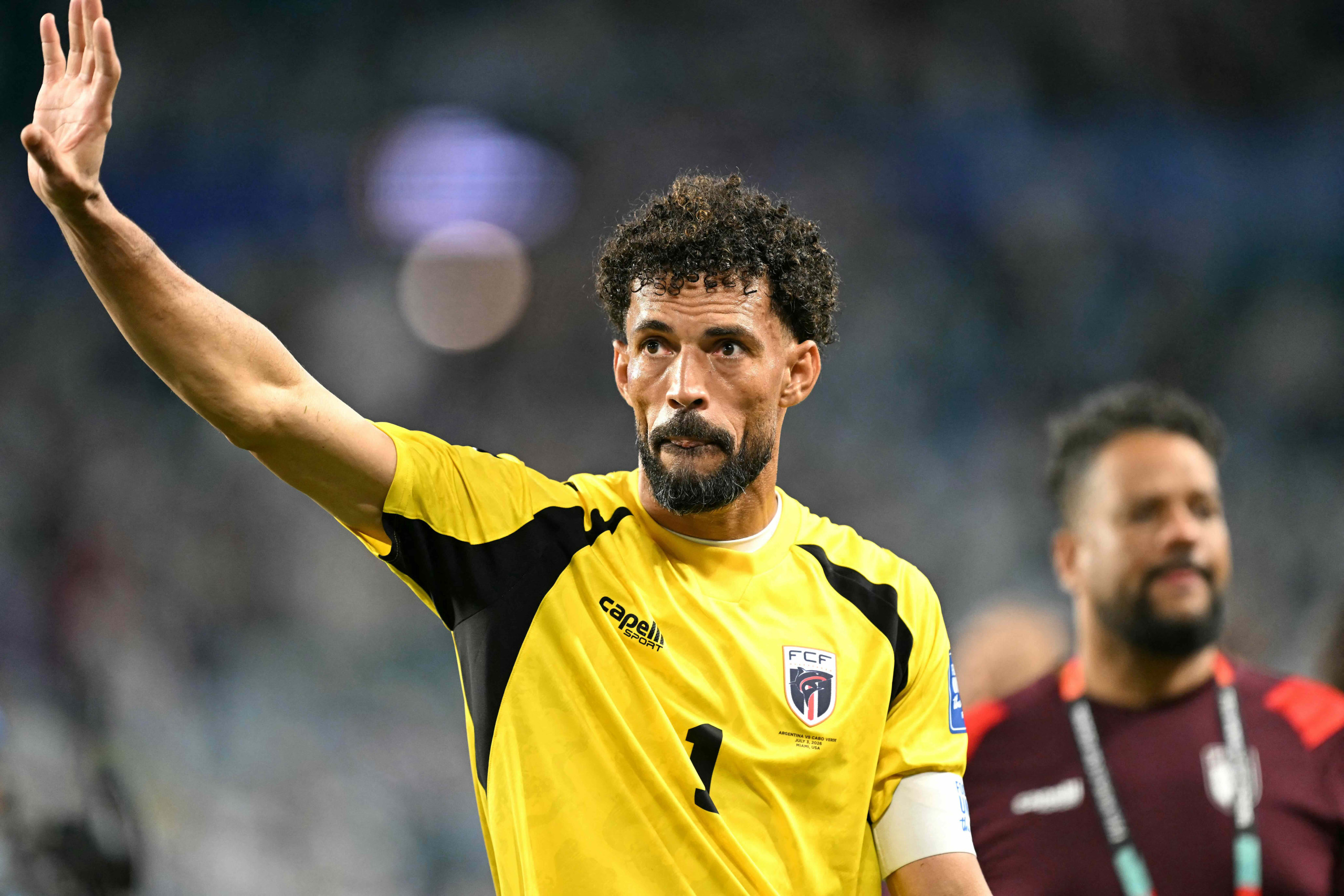
It’s been two weeks since Cabo Verde’s Cinderella World Cup run ended with a crushing extra-time loss to Argentina, but that was only the beginning of a new fascination with the tiny nation among U.S. fans.
After the Blue Sharks’ (the country’s national soccer team nickname) World Cup showing, fans flooded social media with curious posts about the country’s culture and history and questioned how a nation with a diaspora larger than its domestic population nearly knocked Argentina out of contention. Many with roots there and even some African Americans with no connection say they’re eager to visit Cabo Verde for the first time, retrace their familial connections and even explore setting up businesses.
“I definitely need to go. I definitely want my son to go and experience it,” said Tyisha Fernandes, a second-generation Cabo Verdean, who grew up in Brockton, Massachusetts, and is now a reporter for WSB-TV in Atlanta.
Fernandes wasn’t a soccer fan but said covering the Blue Sharks’ World Cup debut in Atlanta stirred so many emotions that she paid her own way to their next match, a draw against Saudi Arabia in Houston. After returning, she bought books on Kriolu–a mixture of Portuguese and several African languages, intent on learning alongside her 4-year-old son.
“I want to be part of the culture,” unlike some in previous generations, who, she said, distanced themselves after moving to the U.S. “I don’t care what country you move to; as a people, you should never let go of your culture. I’m going to be very intentional as a mom.”
Fernandes’ story typifies several others with Cabo Verdean lineage interviewed by EBONY during the FIFA World Cup. Parents or grandparents emigrated to the U.S., mainly settling in New England. They raised their children and grandchildren in tight communities where some families emphasized assimilation, choosing not to pass down their native language to English-speaking children. Most of those interviewed for this story have never traveled to Cabo Verde, despite feeling a deep connection to the place.
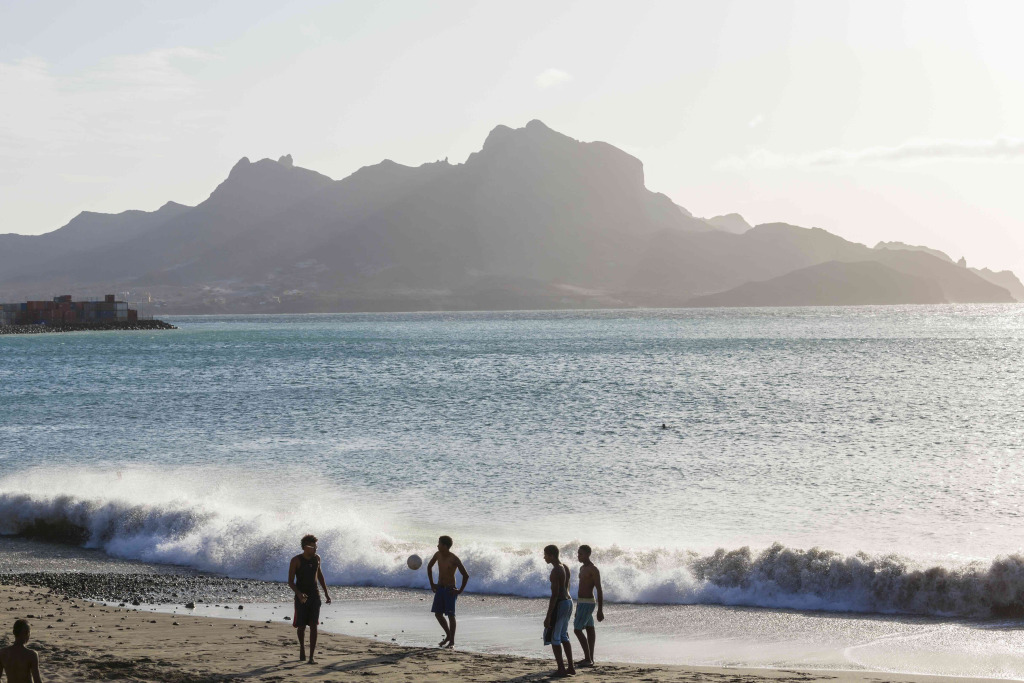

Cabo Verde comprises 10 islands in the Atlantic Ocean, roughly 375 miles off the coasts of Senegal and Mauritania. Like many West African nations, its history is tied to slavery and European colonialism. Originally uninhabited, the islands were used as a staging area and port by slave traders. Kriulo is a mashup of Portuguese and several African tongues. In the U.S., sometimes surnames are a tell; many Cabo Verdean last names sound Hispanic but are spelled with an “s” at the end instead of a ‘z’, like Fernandes. Cabo Verde gained independence in 1975; as a sovereign nation, it’s only 51 years old.
Against that backdrop, the Blue Sharks staged the most improbable World Cup run of any team. They were the tournament’s lowest seed, ranked 64th globally by FIFA before a tournament that only accepted 48 teams. None of that seemed to matter to its players or fans.
“How that 40-year-old goalie, Vozinha, showed up? That’s what we’re about,” Fernandes said.
“We’re such a strong people,” said Shellee Mendes, a Boston native whose Cabo Verdean heritage runs through her father. Mendes said she just booked her first trip to the country for next February. In anticipation, she’s making playlists of Cabo Verdean artists and looking forward to an authentic bowl of monchupa, a hearty soup you can find in Boston, which happens to be Cabo Verde’s unofficial national dish. While her New England neighbors celebrated the Fourth of July, her door was decorated with the Cabo Verde flag; July 5 is their Independence Day.
Mendes originally planned to go with her father before he passed away last year. Now it’s even more important to go, she said. “I think people need to go and see and explore, and they’ll have a whole different perspective of Africa from Cape Verde.”
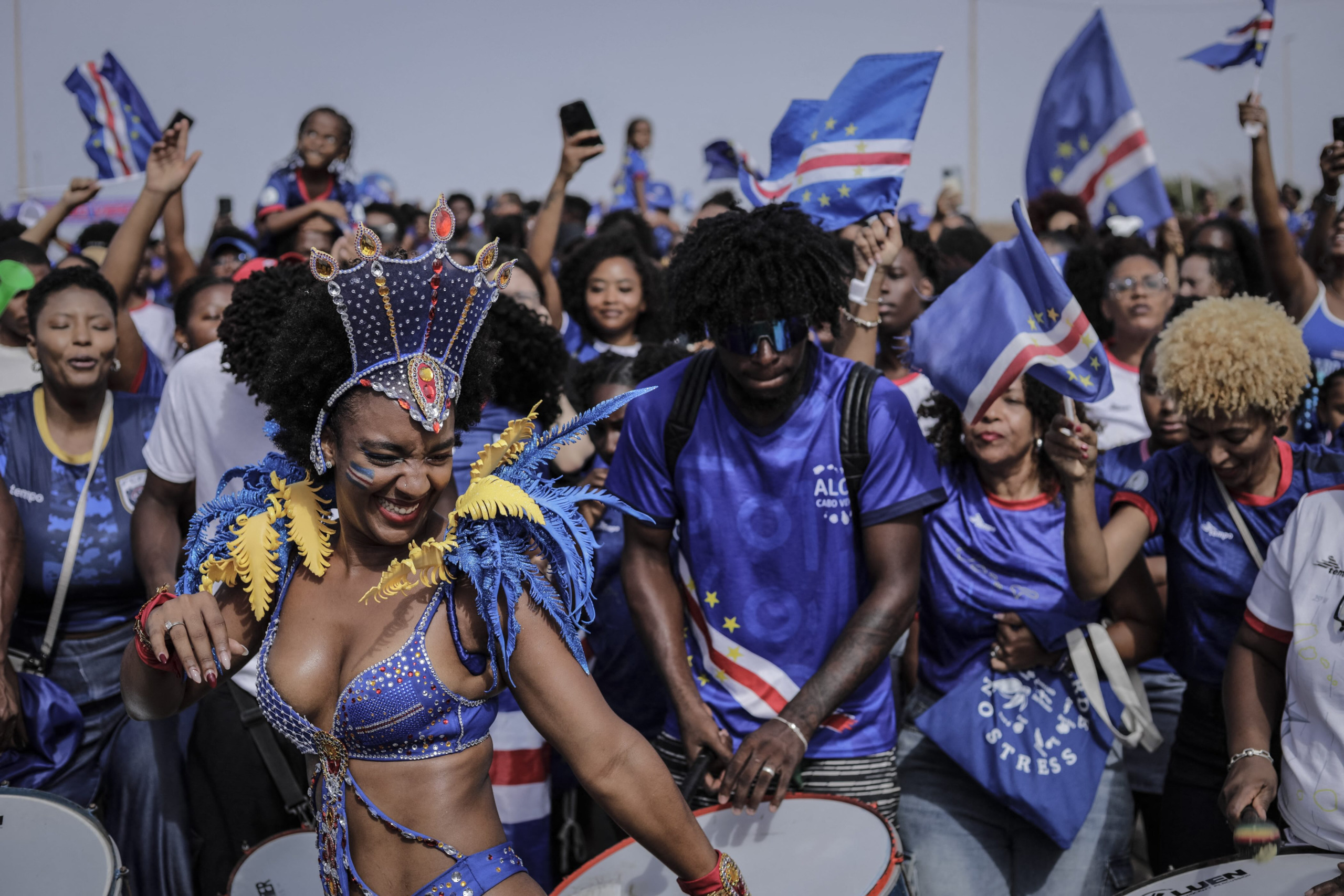
| Credit: Jose Correia / AFP via Getty
Al Vicente, 71, was born on Ilha Brava, which translates from Portuguese to “Brave Island”, the southernmost and least populated of the archipelago. His family moved to Rhode Island when he was seven; as an adult, he moved to New York and finally to Atlanta in 2003, where he organizes an annual Cabo Verdean festival, which he said has grown from a few dozen people to about 500 people, as many from New England migrate south.
Vicente also runs a travel agency called Maraberza —friendliness” in Kriolu— that offers tours of his native country via Rhode Island T.F. Green International Airport in Providence, the only American city with a nonstop to Praia, Cabo Verde’s capital. The trips accommodate 20-25 people and usually fill up within a few weeks, mainly through word of mouth. The next one, scheduled for October, sold out in two days.
“Now I have a waiting list of people who want to get on it if somebody drops out,” he said. Besides filling a void for people from the country’s diaspora, he said the trips are also popular with African Americans who know people there and see them as an entry point to reconnect with the continent.
“I’ve had quite a few African American friends who have gone there, and one of the things they say is, after a few days, ‘Wow, I feel at home,’” said Vicente.
“Being from Cabo Verde and having grown up in an African American society, it’s a privilege to be able to do that.”