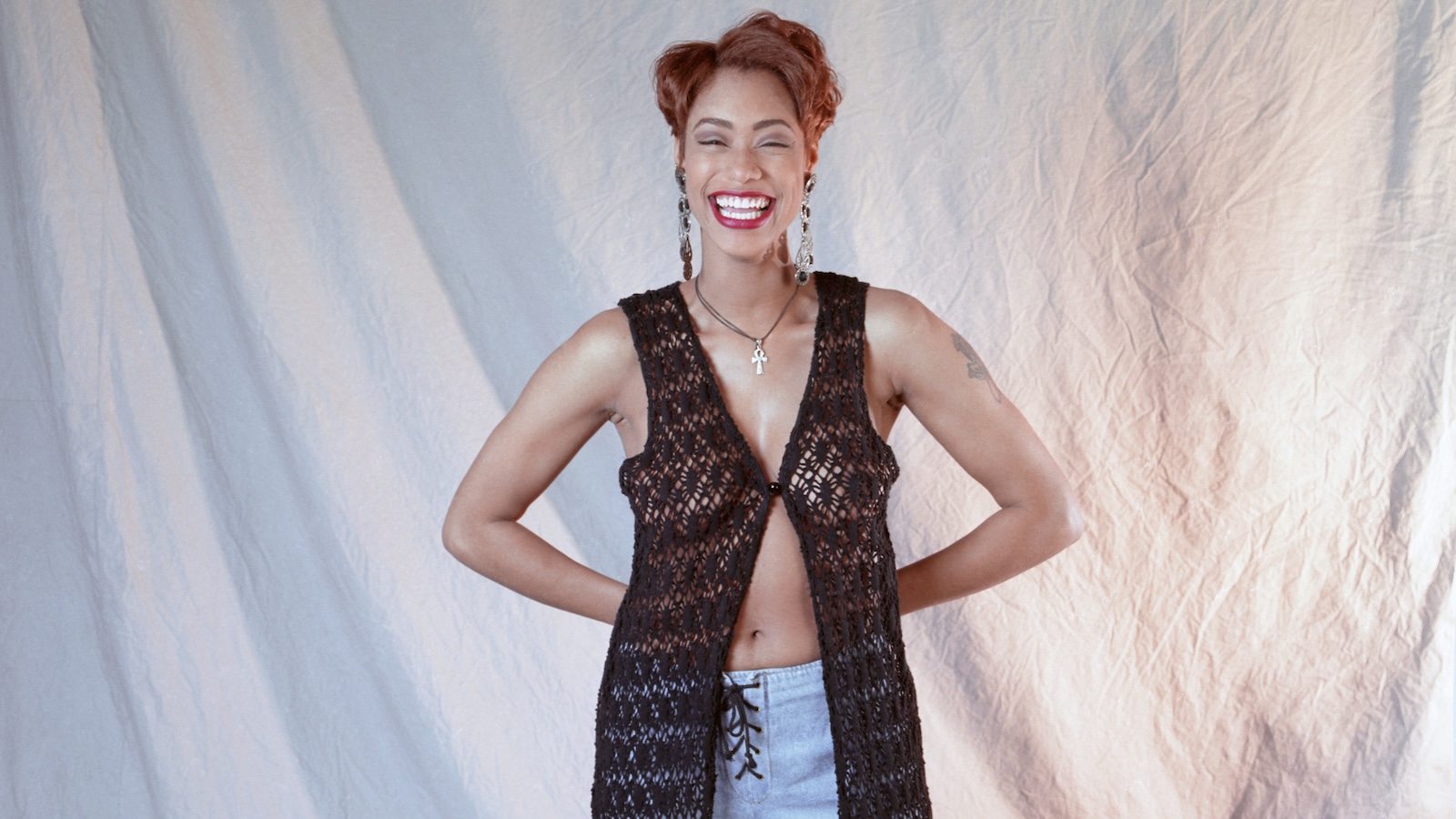
Before Housewives were flipping tables, before Love & Hip Hop became required Monday night viewing and before X, formerly Twitter, turned into Black Twitter, The Real World quietly laid the blueprint. MTV’s social experiment didn’t just introduce reality television as we know it. It gave us some of the most unforgettable Black television moments of the ’90s and early 2000s, scenes that are once again making the rounds online as Black Twitter revisits the franchise one iconic clip at a time.
Some moments make us laugh. Others make us cringe. A few still spark debate decades later. But every single one helped shape reality television before “going viral” was even a phrase.
1. Tami Roman’s blanket incident changed reality TV forever.
Long before Tami Roman became the queen of one-liners, she was a 22-year-old navigating life on The Real World: Los Angeles. When castmate David Edwards pulled the blanket from her while she repeatedly told him to stop, the situation escalated into one of the franchise’s most uncomfortable moments. David ultimately became the first roommate ever removed from The Real World, forcing viewers to confront conversations around consent, boundaries and misogyny years before those discussions became mainstream.
2. Coral Smith reminded everyone she wasn’t the one.
If confidence had a spokesperson, it would be Coral. Whether she was dragging someone with a perfectly timed read or delivering a confessional that deserved its own Emmy category, Coral understood television. Her sharp wit made Back to New York must-watch TV, and Black Twitter still quotes her with the same enthusiasm it did two decades ago.
3. Stephen slapping Irene became one of MTV’s most shocking exits.
Few reality TV moments have aged more awkwardly than the infamous slap heard around the world. It was ugly, deeply uncomfortable and impossible to ignore. The clip continues circulating not because people celebrate it, but because it represents one of the franchise’s most shocking reminders that reality television wasn’t always entertaining. Sometimes it was painfully real.
4. Tami Roman sharing her abortion story was groundbreaking.
Reality television rarely allowed Black women to be vulnerable in the early ’90s. Tami changed that by allowing cameras to document one of the most personal decisions of her life. It wasn’t manufactured drama. It was honest, emotional storytelling that expanded what reality television could look like.
5. Melissa Howard gave New Orleans its heartbeat.
Melissa could go from hilarious to heartfelt in the same episode. Her chemistry with the house, her humor and her refusal to shrink herself made her one of the franchise’s most beloved cast members, proving that personality could be just as compelling as conflict.
6. Karamo Brown kicked the door open for representation.
Years before Queer Eye, Karamo Brown’s appearance on The Real World: Philadelphia offered one of television’s earliest portrayals of a proudly gay Black man simply existing as himself. Today it feels normal. In 2004, it felt revolutionary.
7. The arguments felt…real.
That’s the biggest difference between The Real World and much of today’s reality television. Nobody arrived with a glam squad, a catchphrase or a strategy for securing a reunion special. The disagreements unfolded because strangers with wildly different lives were forced to coexist, not because someone needed a trending soundbite.
Maybe that’s why Black Twitter keeps returning to these clips. They’re nostalgic, yes, but they’re also reminders of a time when reality television still felt like a social experiment instead of a content factory. The memes are hilarious, the one-liners remain undefeated and some moments deserve to stay frozen in television history. Together, they capture an era when being “real” actually meant something.