Before Kehinde Wiley painted Barack Obama’s presidential portrait, he studied under Dewey Crumpler. Deborah Roberts and Rozeal were also among his students. His influence extends across generations of Black artists. And this week, the teacher got a spotlight of his own.
An artist with nearly six decades in the business, Dewey Crumpler: Sonic Lineages, which opened September 30 at San Francisco’s Museum of the African Diaspora, is his first solo show at the museum.
For Crumpler, this is a long time coming. Smokey Robinson commissioned him to paint a mural at Motown Records in Detroit in 1967, the year he graduated from high school. He went on to paint public murals across San Francisco in the 1970s and ’80s, and he taught at the San Francisco Art Institute from 1989 until it closed in 2022.
The exhibition also arrives with a question about the spaces that keep those legacies visible. MoAD celebrated its 20th anniversary last year, reopening in October 2025 following a six-month closure for building and system upgrades. Key Jo Lee, the museum’s chief of curatorial affairs and public programs, acknowledges that Black residents make up a small share of San Francisco’s population, but says the museum is committed to staying.
“We are determined to keep a space here in San Francisco,” she tells EBONY. “It’s really important because it also tells the history of San Francisco.”
Unpacking the Artist’s Vision
Curated by Lee and running through May 30, 2027, Sonic Lineages makes room for the complexity of Crumpler’s thinking, and for Black art that holds history, imagination and possibility all at once.
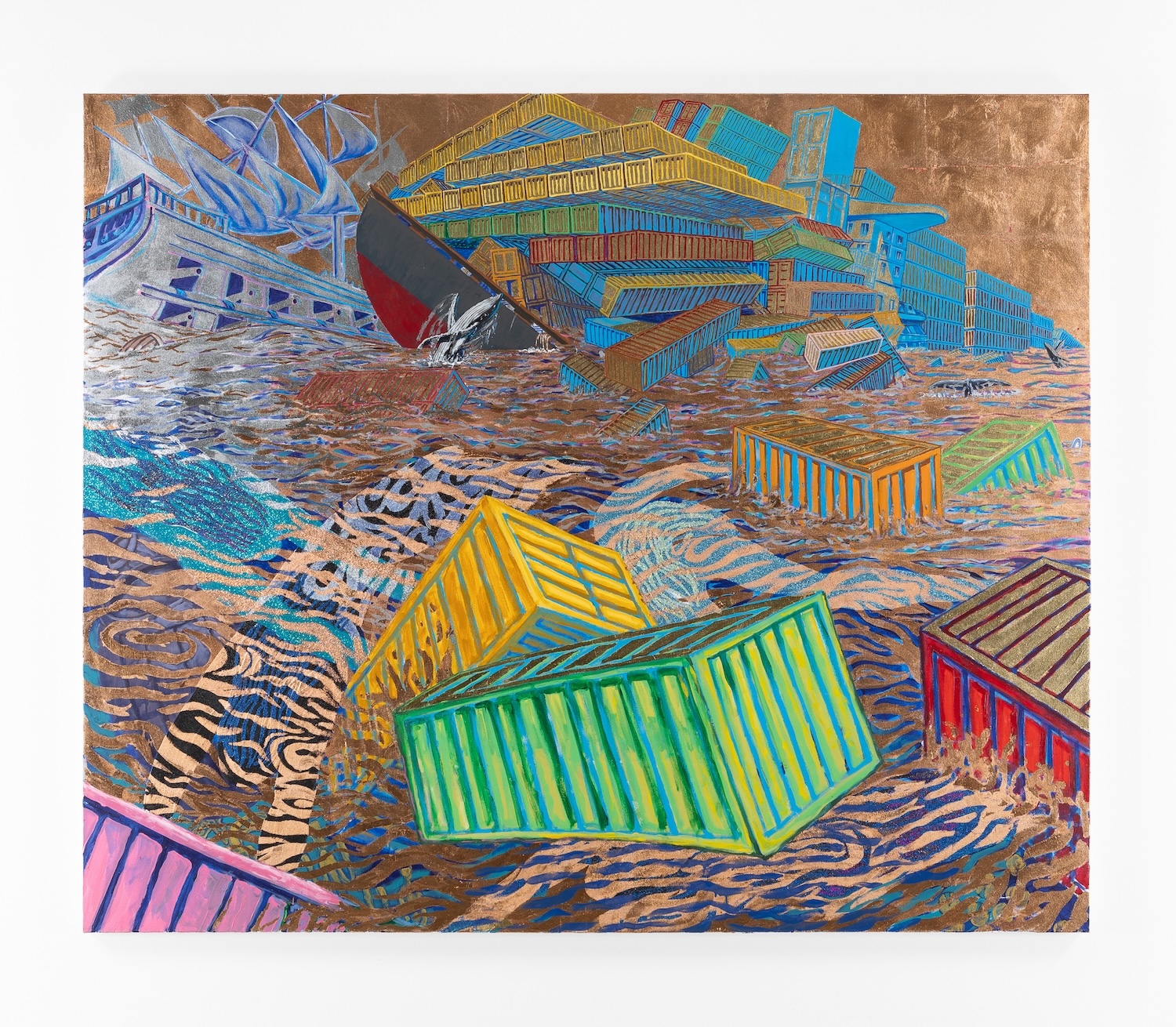
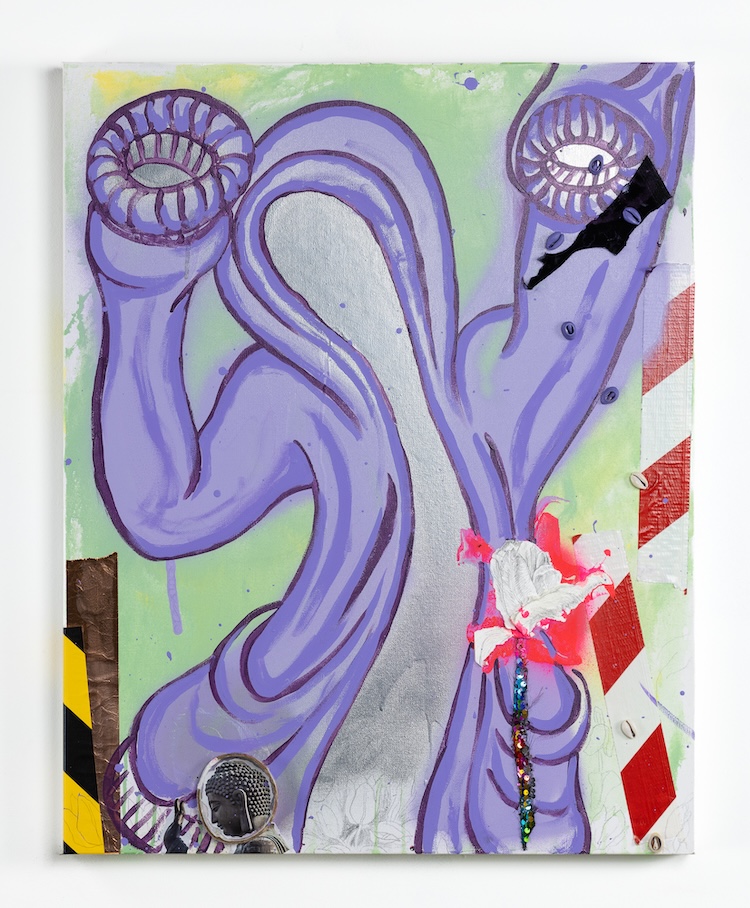
“A shipping container can lead us from the Port of Oakland to the history of the Middle Passage, yet all the while his forms remain wild in their refusal to adhere to a singular meaning,” Lee said. The same is true of the hood, which “can carry the memory of an iron collar, and both are still open onto a cosmic field of possibility.” The Oakland-based painter and muralist’s featured work includes his hoodie and container-ship paintings with new kinetic sculptures inspired by jazz.
Those layers shaped how Lee built the show, and left her wanting to “leave room for endless discovery,” calling it “an unusually rich curatorial conversation.”
Calling the work “perceptual drift,” Lee pointed out it takes “the willingness to let your understanding change as you spend time with a work and move in relation to it.”
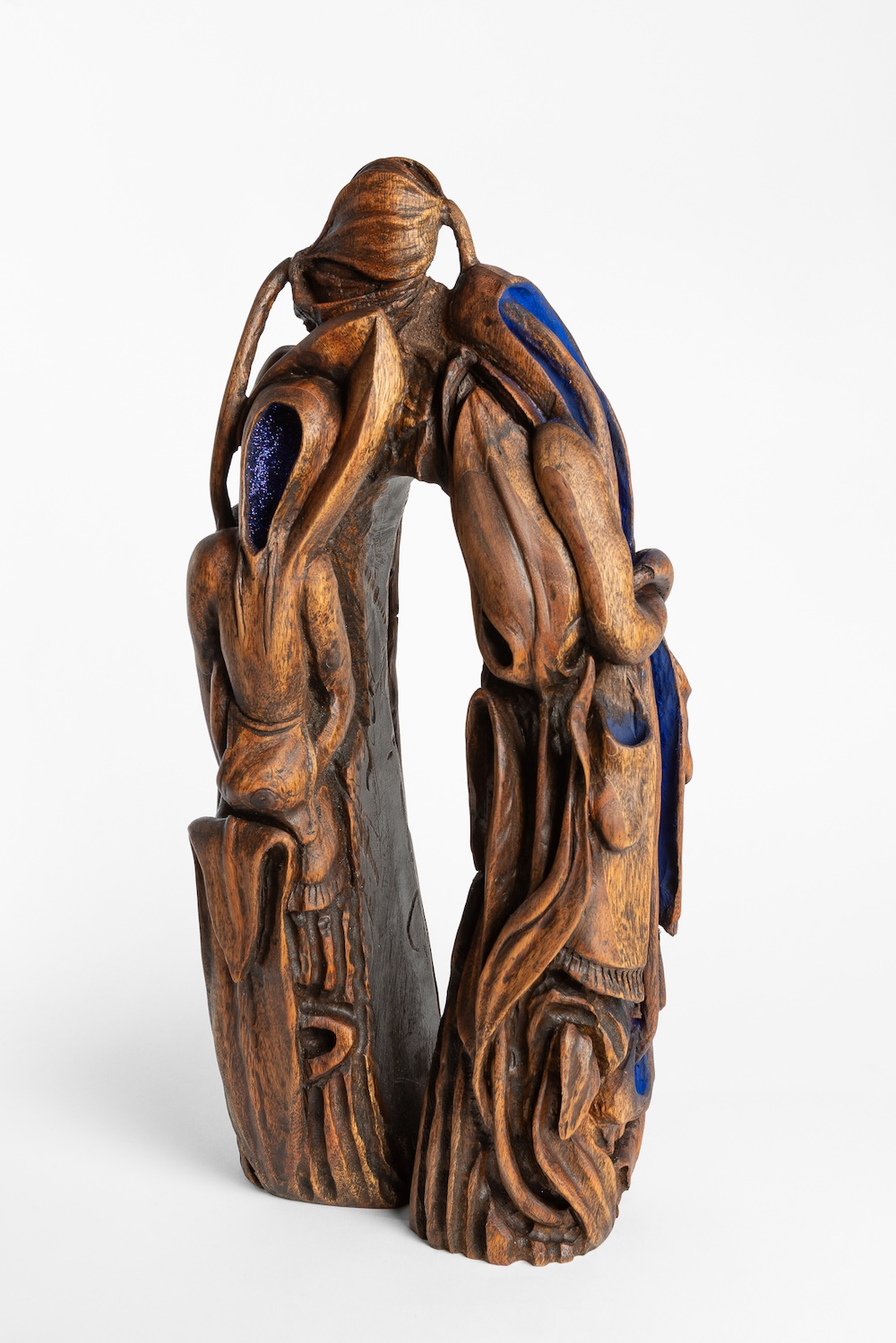
A photograph, she explained, gives you only one view at one instant. In the galleries, the scale of the paintings, along with layered, reflective surfaces that respond to your movement and the light, changes the encounter: “a form you thought you understood can begin to suggest something else,” Lee stated. “Images can introduce you to Dewey’s work, but they cannot give you the full encounter,” she said. “I hope people will come see it in person.”
That invitation extends beyond the museum’s galleries. Crumpler’s exhibition launches the third edition of Nexus: SF/Bay Area Black Art Week, which runs through October 4. MoAD launched Nexus in 2024, and this year’s program brings together more than 100 arts organizations, venues, collectives and studios and highlights more than 60 artists.
The week includes a black-tie gala, a DJ-fueled party, an Oakland street fair and a conversation marking the 60th anniversary of the Black Panther Party. There’s even a panel on Black art and artificial intelligence. Together, the events make space for the region’s Black cultural history and the artists shaping what comes next.
“Nexus was founded to build a closer bridge between communities in the Bay Area, and use this platform as a rallying cry to attract global attention to our region overall,” Monetta White, the museum’s executive director and CEO, told EBONY.
“It’s been a great joy to see how Nexus continues to flourish and build momentum for the community. Our aim was always to build an accessible template through which cultural and civic partners could offer their creativity and present innovative ideas.”
Crumpler will also be honored Saturday at MoAD’s black-tie Afropolitan Ball as the inaugural recipient of the MoAD Vanguard Award, the museum’s highest artistic honor. Last year’s Nexus included 140 programs, and that year’s Afropolitan Ball raised $1 million.
For Lee, the work of keeping Black art visible requires a commitment that extends beyond any one exhibition or institution.
“We really want to put Black art and artists of the African diaspora at the very center of the global cultural conversation,” she says. “And we can’t do it alone. So even if you’re not supporting us directly, support your local Black institution, because it takes all of us.”
A full schedule of events is available at nexus-sfbay.com.