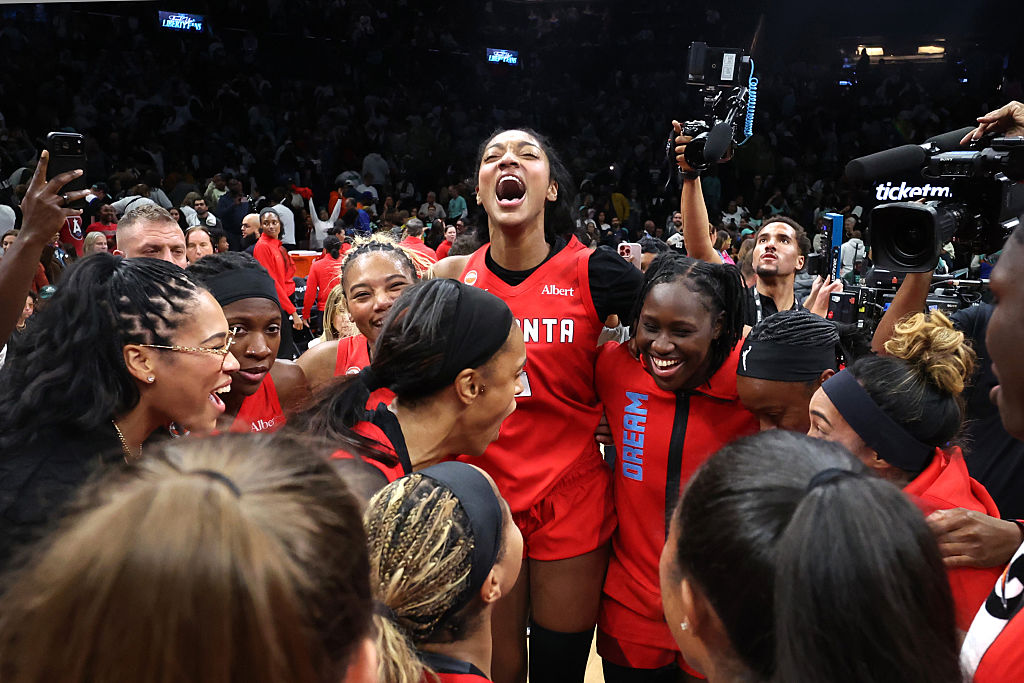
Black women love the Atlanta Dream because we love Black women and so does the franchise. Over the years, we’ve experienced the team celebrate Black culture, invest in Black women’s talents, and create an environment where their confidence is affirmed. At a time when Black women are facing increasing hostility both publicly and professionally, that kind of affirmation feels especially necessary.
In its 30th anniversary season, the WNBA reached historic heights, reaching more than 90 million unique viewers, welcoming 3.8 million fans, and generating four billion social media views. Black women comprise between 65 and 70 percent of the league’s players, yet their growing cultural and economic influence does not shield them from discrimination.
Few athletes epitomize this more than Angel Reese.
Since winning the 2023 NCAA championship with LSU, Reese has faced relentless scrutiny. When she dominates the boards, critics dismiss her rebounds as the product of missed shots. When she celebrates her accomplishments, they call her unsportsmanlike. When she displays confidence, they characterize her as arrogant or unlikable. Much of this criticism was fueled by her time at the Chicago Sky. When Reese challenged the Sky’s direction, her criticism generated controversy and resulted in disciplinary action.
Watching these controversies unfold, familiar tactics made to belittle Black women were clear.
The vitriol directed at Black WNBA athletes mirrors the misogynoir Black women experience in classrooms, boardrooms, political offices, and other professional spaces. Whether negotiating a collective bargaining agreement, demanding better working conditions, or celebrating an accomplishment. Black women regularly watch their confidence villainized and their advocacy purposefully misconstrued as anger.
In Angel Reese, Black women are reminded to choose ourselves.
When Reese announced her move to the Atlanta Dream, it was about more than an athlete joining a new franchise. Reese’s transition marked the entrance to a new chapter, one where she would inevitably flourish.
For many basketball fans, Reese joining the Atlanta Dream was a relief and an eye opener, because we all saw the impact the Chicago Sky had on her. There’s a point in every Black woman’s professional career where she realizes that loyalty to a workplace, organization, or even a country should never require abandoning ourselves. We learn that being needed isn’t the same as being valued, and being tolerated isn’t the same as being celebrated.
Atlanta understood something institutions frequently overlook, that investing in Black women means investing in her full potential, not merely the labor she can provide. Reese didn’t have to become less outspoken, less ambitious, or less herself to contribute to the team’s success. Instead, the Dream embraced those qualities as part of what made her valuable.
At the Dream’s first press conference, teammates Allisha Gray, Jordin Canada, Naz Hillman, and Rhyne Howard, all smiled alongside her. This never wavered.
In interviews, her coaches and teammates remarked on her talent, tenacity, and the joy she’s brought to the team. After unveiling the Angel Reese Barbie, the franchise dedicated an entire game to “pink out,” celebrating her impact on the game and culture. Her pride wasn’t deemed as arrogance, it was used to motivate everyone and push the entire team to new heights.
Atlanta doesn’t seem afraid or intimidated by Reese. They realize iron sharpens iron and the results speak for themselves.
During this season, Reese became the first WNBA player to collect 500 rebounds in a single season, recorded 32 double-doubles, earned Defensive Player of the Year and earned four double-doubles in the playoff series. Alongside Gray, Howard, and the rest of her teammates, she helped Atlanta reach and secure the franchise’s first Finals victory.
As a Black girl from the deep South, there’s something especially meaningful about watching this story unfold. Throughout the season, the Dream celebrated everything from the Divine Nine and HBCU culture to ’90s rap. These weren’t simply entertainment choices. They reflected a franchise that understood the culture and community who helped build the league.
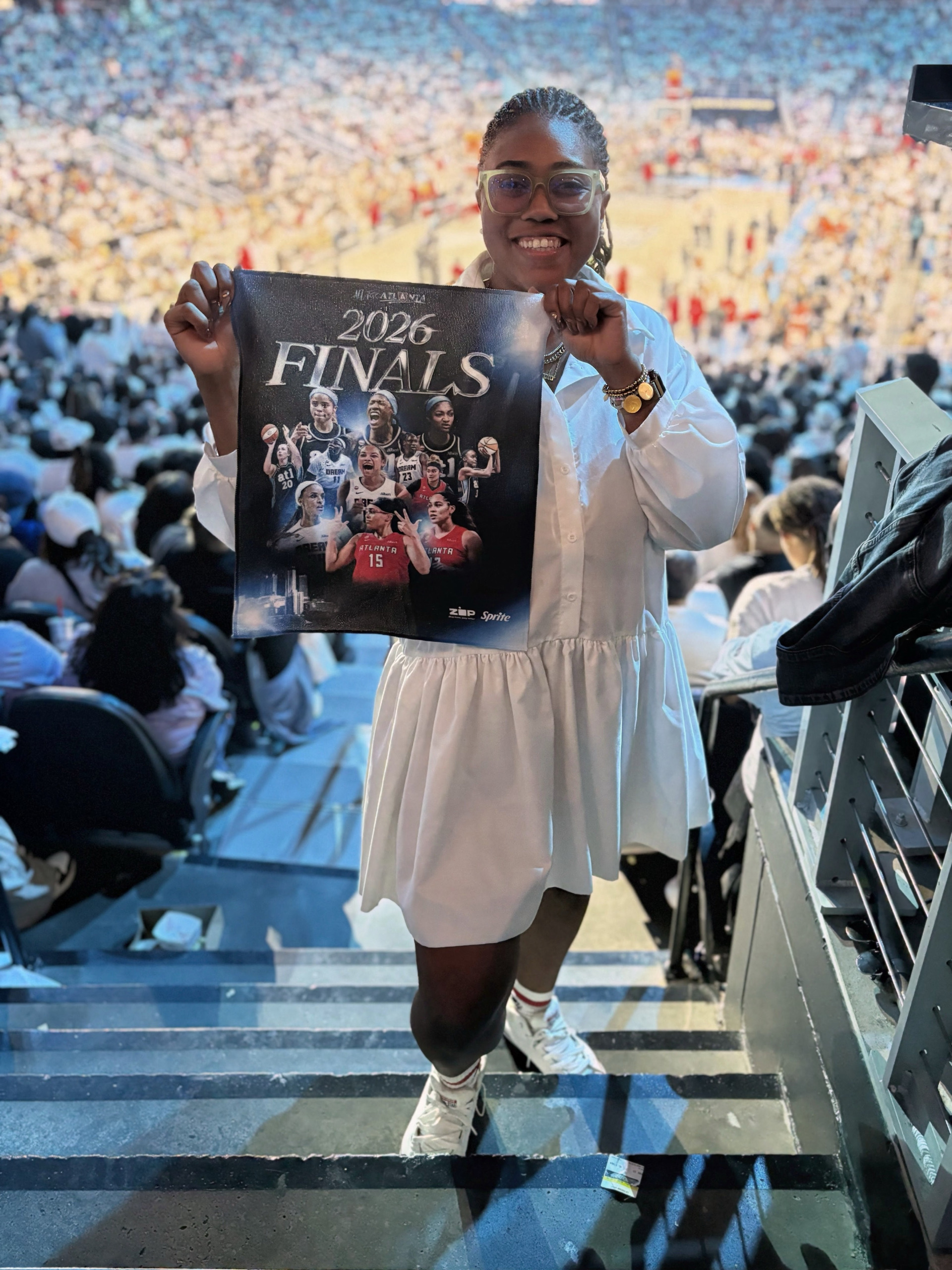
When I attended Game 4 of the Finals, I recognized something familiar: the joy Black women create when we can celebrate ourselves without explanation or apology.
And right now, that joy is crucial.
Across the country, Black women continue to confront professional instability, political hostility, and institutions that benefit from our contributions while questioning our qualifications. We shouldn’t have to endure mistreatment to prove our worth, nor should we have to become exceptional before receiving basic respect.
That’s what makes the Dream’s success bigger than basketball.
Although the franchise fell short of a championship, its impact shouldn’t be measured solely by the final score. The Dream’s season reminds us that institutions choose whose talents they cultivate, whose voices they respect, and whose ambitions they support. The franchise demonstrates that celebrating Black women and investing in their success are complementary priorities.
In Angel Reese, Black women are reminded to choose ourselves. In her teammates, we see the power of sisterhood and collective ambition. And in the Atlanta Dream, we see what happens when institutions recognize Black women’s brilliance and invest in our potential.
Black women have always known how to make something out of nothing. The Atlanta Dream’s season showed us what becomes possible when Black women receive the investment, trust, and support we’ve always deserved.