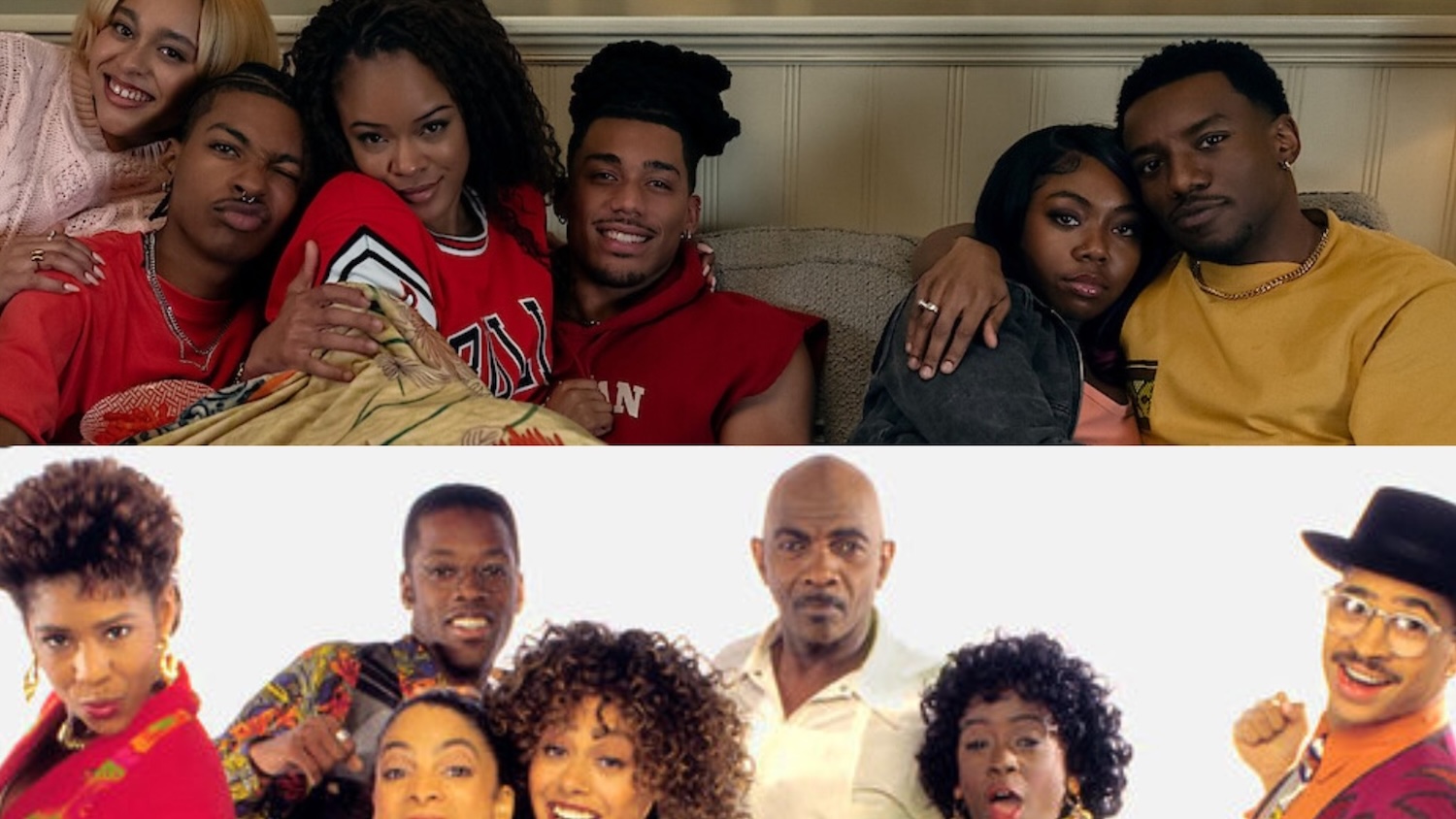
In the past, there was a defining presence on television. It happened around the late 1980s through the nineties, and A Different World was one of the top shows on the list. Nearly four decades later, the series return has proven that audiences never stopped wanting it.
A Different World arrived on NBC in 1987 as a spinoff, opening the doors to the fictional Hillman College, a historically Black college in Virginia. What began as a vehicle for one of television’s biggest young stars quickly became something much bigger: a weekly, primetime celebration of Black college life, ambition, friendship, style, politics and possibility.
Now Hillman has reopened its doors.
Netflix’s sequel, which premiered September 24, centers on Deborah Wayne (Maleah Joi Moon), the daughter of Dwayne Wayne (Kadeem Hardison) and Whitley Gilbert (Jasmine Guy). Hardison and Guy return alongside original cast members including Cree Summer, Darryl M. Bell, Dawnn Lewis, Jada Pinkett Smith and Glynn Turman, while Debbie Allen—whose creative leadership helped transform the original series—returns as an executive producer and director.
Returning star Summer summed up her feelings about being on the original series to EBONY for our iconic cover shoot: “It was lightning in a bottle.” And with the sequel series, signs are clear: the magic has returned.
A Ratings Juggernaut, Twice
The original A Different World was never a niche Black-culture hit tucked somewhere on television’s sidelines. It was one of America’s biggest shows.
During the 1987–88 television season, A Different World finished as the No. 2 primetime program in the country, behind only The Cosby Show. It outranked mainstream hits including Cheers, The Golden Girls, Growing Pains and 60 Minutes. That meant millions of households weren’t simply getting an occasional glimpse of Black college life. Hillman was sitting near the center of American popular culture every week. The cultural impact stretched well beyond Nielsen ratings.
HBCU enrollment increased 26% between 1976 and 1994, with nearly all of that increase occurring from roughly 1986 to 1994, overlapping almost exactly with A Different World’s 1987–1993 run. Those figures do not prove that one television show caused an enrollment boom, but Hillman’s influence has become part of HBCU history. Howard University President Ben Vinson III said in 2024 that students still cite the show as one reason they considered attending an HBCU. Howard University itself has celebrated A Different World for helping popularize HBCU culture on television.
Nearly 40 years later, people are showing up for Hillman again. A Different World climbed to the No. 1 spot for TV shows in the U.S. on Netflix. The message feels familiar: Put a Black world at the center of television and audiences will come.
Black Audiences Never Stopped Watching
Hollywood’s contraction has meant fewer opportunities for Black-centered shows to run long and make an impact. Behind the camera, the decline is even clearer.
UCLA’s latest Hollywood Diversity Report found that White men accounted for 78.9% of creators behind the most-watched streaming programs it studied. Nearly four-fifths of the leads in the top streaming comedies and dramas were also White.
But another finding was buried in those numbers: stories centered on underrepresented communities remained popular with audiences and generated greater social media engagement. In other words, fewer diverse stories are being made even as audiences keep responding to them.
And Black people are most certainly still watching television. Nielsen reports that Black adults spend 46 hours and 13 minutes watching television each week, compared with nearly 35 hours for the overall U.S. population. Forty-six percent of that Black viewing time now goes to streaming. The audience never disappeared, and the production and release of A Different World proves that.
Recreating the Formula that Led to Success
If ratings were one part of the original A Different World’s success, authenticity was another. When Allen assumed greater creative control after the show’s first season, she pushed Hillman closer to the actual feel of HBCU life. A Howard University graduate herself, Allen brought the traditions, contradictions, humor and political consciousness of Black college campuses into the series.
Howard has described the changes she brought to the show as including everything from step shows and Greek-letter organizations to homecomings and marching bands. The series also tackled apartheid, HIV/AIDS, date rape, police brutality and war while still allowing its characters to fall in love, fail classes, argue with their friends and figure themselves out. The new series understands that.
Showrunner Felicia Pride assembled an all-Black writers’ room and hired Black directors, including Black women and queer filmmakers. Current HBCU students participated through a council that weighed in on scripts, stories and ideas. Netflix hired HBCU students and recent graduates as production assistants through its Next 13 program.
The production itself is embedded in HBCU life. The series was filmed at Morehouse College, Spelman College and Clark Atlanta University. According to UNCF, about 59% of its background performers were HBCU students or alumni, while an HBCU student council consulted on storylines. People who actually know that culture helped determine how it looks, sounds and moves, and real HBCU people filled its scenes.
Hillman Has to Belong to Gen Z Now
A Different World hasn’t repeated its past. Deborah and her classmates are entering Hillman in 2026. Their relationship to identity, dating, technology and even their own Blackness has been shaped by an entirely different world.
Pride has said that social media and the internet had to become part of the lens through which these students experience college because this generation has never known life without them. She also expanded the HBCU traditions viewers see onscreen, including convocation, Founders Week and Homecoming.
But the original A Different World didn’t become culturally significant because its characters reproduced someone else’s version of Black college life. Dwayne, Whitley, Freddie, Kim, Ron and Jaleesa became cultural touchstones because they were allowed to define their own moment.
The sequel has given Deborah and her classmates that same freedom. There can be flip-up-glasses callbacks and familiar faces. There can be traditions that make longtime viewers feel like they have come home. But it also has become someplace Gen Z wants to claim for itself.
A Love Renewed
The original series arrived at a moment when few television programs treated young Black people as expansive enough to carry an entire world. Hillman allowed them to be smart, ridiculous, political, privileged, struggling, Southern, international, light-skinned, dark-skinned, ambitious, confused and still becoming.
The A Different World sequel is doing the same during a very different television era. It is centering a young Black ensemble. It has placed Black creatives behind the camera. It has invited actual HBCU students into the process. And instead of sanding down cultural specificity to make Hillman supposedly more universal, it is leaning further into it. It is recreating the conditions that made that success possible.
Sometimes, lightning does strike twice.