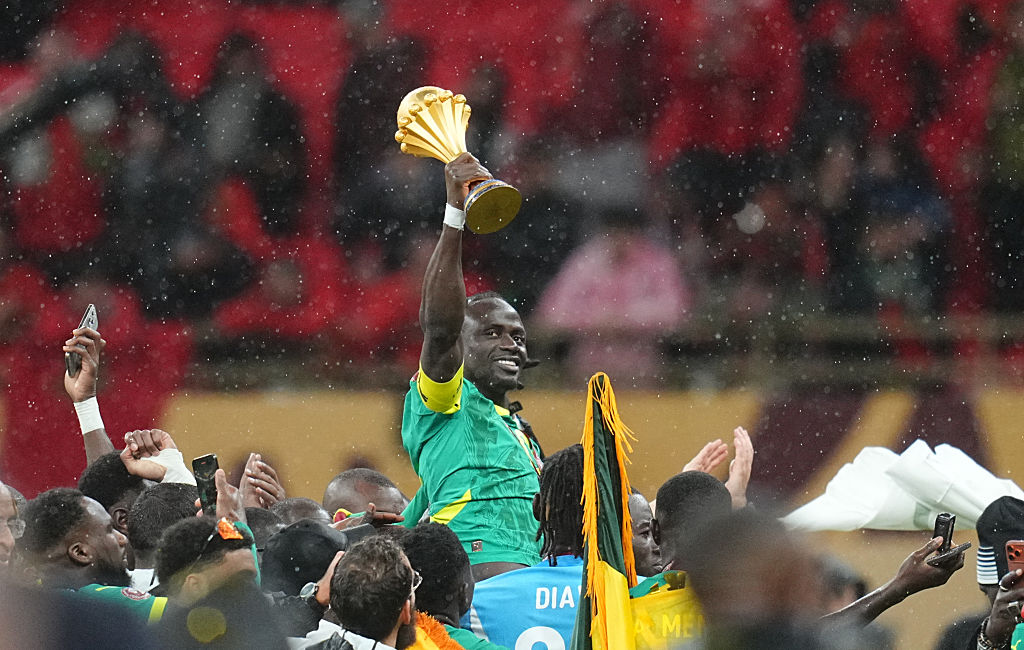
Under the floodlights of the Prince Moulay Abdallah Stadium, with 68,000 spectators inside and millions watching worldwide, Senegal defeated Morocco 1-0 to win the Africa Cup of Nations (AFCON), the continent’s premier football competition.
In a dramatic final, the likes the continent had never seen before, it brought the curtain down on a compelling tournament, one in which the West Africans stunned the hosts to claim their second title.
Fireworks lit the sky, champagne flowed and the Lions of Teranga celebrated long into the night.
That was January 18, 2026. The following day, the players flew home. There was an open-top bus parade through the main streets of the capital, Dakar. And President Bassirou Diomaye Faye welcomed the players to the presidential place and rewarded each of the 28 players with $134,892 and handed them plots of land to go with it.
The country was gripped by euphoria, players went back to their clubs to sterling welcomes, and the Senegal Football Federation added another star to their badge. The title of two-time African Champions was earned.
Normally, that’s where the story would end, and life for the team and all of its fans would move on. But this final was not a normal one, and any end was always going to be far-fetched.
Fifty-Eight Days Later
On March 18, 2026, the Confederation of African Football (CAF), the governing body of the sport on the continent and organisers of the AFCON, overturned the result and awarded the trophy to Morocco.
It was the kind of twist that defied belief. Imagine a team winning the Super Bowl, lifting the trophy amid a storm of confetti, returning home to a hero’s welcome, even marking the triumph with cash in hand and new land to settle, only to be told weeks later by the NFL to hand it back, the title reassigned to the team they had beaten.
That is the scale of this controversy.
So What Happened?
CAF’s decision did not emerge in a vacuum. To understand it, you have to return to the final in Rabat.
In the 98th minute, with the score 0-0 and the match poised for extra time, referee Jean-Jacques Ndala awarded Morocco a controversial penalty. Had Morocco converted, it would almost certainly have been the final act of the game, and the Atlas Lions would have been African champions.
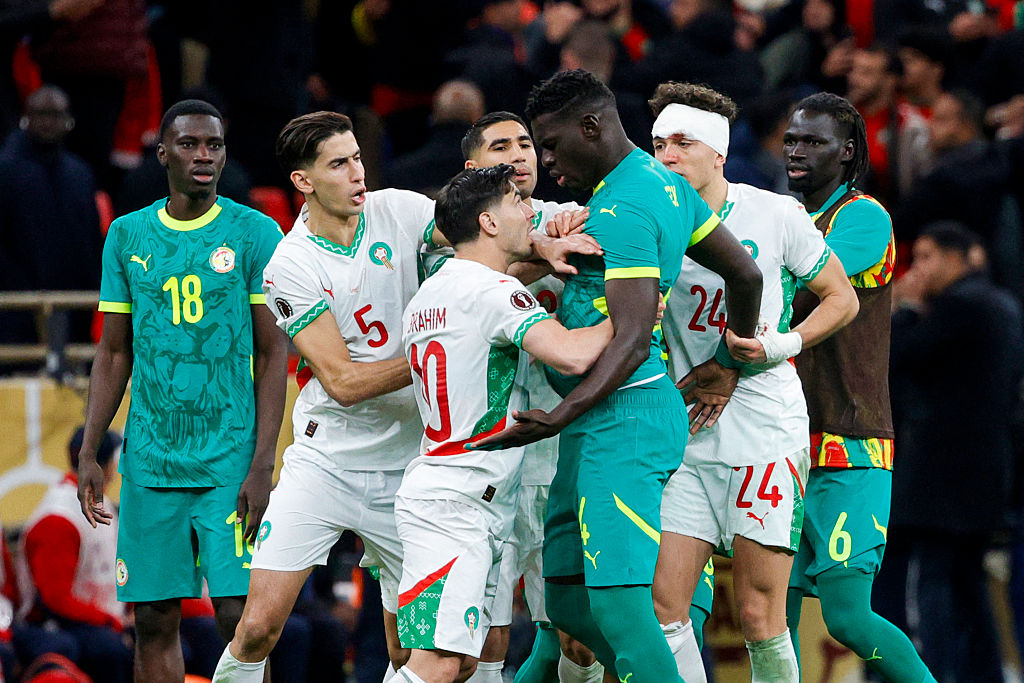
The Senegal players reacted furiously to the decision. And Ismaïla Sarr, the Senegalese-French forward, was booked for charging at the referee, while winger Iliman Ndiaye made a sarcastic gesture suggesting the decision had been bought. In the stands, Senegal supporters protested. Some even breached security and clashed with police in the stands. While on the pitch, the melee continued, causing Senegal’s coach, Pape Thiaw, to eventually signal for his players to leave the field of play.
At this point, Senegal had effectively abandoned the match, a scene that left officials scrambling and broadcasters uncertain of an unprecedented situation. Senegal’s captain, Sadio Mané, was the last to go. On his way off the field, he stopped to speak with Claude Le Roy, a doyen (senior member, who is respected) of African football, who urged him to call his teammates back. Minutes later, Mané reappeared from the tunnel, leading the team out again.
After the delay, the penalty decision stood, but play resumed. Morocco’s midfielder Brahim Díaz missed his shot, leaving the match goalless.
It wasn’t until extra time that Senegal found the breakthrough through midfielder Pape Gueye and secured what appeared to be a historic victory.
Afterwards, Mané reflected on the drama in a conciliatory tone. “We shouldn’t have reacted like that,” he said. “We apologize to football. Sometimes you react in the heat of the moment. We accept that referees can make mistakes. Personally, I don’t think it was a penalty, but if the referee decides, you have to respect it.”
The Trigger
For anyone that covered the tournament closely, it was easy to see that Senegal’s actions did not come out of nowhere. Tensions had been building in the days leading up to the final.
The team had been based in Agadir throughout the tournament and travelled to Rabat only for the final. On arrival, they were met by large crowds at the train station, with what they considered inadequate security. Officials described the situation as “unacceptable”, saying players had been left exposed.
Further disputes followed. Senegal rejected their initially assigned hotel and declined to train at the Mohammed VI complex over concerns about possible surveillance. The venue is Morocco’s national team base.
In their view, the conditions favored the hosts.
Those suspicions deepened during the match. Shortly before the penalty incident, Senegal had a goal ruled out for a foul in the build-up, a decision they strongly contested. So, when the penalty was awarded, frustration boiled over.
The Legal Battle
The day after the final, Morocco lodged a formal protest with the CAF disciplinary board, arguing that Senegal’s temporary walk-off constituted a breach of competition regulations and warranted forfeiture. CAF rules, notably articles 82 and 84, provide for sanctions, including forfeiture, in cases where a team abandons a match.
However, on January 28, 2026, the disciplinary board rejected Morocco’s request to strip Senegal of the title. Instead, it imposed sanctions: bans for the coach and two players, along with fines totalling $715,000. Morocco’s federation and players were also fined a combined $415,000 for their part in the disorder.
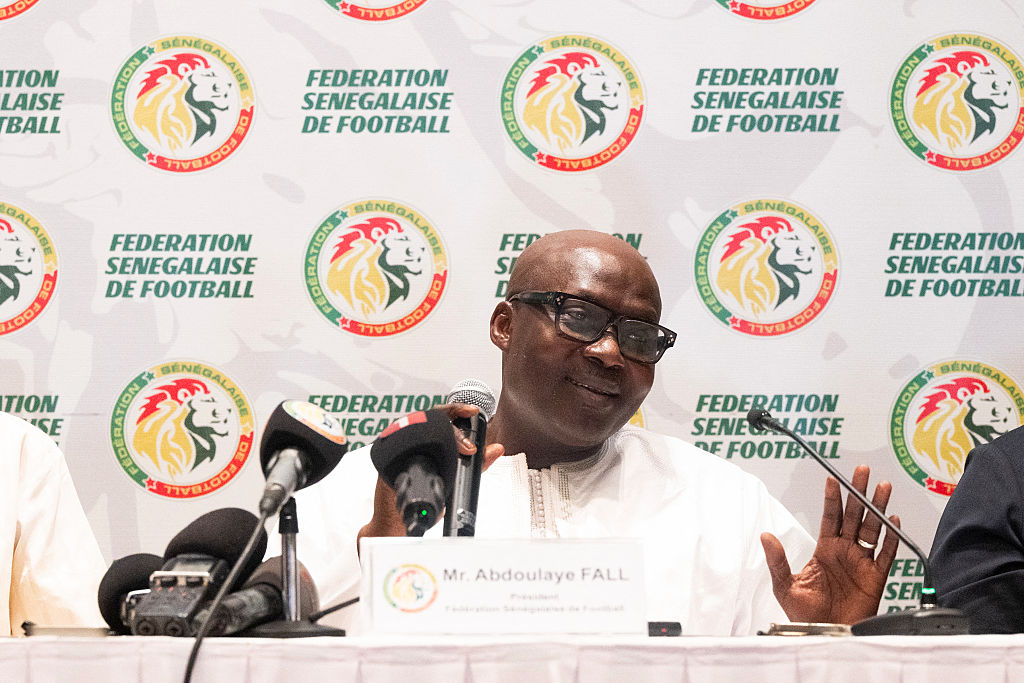
Senegal accepted their punishment and agreed to pay the fines. Morocco weren’t having it, and appealed.
On March 17, 2026, CAF’s appeals board sat on the matter again and overturned the initial ruling, concluding that Senegal’s actions justified forfeiture, stripped them of the title, and awarded the match and the trophy to Morocco.
The Reaction
The decision triggered a fierce global response. Spanish outlets AS and Marca described it as a “global scandal”, while the UK’s Daily Mail called it an “unprecedented measure”. In Senegal, Le Dakarois labelled it “a scandal in the final” and Le Soleil “the joke of the century”.
In Morocco, however, Le360 Sport said CAF had “delivered justice” and protected the integrity of the game.
Senegal’s football federation condemned the ruling as “iniquitous, unprecedented and unacceptable”, arguing it had brought African football into disrepute. The government called for an independent international investigation into alleged corruption within CAF. While the players responded publicly. Mané posted a photo with the trophy, writing: “The whole world knows Senegal are the African champions.” Pape Ciss shared an image accompanied by four laughing emojis.
President Faye’s response was more subtle, updating his Facebook profile with a photo of himself with the AFCON trophy conspicuous in the background, as if to say “the trophy is here, come get it.”
Prominent voices across the continent weighed in. Former Liberia President and African football great George Weah said the decision had “scarred and blemished” African football, while former Cote D’Ivoire captain Didier Drogba warned it threatened the game’s “credibility, dignity and soul”.
Morocco’s response was more restrained, and the country’s football federation said the matter was closed and expressed satisfaction with the outcome.
CAF’s dance with Morocco
Morocco delivered a tournament of a standard comparable to the best in world football.
Over the past 15 years, the North African nation is reported to have invested around $20 billion in sports infrastructure. The stadiums showcased at this year’s AFCON were among the finest the continent has seen.
For the 24-team tournament, Morocco provided nine stadiums across six cities, the highest number ever used for a single AFCON. For context, the previous edition in Côte d’Ivoire was staged across six venues.
The country is also set to co-host the 2030 World Cup alongside Spain and Portugal. For this reason, AFCON 2025 appeared in many ways to be a dress rehearsal for that global event.
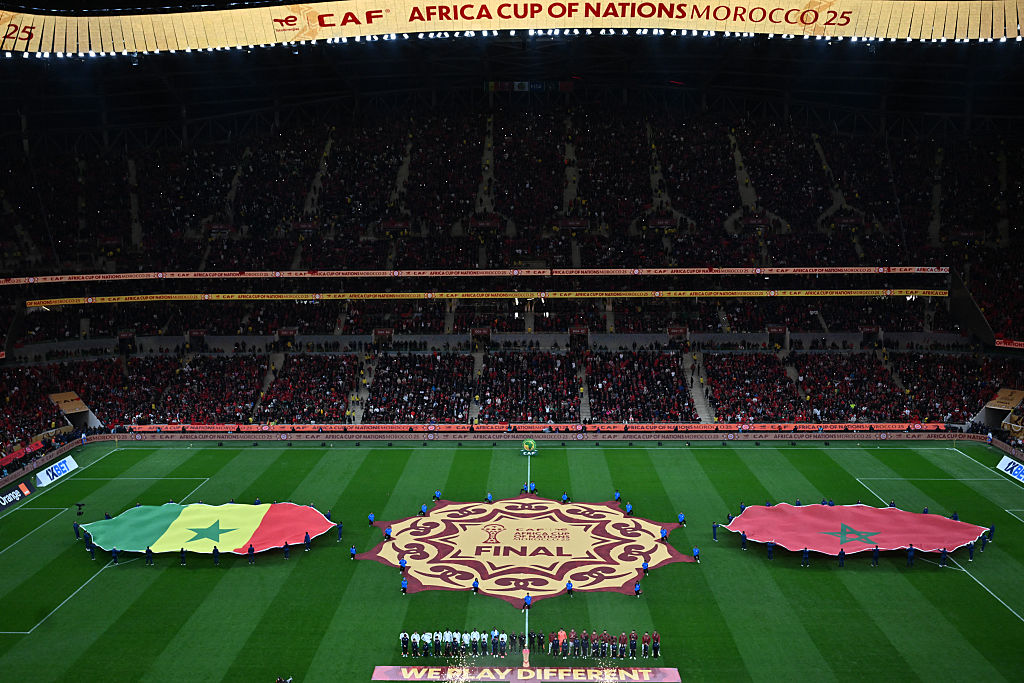
In a continent where many nations continue to struggle with infrastructure, Morocco stands out. It has also positioned itself as a reliable host, frequently stepping in to stage matches or entire tournaments at short notice. Since 2021, it has hosted 14 major CAF competitions. Morocco’s influence extends beyond infrastructure. CAF’s vice-president, Faouzi Lekjaa, is Moroccan and serves domestically as minister of budget.
Yet for all its investment and growing stature, Morocco has only one AFCON title, won in 1976.
Against that backdrop, their run to the final on home soil brought with it hopes that the trophy drought was nearing its end. For some, however, it also fed a narrative that the conditions on and off the pitch tilted to their side. Meanwhile, Senegal’s camp pointed to a series of contentious refereeing decisions during Morocco’s run, and ultimately in the final itself, as reinforcing those suspicions CAF was determined to hand the trophy to Morocco, perhaps as payback for all the recent favors.
Senegal Stands its Ground
Senegal have refused to accept CAF’s ruling quietly.
The federation has filed an appeal with the Court of Arbitration for Sport (CAS), sport’s highest judicial authority. Their legal team is a seven-member group comprising four Senegalese lawyers, alongside French and Spanish counsel. And in the meantime, they have declined to return the trophy and medals.
Days after the appeals board’s decision, the team paraded both during a friendly against Peru in Paris. Players wore jerseys bearing two stars, while “African champions” banners filled the 81,000-capacity Stade de France.
It was a bold statement. Some called it disrespectful, others called it brave.
Over at CAF, the fallout is taking its toll. General Secretary Véron Mosengo-Omba resigned on March 29, ending a five-year tenure. CAF president Patrice Motsepe addressed a press conference on the same day and pledged reforms to avoid a repeat of the “unacceptable” actions in the final. He also called Senegal his “brothers” and indicated he will visit the country in an effort to ease the dispute.
Morocco, for their part, had already signalled their displeasure earlier in the month. Scheduled to host the Women’s Africa Cup of Nations from mid-March, they announced that they could no longer do so, forcing a postponement to July. The decision unsettled many of the teams, which had already moved to come in preparation for the tournament. CAF, according to sources, had already begun looking for substitute hosts, with Morocco initially refusing to communicate its intentions for the tournament.
With a CAS verdict potentially months away, African football is left in a strange limbo, one where there are, depending on your perspective, two champions: one legal and the other earned on the pitch.
For now, the confusion persists. Morocco holds the title in law, but not the trophy; Senegal has the silverware, but not official recognition.