The internet’s latest foodie obsession is Nigerian cuisine, with many users online attempting the culture’s most intricate dishes, like pounded yam (also known as fufu) and egusi (a savory soup made from ground melon seeds). Some love and respect the cuisine, while others don’t quite understand it.
But as with most things in life, it’s better to ease into it than to jump straight into a meal made for a more seasoned palate. In honor of Nigerian Independence Day this October 1, we’ve tapped a few experts to help round up some beginner-friendly dishes for those looking to indulge in Nigerian cuisine the right way.
Red Stew – Chef’s Choice
“If you want to understand Nigerian food, you have to ground yourself in the symbiotic relationship of these core ingredients: onions, tomatoes, peppers [like] scotch bonnets and habaneros, garlic, oils, preferably native palm oil, and spiced protein stocks,” said Ope Amosu, owner of West African fast-casual restaurant, ChòpnBlọk. He added, “Red stew is the foundation for that lesson and often serves as a base for other Nigerian staples, including jollof rice and other tribal soups and stews.” Red stew is an essential dish — paired with anything and everything such as beans, soups for fufu, and plain, fried, jollof, or coconut rice.
Nigerian Jollof Rice
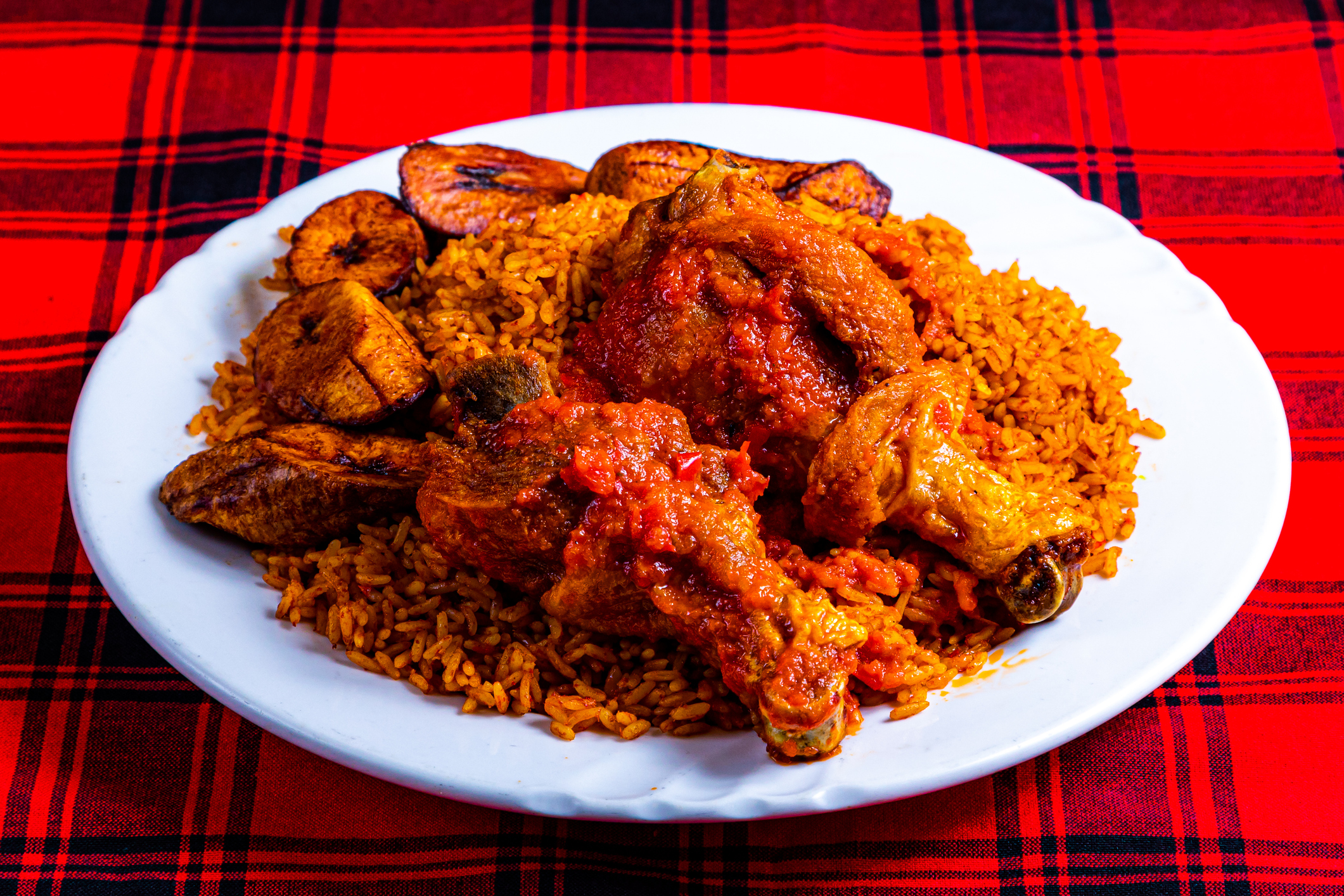
Anyone trying Nigerian food for the first time should start with jollof rice. Jollof rice is a low-risk meal because it combines flavors everyone knows and loves — fresh tomatoes, red bell peppers, and fiery scotch bonnet — while still capturing the essence and taste of the culture. What separates Nigerian jollof rice from other African variations of the dish is through the rice, which is typically made with long-grain parboiled rice. Jollof rice can be served with beef, chicken, stewed or fried plantain, and gizzard.
Suya – Chef’s Choice
Suya is a popular street food or appetizer made from thinly sliced meat like beef, chicken, or goat, and even seafood like shrimp. The casual dish is often seasoned with chili, cayenne pepper, crushed peanuts, and other spices. You can enjoy it as a kabob or packed in a newspaper-lined container, paired with tomatoes, onions, and cucumbers to help soften the meat’s spiciness. “Suya is definitely one of the dishes I would recommend because it’s so flavorful and easy to enjoy,” said Rita Igbinoba, former contestant of MasterChef Season 16: Global Gauntlet. “I love that it’s simple but has so much flavor. I think it’s a great way for someone who has never had Nigerian food to get introduced to the bold flavors of our cuisine,” Igbinoba adds.
Fish Pepper Soup – Chef’s Choice
Most Nigerians gravitate to this meal when they’re feeling sick or want something warm and comforting. This hearty dish is known for its potent, spicy flavor and can be eaten on its own, with plain white rice, or with fufu. “When prepared well, fish pepper soup is a harmonious blend of spices and herbs, with a silky broth velveted by collagen from the fish bones, onions, and starch from the sweet potatoes. It serves as an ideal complement for a flaky catfish or other fresh fish,” says Michael Elégbèdé, chef and creator of the Lagos and New York-based dinner series Ìtàn. “I think it gives a great insight into the complexity and deliciousness inherent in our cooking traditions,” he says.
Moi Moi – Chef’s Choice
Moi moi is a bean pudding made from blended beans, peppers, onions, and spices. It’s steamed until it’s soft and full of flavor. It’s delicious on its own or with protein-packed additions like boiled eggs, canned fish, corned beef, or various vegetables. “Moi moi is one of my favorite Nigerian dishes because it’s so flavorful and versatile,” says Igbinoba. “I think it’s a great dish to try because it’s comforting, flavorful, and really shows how creative Nigerian cooking can be.”
Puff Puff
Nigerian cuisine technically doesn’t have an official dessert; however, no big meal at a party or event is complete without puff puff. It’s a traditional donut-like snack made with flour, yeast, sugar, warm water, and nutmeg, then deep-fried in vegetable oil until golden brown. You can also pair it with other bite-sized appetizers like spring rolls, samosas, and peppered meat or chicken. The combined finger foods are often referred to as small chops.