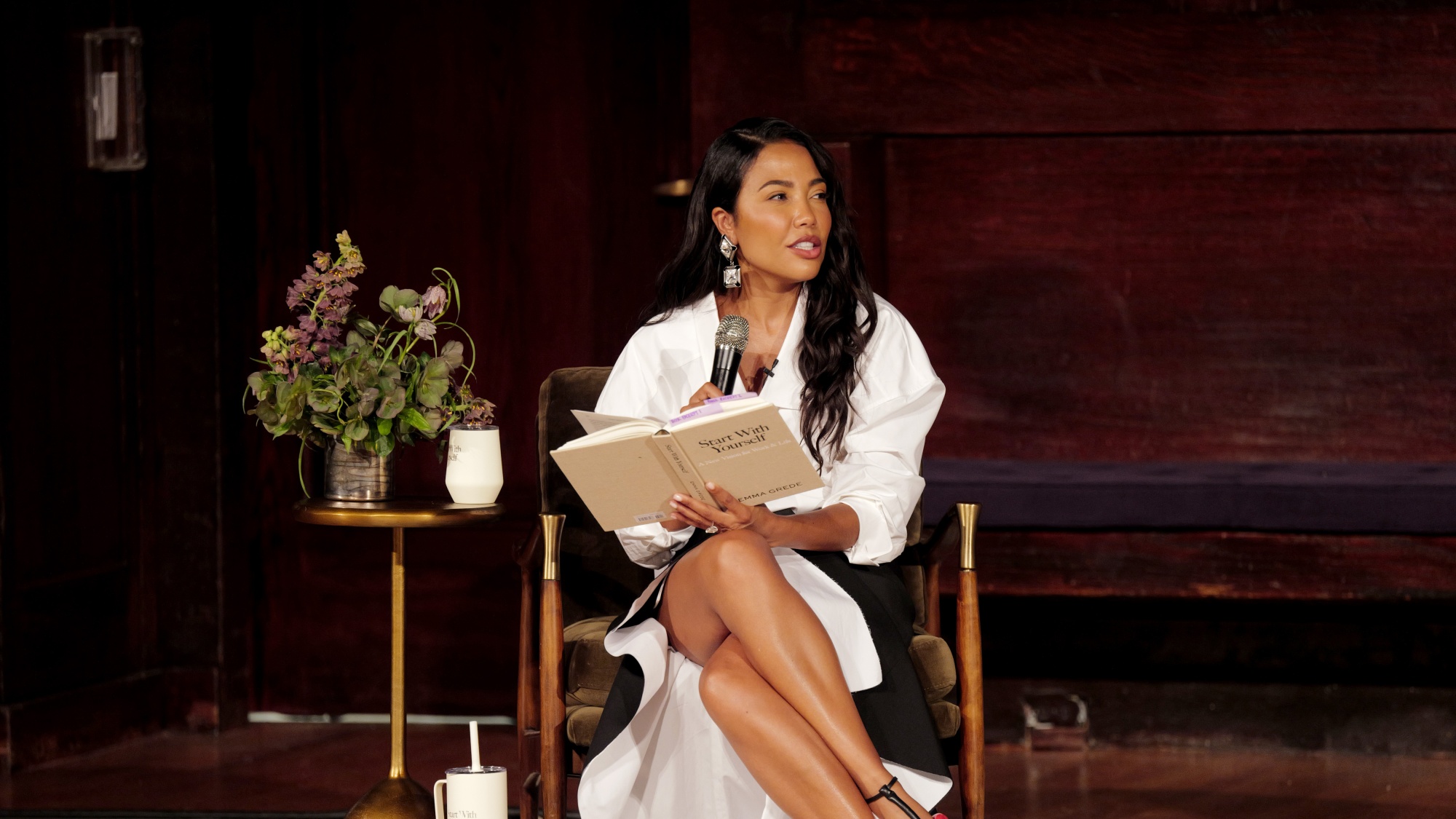
When we hear “remote work,” we instantly think of the pandemic, a time when Zoom was booming and a digital shift empowered many to build the careers they wanted from their phones and laptops. Recently, co-founder of SKIMS and Good American, Emma Grede, was caught in the latest internet discourse after her comments on work-from-home productivity on “Baby, this is Keke Palmer.”
“What I think is that work from home culture is a career killer for women […] What is happening is that we talk about all of this upside of Zoom culture, but not all of the rigidity of it. No one in reality will tell you, but careers require proximity and visibility. You want a pay rise? You want the next promotion? You want the big corner office? Guess what? You need to be there,” Grede expressed in her interview with Palmer.
Many people pushed back on her remarks, claiming that since the COVID-19 pandemic, this has been the most career growth they’d experienced. According to a Society for Human Resource Management (SHRM) study, 65% of HR professionals reported that their organization’s remote work policies positively impacted employee morale.
“I’m genuinely unsure why Emma Grede is the authority on what ambitious women can build from their laptops. Some of us have been doing it for years,” said digital creator Kedasha Kerr in a video response. On the other hand, some people agreed with Grede’s comments but were still left with questions. This also wouldn’t be the first time that Grede’s perspective has gotten called out by Black women recently after her comments on being a “3-hour-mom”.
McKinsey and the nonprofit Lean In released their “Women in the Workplace” report late last year, which showed that work-from-home culture is limiting opportunities for upward mobility in the workplace. The study found that six in 10 women experienced frequent burnout, compared with half of men at the same level. Additionally, the stigmatizing of remote work for women has a low likelihood of sponsorship or promotion in the workplace.
Meanwhile, men don’t face the same repercussions. So, while Grede’s comments may have had some truth to them based on the data presented, the circumstances that Black women or women of other races may experience this issue vary based on industry and workplace culture.
@itsthatlady.dev Remote work didn’t hold me back. It funded my freedom.
I’m genuinely unsure why Emma Grede is the authority on what ambitious women can build from their laptops. Some of us have been doing it for years! What did you think about what she said? Drop a
if remote work changed your life too. #ai #remotework #workfromanywhere #workfromhome
♬ Big Guy – from “The SpongeBob Movie: Search for SquarePants” – Ice Spice
Allie Tsahey is one of the many Black women who have come forward on social media to speak up in response to Grede’s interview. Her latest social media post, in collaboration with her organization, Baddies in Tech, has sparked a new conversation within the pre-existing one. Tsahey’s video not only touched on the lack of accessibility to women of color in the workplace, but it shone a light on how the rules for Black women are different in the workplace and how much gatekeeping plays a role in getting bypassed for opportunities.
“For many women, especially Black women, work-from-home is not just convenience from daily commutes, or being able to hit a pilates class on your lunch break, it’s literal protection from the bias, daily microaggressions, and heightened scrutiny most of us face in corporate America,” Tsahey told EBONY.
She continued on to explain that work-from-home culture has allowed people to take the necessary mental health breaks that they need to be successful, and avoid burnout or exhaustion to aid their mental health. In turn, this allowed some to show up in the workplace in a healthier way.
“The fact remains, career opportunities are absolutely driven by relationships, proximity to leadership, and informal networks, but remote or not, women and minorities have always been left out of the rooms and relationships that truly accelerate career growth. Now that we’re being called back into the office, the real issue isn’t in-person presence, it’s how that presence is being valued and rewarded, because if showing up was enough, women of color would rule the world,” she said.
Similar to Baddies in Tech, other organizations such as Sports Equity Entertainment Network (SEEN) and Fortune & Forks are actively working to combat the lack of access that minorities and women of color experience in the lack of relationship capital that supports career growth.
Community support and sponsorship are the ways that people have been combating the issue of accessibility, primarily because the inequality that exists in corporate spaces and workforces is perpetuated at a greater magnitude than what can be fixed in an employee resource group (ERG).
Though the future of work remains uncertain as more layoffs happen, it’s safe to say that working from home isn’t going anywhere anytime soon.