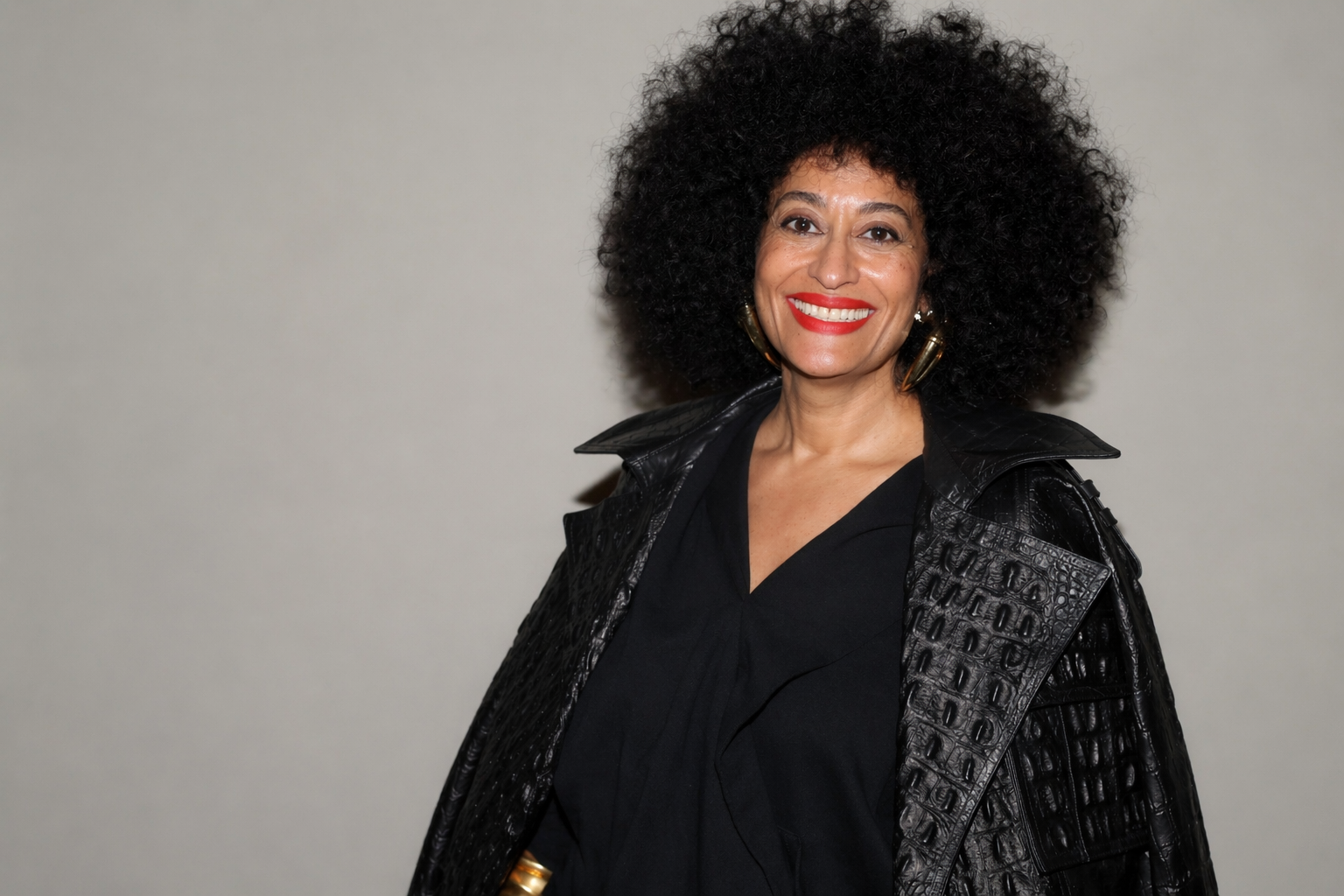
A Tracee Ellis Ross afro was recently renamed a “Cloud Bob” by Vogue Magazine, and just like that, we were reminded how quickly Black women’s hair can be erased, rebranded, and handed back as something new. Not new to us. There is nothing novel about texture, volume, or shape that has lived on our heads for generations. But the renaming is the point. It is the quiet audacity of taking what has always existed in Black culture and reframing it as discovery. A reminder that even now, our hair is still not allowed to simply be.
As the 25th anniversary of my novel Nappily Ever After approaches, one would think the hair wars had ended. It has been decades of evolving and understanding the beauty of a Black woman’s hair. Yet the story of Venus, who stopped straightening her hair for love and acceptance, still resonates because the struggle remains. The book and its film adaptation told a story of resistance and self-acceptance. A romance centered on loving who we are rather than aspiring to something else.
I wrote the book for catharsis. I researched the roots of our hair history from Africa to the southern plantations, where lye was used to strip my ancestors of their hair because it was deemed unsightly. I wrote it to heal from the constant expectation of being “fixed,” as if we were perpetually broken.
Fast forward to now, and a Black woman can win a Grand Slam, argue before the Supreme Court, build a company and still be reduced to commentary about her hair. One small reference can summon her back into that space. In this case, Vogue Magazine renaming Tracee Ellis Ross’s afro.
Apparently, we are still fighting this war. The pursuit of simply being is constantly questioned. It feels unnecessary, yet unavoidable. Having to explain that our hair is off limits, literally or figuratively, feels redundant. And yet, here we are.
A Black woman’s discipline over her hair is beyond reproach. No culture reflects on its hair more than we do. It is not just beauty. It is class, professionalism, and worthiness. From schoolyards to fashion spreads, the message is clear. She must survive the gaze of expectation. She is denied the freedom to simply be.
It begins in childhood. Mothers, aunties, and grandmothers care for us with love, trying to shield us from a world that can be merciless. Pressing, parting, smoothing, and controlling happen in the name of protection. Beauty becomes strategy. A negotiation for fairness in an unfair landscape. It is policy in a Black household. Protect yourself at all times.
Our hair becomes armor.
It must signal that we are neat, disciplined, and acceptable. Beneath those rituals is a quiet hope that we can survive. Because simply showing up as we are may not be enough.
We learn early. Which hair is called “pretty” and which is “nappy.” Which textures are praised and which are corrected or mocked. Before we reach classrooms or boardrooms, we understand that our hair will be read as evidence. Of discipline. Of belonging. Of worth.
And if we resist? If we choose not to perform acceptability? The question becomes, what right do we have to focus on anything else? What right does an athlete have to prioritize excellence over presentation? Again and again, Black women are told that achievement is not enough. We must also be perfectly arranged while achieving.
The self-policing does not stay within our community. Once we are seen navigating these rules, others take it as an invitation to comment.
“Can I touch your hair?”
“How long does it take?”
“Is that your real hair?”
These questions may seem casual, but they reveal how quickly our hair becomes public property. What makes it exhausting is that these conversations were never meant to be public. They are rooted in survival, in quiet understanding between us.
We manage these rules daily, making it look easy. But then we are asked to defend ourselves against those who mistake observation for authority.
When I wrote Nappily Ever After, I was surprised by the backlash. The title itself was seen as blasphemy. Speaking openly about this burden was treated as betrayal. The story revealed how deep the wound runs and how much silence has been required to maintain it. That is the double-edged sword. We need to speak, but we are warned not to speak too loudly.
Keep our business out the streets, they say. But how do we find connection if we stay quiet? How do we protect ourselves when public commentary continues, from red carpets to radio shows, reducing us to our hair?
How we wear our hair should not be national news. It should not require legislation to ensure we can show up as we are. And yet, it does.
I hope there is a generation that can exist without this burden. One that can simply show up without having to prove they are enough. But for now, the challenge remains. Even when we try to put down the sword, we are pulled back into the fight.
Can we just show up? Can we finally let the hair war end?