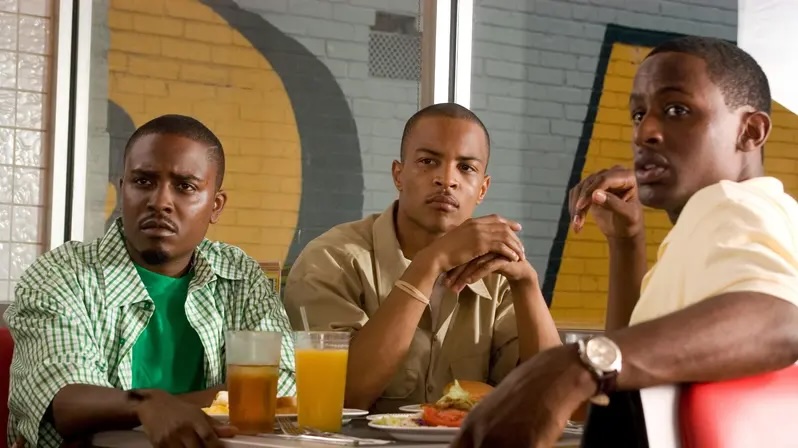
Remember when Friday nights meant meeting up at the skating rink with friends, back when getting ready felt just as important as actually arriving. In the early 2000s, closets were filled with oversized white tees, fitted caps, jerseys, and fresh airbrush designs that felt custom-made for the moment. Flip phones snapped open and shut between conversations while playlists filled with artists like Nelly, Ashanti, Ludacris, and Destiny’s Child rotated through the soundtrack of the era.
In Atlanta, though, the details carried their own rhythm. Cascade Skating Rink was not simply a place to skate. It was where the city gathered. MetroPCS chirps echoed through conversations, while lemon-pepper wings somehow became part of the ritual of the night itself.
The sounds of T.I., Outkast, Young Jeezy, and Usher shaped not just playlists, but the emotional atmosphere of the city. Atlanta still felt local then. Before the luxury rebrandings, before social media flattened regional culture into aesthetics that could be copied anywhere, the city moved to its own cadence. Neighborhoods still carried distinct identities, and the skating rink became one of the few places where all those worlds collided under the same lights.
That feeling became the heartbeat of the cinematic cultural force known as ATL.
Released in 2006, the film grossed more than $21 million and quickly became more than a successful coming-of-age drama. Starring T.I., Lauren London, Big Boi, Jason Weaver, Keith David, and Mykelti Williamson, the movie became a cultural timestamp for a generation that saw itself reflected in the quiet details of Black Southern life.
ATL understood Atlanta from the inside, and captured the humor, the ambition, the grief, the style, the vulnerability, and the communal nature of a city where everybody seemed connected by only a few degrees of separation.
The City Behind the Story
The skating rink sat at the center of it all because it represented much more than entertainment. Long before people started using phrases like “third spaces,” Black communities already understood the importance of places where people could simply gather and exist together. The rink was a social infrastructure. It was where friendships deepened and reputations formed. Young people learned how to carry themselves there. They learned how to read energy, how to move through community, and how to express identity publicly before they fully had language for any of it.
ATL captured that dynamic perfectly through Rashad and his crew. Played by T.I., Rashad carried the weight of adulthood long before he should have had to. He was balancing grief, responsibility, and the pressure of helping raise his younger brother while quietly trying to imagine a future for himself at the same time. Yet when he entered the rink, there was still room for laughter, flirtation, friendship, and possibility.
Too often, stories about Black neighborhoods flatten entire communities into narratives centered only on struggle. ATL resisted that instinct and acknowledged hardship without allowing hardship to become the sole identity of the people living through it. The characters experienced financial pressure, family tension, uncertainty, and loss while also making space for joy, romance, dreams, and personal reinvention. That duality reflected a truth deeply familiar to many Black communities. Marginalization may shape the environment surrounding people, but it does not erase their imagination, softness, humor, or humanity.
More Than a Skating Rink
What ATL understood so clearly is that places like Cascade were never just recreational spaces. They were communal anchors that were a part social hub, part creative incubator, part relationship center, and part sanctuary. It was one of the few places where people from different neighborhoods, schools, and walks of life could gather and where people were given permission to be seen.
That visibility mattered, especially for young Black Atlantans growing up in communities too often discussed only through the lens of deficiency or danger. Inside the rink, there was style, skill, vulnerability, confidence, performance, and imagination all unfolding at once.
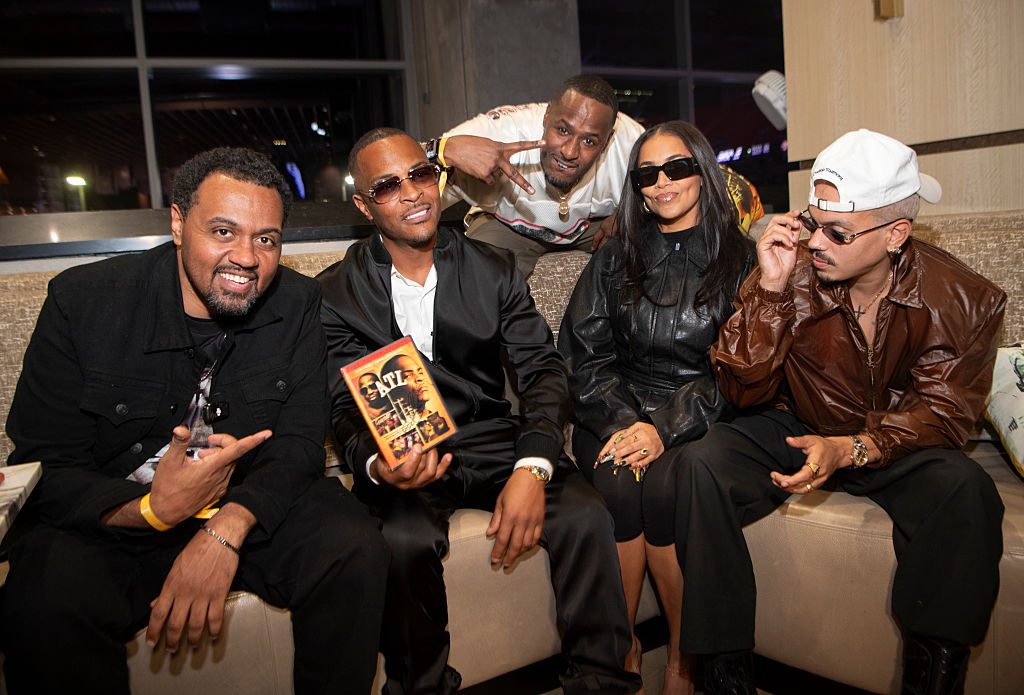
The film’s cultural richness is part of why its recent 20th-anniversary celebration felt so meaningful to the city of Atlanta. To commemorate the moment, T.I. transformed Mercedes-Benz Stadium into a large-scale tribute to ATL and the world the film created. The space was redesigned to resemble Cascade itself, complete with skating areas, arcade games, music, and visual callbacks to the movie’s nuances. As skaters moved across the floor and classic Atlanta records echoed through the stadium, the event felt less like a traditional anniversary celebration and more like a family reunion.
A Time Capsule for Black Atlanta
If you go back and watch ATL today, it will evoke a sense of nostalgia that is almost tangible. The city portrayed in the film feels increasingly difficult to preserve. Atlanta has grown into a global cultural capital, but in the process, many of the neighborhood textures and communal rhythms that shaped the city’s identity have shifted. ATL now functions almost like an archive of a specific era in Black Southern life, preserving not just the emotional experience of growing up in a community where dreaming collectively still felt possible.
And 20 years later, ATL still resonates because it reminded audiences that Black communities are never defined solely by what they lack. They are also defined by what they create together: culture, connection, resilience, and joy.
You can watch ATL, now playing on Tubi.