Formula 1’s global fanbase hit 827 million in 2025. Season attendance topped 6.7 million. The sport is growing faster in the United States than anywhere else in the world. And yet, if you’ve ever walked through a Grand Prix (GP) campus and looked around, you already know what the numbers don’t say out loud: Black fans are largely absent from the picture.
Attending a race isn’t cheap, and F1’s history hasn’t exactly built the kind of cultural infrastructure that makes Black people feel like this sport was made for them. But Miami is different. And this year, the race’s fifth edition, left one answer to one question: where is the Black culture at the Miami GP?
Here’s what EBONY found.
The Car Show That Felt Like Home
Black culture showed up days before the race, and it landed in Miami’s Riverside Studios.
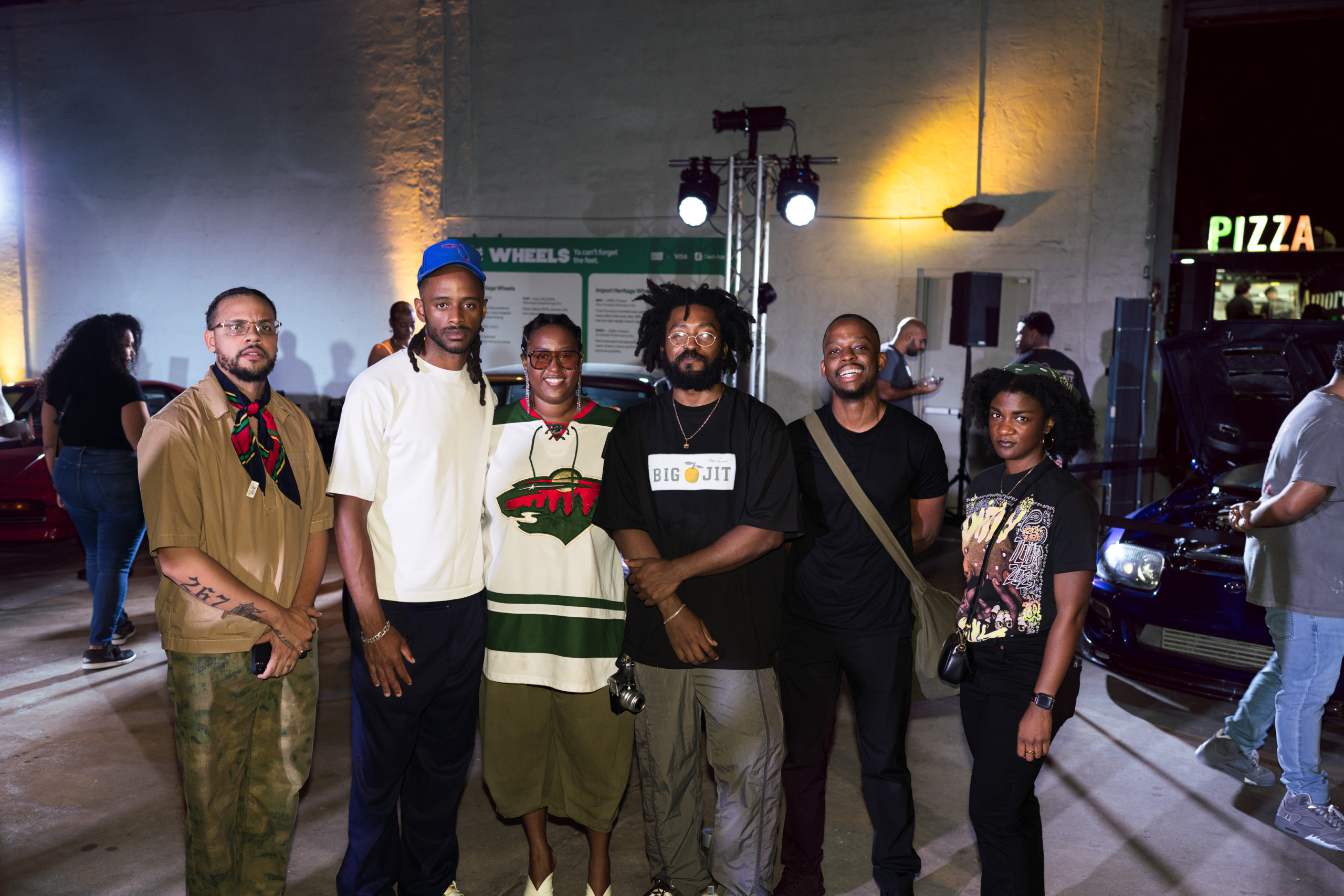
Esses, in partnership with Visa and Cash App, took over Riverside Studios for a block party and car show that stopped me in my tracks the moment I walked in. Inside the hangar, local fine artist Mark Delmont had curated a collection that told the full story of South Florida car culture: candy-painted donks, JDM legends, European classics, and purpose-built race cars, all sharing the same floor with a Visa Cash App Racing Bulls show car. DJs, local food trucks, live programming. The energy gave Black family reunion vibes.
“I think cars are a very international thing — everyone does it,” Delmont said. “But like many things, nobody does it like Black people.” He went on to say how our community tells their stories through cars — the custom interiors, the candy paint, the monograms on headrests.
“The one it came with wasn’t enough and it didn’t tell the story,” he said.
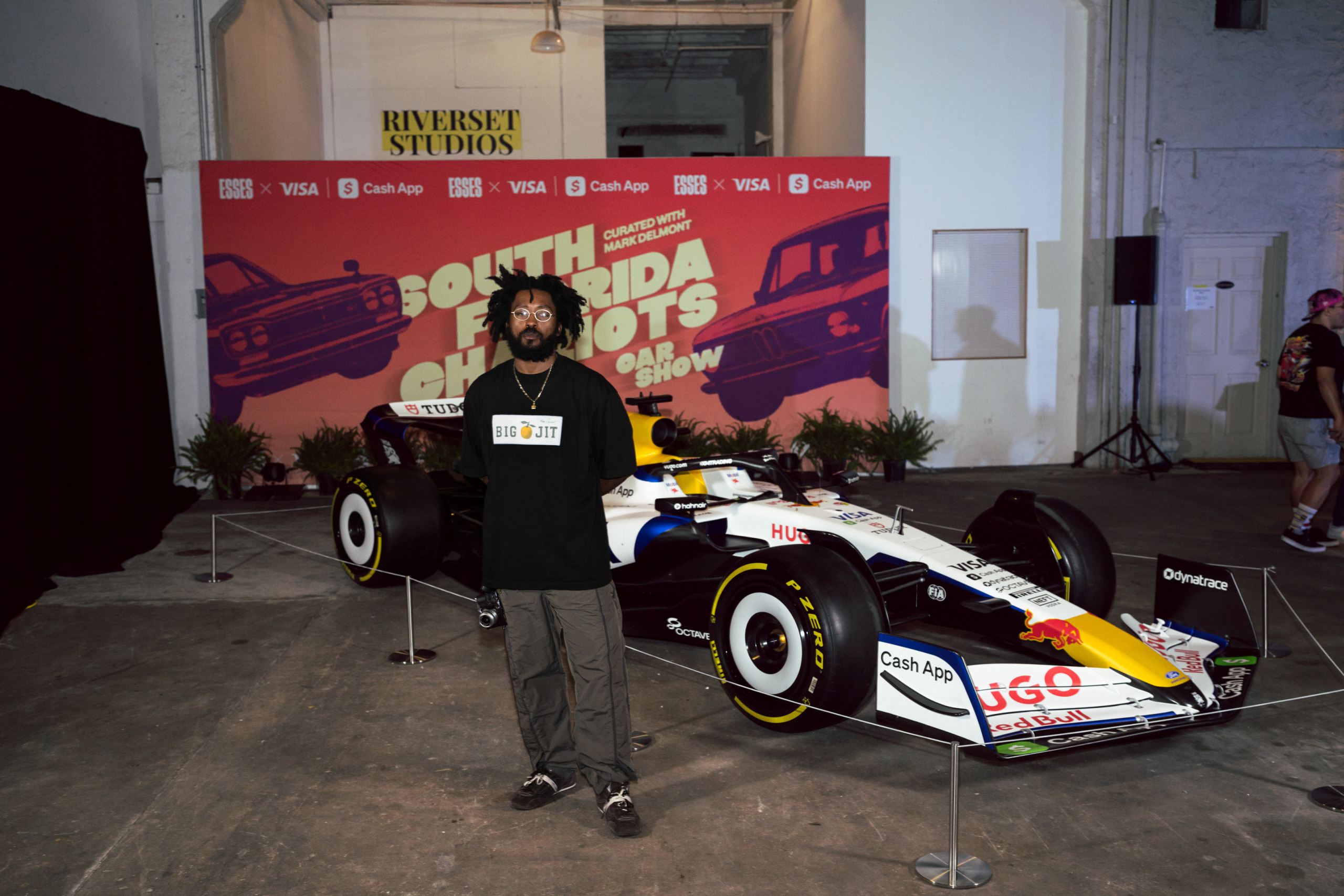
And the name of the event, South Florida Chariots, wasn’t accidental. “Before the cars, there were horses,” Delmont explained. “And we treat these cars like our horses.”
Ojus Jain, the founder and publisher of Esses, told me the community feel of the event was completely intentional. “Authenticity is at the core of it,” Jain said. He was also deliberate about what the show represented beyond donks and candy paint.
“The car culture here is very diverse,” Jain said. “We wanted to bring JDMs, we wanted to bring some Eurocars, to show that the culture here isn’t a monolith.”
Cadillac Pulled Up With a Story
F1’s newest team, backed by General Motors and TWG Motorsports, made its U.S. debut at Miami GP. The Cadillac Formula 1 Team brought Terry Crews along as their official team ambassador, and what makes that significant goes deeper than a brand deal. Crews grew up with a father who worked for GM, so the brand has always been embedded in his legacy in a way that felt deeper than just the place his father worked. His new 18-episode YouTube series, Crews Control —produced by Box to Box Films, the team behind Drive to Survive — premieres May 5, and it’s built around exactly the kind of storytelling Black F1 fans have been waiting for.
But the intentionality around Cadillac’s Miami presence extended beyond Crews. Jim Beam, one of the team’s brand partners, hosted a group of creators for the weekend, and the way they did it said a lot about the culture they are trying to build. New York-based F1 and lifestyle creator Tasia Johnson was among those invited, and she told me the experience stood out from the jump.
“Even down to the sunglasses they picked for me — they told me those were specifically picked based off my style and what they saw on my Instagram and my socials,” she said.
The welcome bag went even further: the products included — Topical and Brown Sugar Babe — were both Black women-owned brands.
“I think they were super intentional about the creators they picked and chose to have with them,” Johnson said, “And then also intentional about learning about us before the weekend.”
For Johnson, who built a community specifically to create an inclusive community for women and LGBTQ+ fans of the sport, being centered in a space like this isn’t just a nice weekend. It’s proof of what the sport can look like when brands do the work.
The Brands That Did the Work
Even the brands that built out full-scale activations were intentional about who was on their guest list, and that intentionality showed up in a big way this weekend.
At the Red Bull Energy Station, the guest list spanned Black creators and athletes. On the athlete side, Red Bull brought in Amon-Ra St. Brown, Jeremiah Smith, and DJ Lagway. On the creator side, the roster included Jalen Noble, Kordell Beckham, Anna and Lexie Learmann, Trechelle and Treona Andino, and Shaquan Parson.
But beyond the names, Red Bull’s media group also included a strong representation of Black women journalists — and that part matters just as much. When we’re the ones telling the stories, our people learn more about the sport. That’s how a pipeline gets built.
SheaMoisture was doing the same work off the circuit. For the second year running, the brand brought its Sheacation experience to race weekend. This time, the brand planted its flag on Lincoln Road with the Hot Off the Press Newsstand pop-up, where it showcased one of its newest products, Silk Press in a Bottle. The brand curated a group of Black beauty influencers and editors and brought them into the weekend as the center of the experience. Among those hosted included JaNa Craig, Monica Veloz, Kira Hominique, and Cindy Ogechi.
Exposure and Inclusion Are the Only Way Forward
It’s going to take a multi-stakeholder solution to bring more Black culture, Black leadership and Black fans into F1. It has to come from the front office, the teams, the brands, everyone. No single person or campaign can solve this, but Miami GP was a good example of how to address the lack of Black culture in the sport, one race at a time.
This is something F1 legend Lewis Hamilton, who currently drives for Scuderia Ferrari HP, has been vocal about throughout his entire tenure on the grid. It’s one of the main reasons he started Mission 44, his charitable foundation, which he built to expand STEM education for underrepresented people interested in Motorsport careers.
When it comes to bringing more of South Florida Chariots into Formula 1 itself, Delmont said, “It’s not a coincidence. This is all a formula in my mind. I can’t tell you there’s a perfect way to do it, but I do know how.” He smiled. “Just holler at me.”
That’s where we are. F1 is growing. The American market is wide open. But real Americans don’t look one way, and the work of exposure and inclusion — the real, intentional, unglamorous kind — is the only path forward.