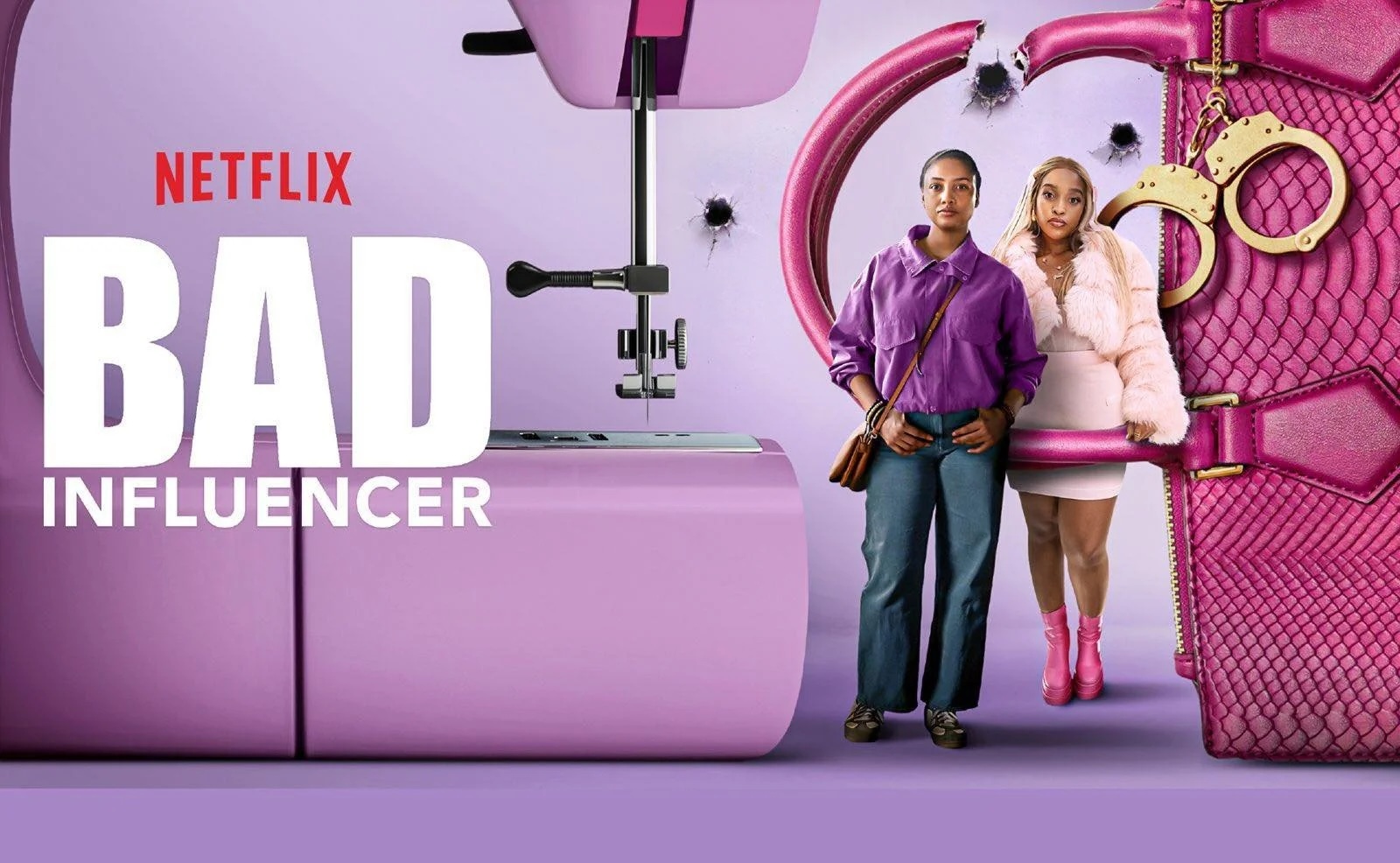
Netflix’s Bad Influencer doesn’t just expose the chaos of online fame; it holds up a mirror to the illusion itself. The show pulls viewers deep into the world of digital aspiration, where status is built on aesthetics, followers are currency and authenticity is negotiable. At its core, it’s less about influencer culture and more about survival in a system that demands you look like you have it all, even when you don’t.
The story begins with BK, a single mother trying to make ends meet while selling counterfeit designer bags to wealthy women who believe they’re buying exclusivity. She’s the kind of woman the influencer machine depends on but never acknowledges. For her, imitation isn’t deception, it’s survival. BK’s storyline reveals the quiet truth that sits beneath the glitter of luxury culture: that proximity to power and beauty is often manufactured, not inherited. Her craft and hustle are her rebellion against a world that tells her she’s not supposed to be in the room.
Her life shifts when she crosses paths with Pinky, a rising influencer chasing fame, belonging, and the dopamine hit of digital approval. Pinky is everything the internet rewards: ambitious, stylish, and willing to blur the line between performance and reality. She dreams of sponsorships, invites, and blue checks, but her friendship with BK reminds her that there’s a cost to all of it. Together, they form an unlikely bond that balances hope and hustle, each seeing in the other what they’re too afraid to admit about themselves. BK is grounded in reality, while Pinky is addicted to the fantasy. Their friendship becomes the emotional anchor of Bad Influencer, showing how the quest for relevance can both connect and corrupt.
Enter Naomi, the reigning queen of the algorithm. She’s sharp, strategic and addicted to her own reflection. Naomi represents the upper echelon of influencer culture, the girls who can turn a coffee run into a full-blown campaign. Every look is intentional, every caption calculated. She’s the embodiment of what everyone in the show is chasing, yet her confidence hides a deep fear of fading into irrelevance. Through Naomi, Bad Influencer unpacks what it means to build a life on perception and how easily that power can collapse once the likes slow down.
Together, these three women paint a layered picture of digital ambition. BK shows us the cost of survival, Pinky exposes the hunger for validation, and Naomi symbolizes the emptiness of success without substance. Each of them is fighting for visibility in a world that confuses attention with worth.
Anyone who’s scrolled through TikTok can see how familiar these dynamics are. The fakes, the flexes, the filters, it’s all part of the game. Behind every “soft life” video are people hustling to look happy. Bad Influencer captures that energy perfectly, showing how art imitates life and how far people will go to fit an image that doesn’t exist.
For Black creators especially, the show hits close to home. It highlights how cultural influence often gets stolen or repackaged, how the architects of online cool are still asked to prove their worth in rooms they built.
In the end, Bad Influencer isn’t just a show about social media; it’s a cautionary tale about how far we’ll go to be seen. In a world where validation is sold by the pixel and self-worth comes with a blue check, it’s a reminder that the real performance isn’t in the content, it’s in the pretending.