In every beauty controversy, there is usually a bigger conversation hiding beneath the surface. The recent debate involving Patrick Ta, Painted by Esther, Jackie Aina and Juvia’s Place is no different. What started as a discussion about creative attribution and beauty innovation quickly spiraled into a familiar cycle of internet distractions, ultimately shifting attention away from the person at the center of the conversation: Painted by Esther.
For those who haven’t been chronically online over the last few weeks, here’s a quick recap. In May, Patrick Ta unveiled his new Transition Blush collection. Almost immediately, beauty enthusiasts began pointing out similarities between the campaign’s application technique and Painted by Esther’s signature gradient blush method, a style many credit her with popularizing across social media.
The conversation initially centered on a larger question that beauty lovers have been asking for years: What happens when a creator introduces a technique that reshapes beauty culture but doesn’t necessarily receive the same recognition or financial opportunities as the brands that later capitalize on it?
Then the discourse took a turn.
How Jackie Aina Became Part of the Conversation
Ahead of the launch, beauty creator Jackie Aina shared a positive review of the product. Some viewers interpreted the post as an endorsement of Patrick Ta amid the growing criticism and quickly flooded her comment section with their frustrations.
Aina, a pioneer in the digital beauty space, regularly champions inclusion and frequently calls out the aesthetic inequities plaguing the industry. Her established history of inclusion-forward content has placed Aina on a pedestal within the online beauty community, a notoriously fickle place to be. From there, the entire situation devolved into chaos with many people then bringing up Juvia’s Place, a Black-owned beauty brand that has a similar dual blush palette style, akin to the one used by Patrick Ta.
In case you weren’t in the beauty YouTube streets back in the 2010s, Aina and the founder of Juvia’s Place have quite the history, which Aina briefly spoke on in a response video addressing the backlash she’s faced since posting her tutorial. In her video, Aina stated that there are no circumstances in which she would ever support Juvia’s Place, given the two’s previous history.
Large factions of the internet took this as a slight to Black-owned brands, but as some creators have pointed out, the specific issues between Juvia’s Place and Jackie Aina have nothing to do with the original issue at hand. Shortly thereafter, people started digging up old posts and rehashing a beef that started over a decade ago and has little to do with the issue at hand.
This topic shift is a recurring and frustrating phenomenon that happens anytime digital discourse blows up, and it often ends up doing more harm than good. Blame it on the phones or the nationwide adderall shortage, but as a collective, our focus is not where it needs to be, and that allows us to be easily distracted by external stimuli, which, while interesting, contributes nothing to the larger point at hand.
When Sidebars Eclipse the Main Topic
While there is undoubtedly a place for sidebars and supplemental information in any online conversation, the problem comes when those sidebars become the story. We end up in situations like this, where a non-Black creator is accused of disenfranchising a Black woman, yet the loudest criticism ends up being directed at other Black women and creators. That’s what makes this situation particularly frustrating. The central question was never whether Black-owned brands should be immune from criticism or whether creators should agree on every issue. The conversation was about attribution, influence and the ways Black beauty innovations often move from niche communities into the mainstream.
This shift in optics, while not intentional, has larger overarching consequences: The inciting figure in all of this, Patrick Ta, gets the focus shifted off of him without even trying. None of this is to say Black brands or creators are above critique, but in instances like these, there is no reason for the attenuation of the discourse to reach this extent.
What’s Next for Painted by Esther?
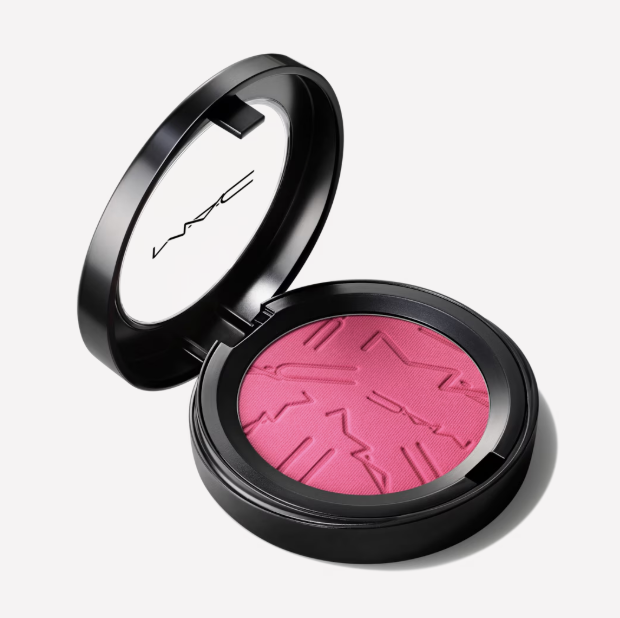
Thankfully, the discourse eventually boomeranged back to where it belonged: Painted by Esther. On May 27, the beauty creator announced a collaboration with MAC Cosmetics centered around the brand’s Skinfinish Colourstruck Blush collection, unveiled through MACzine and fronted by Love Island USA breakout star Olandria Carthen. There couldn’t have been a more fitting face for the campaign. Olandria’s now-viral blush looks helped introduce many beauty lovers to Esther’s artistry, making the partnership feel less like a coincidence and more like a full-circle moment. Long before gradient blush became one of beauty’s most copied techniques, Painted by Esther was demonstrating how placement, color and artistry could completely transform a face. Her approach has influenced countless tutorials, product launches and beauty trends that followed.
And perhaps that’s the real lesson here. Internet discourse will always find a new side quest and timelines will always chase the loudest argument. But amid all the noise, it’s important to recognize the innovators whose creativity pushes beauty culture forward. In this case, the person deserving the spotlight was never the controversy itself. It was Painted by Esther all along.
If you’ll recall, Olandria’s face was the canvas for one of Painted by Esther’s most viral gradient blush moments. The MACzine dives deep into the lore surrounding Painted by Esther’s coveted blush technique that has effectively turned the makeup world on its head. The girlies weren’t really putting blush under their eyes like this until Painted by Esther got into the picture, and that is worth acknowledging.
The timing of this announcement also could not be any better. Just before the discourse veered irreparably off course, we get to see Painted by Esther’s GOATed blush technique get the shine it deserves, which should have been the point of the entire discourse from the beginning.