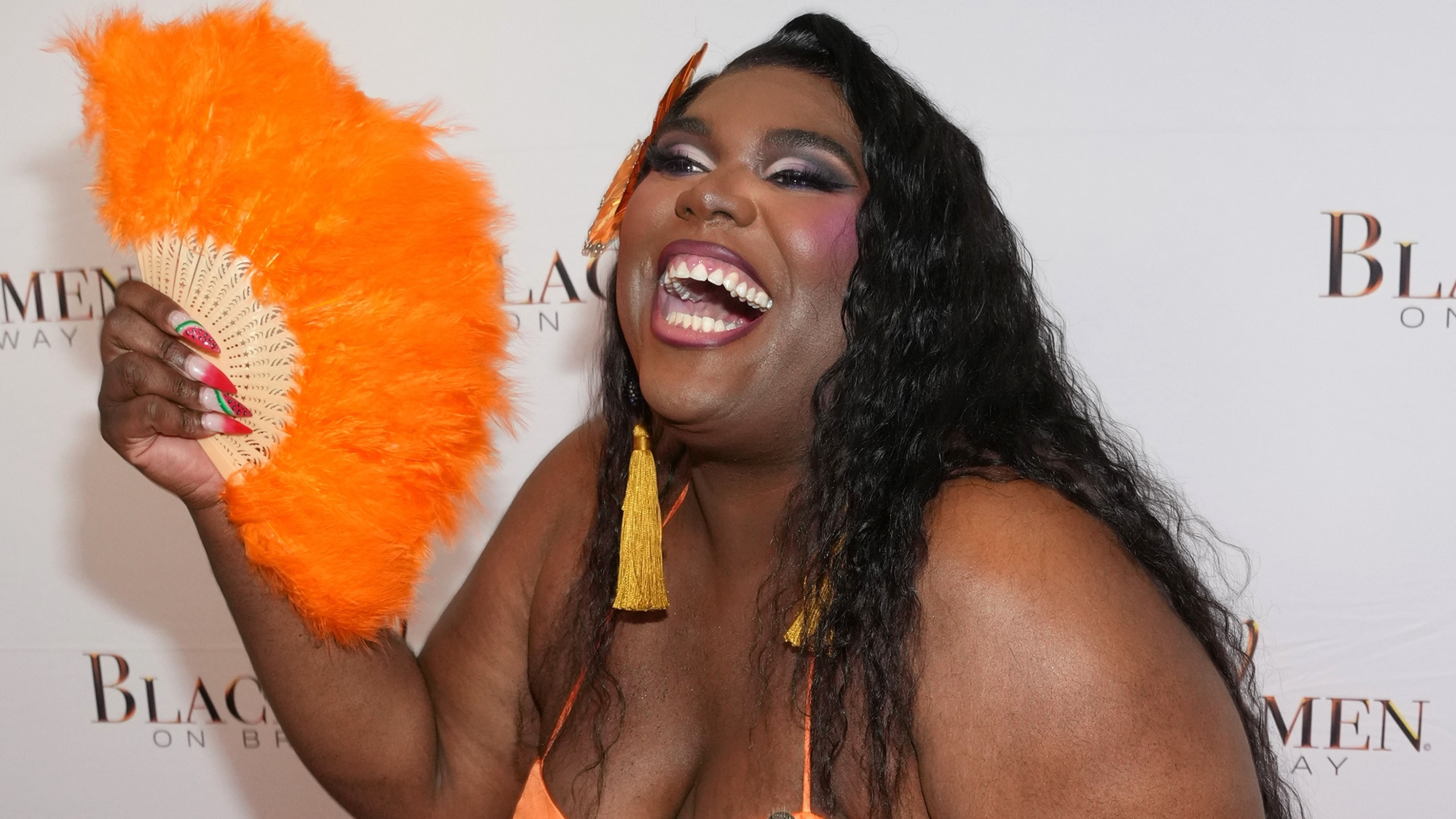
For decades, Black queer stories have fought for space on Broadway. This season, they’ve taken center stage. Cats: The Jellicle Ball, a ballroom-inspired reimagining of a classic musical, and Liberation, an exploration of power, identity, and self-determination, are just two productions celebrating Black queer joy, shaped by dedicated creatives.
No one embodies that more than costume designer Qween Jean, whose work on both productions earned her two Tony Award nominations in the costume design category for the 79th Tony Awards.
“On Broadway this season, we are seeing unbound, unshackled, untethered artists living their best selves, dreaming and singing their songs without any persecution, without any fear, without any reservation,” Qween exclaimed to EBONY while glamming for The Fifth Annual Black Women in Broadway Awards ceremony later that afternoon.
Getting dually recognized for her work has been a welcome acknowledgment of the many stories woven into the LGBTQ experience. “I was on FaceTime, and my friend said, ‘Girl, it’s good,’ and then they said, ‘No, it’s even better.’ I just started crying. I actually wept.”
But her dedication to the stage, especially in LGBTQ spaces, goes beyond awards. “It is our duty to fight for our freedom,” she declared.
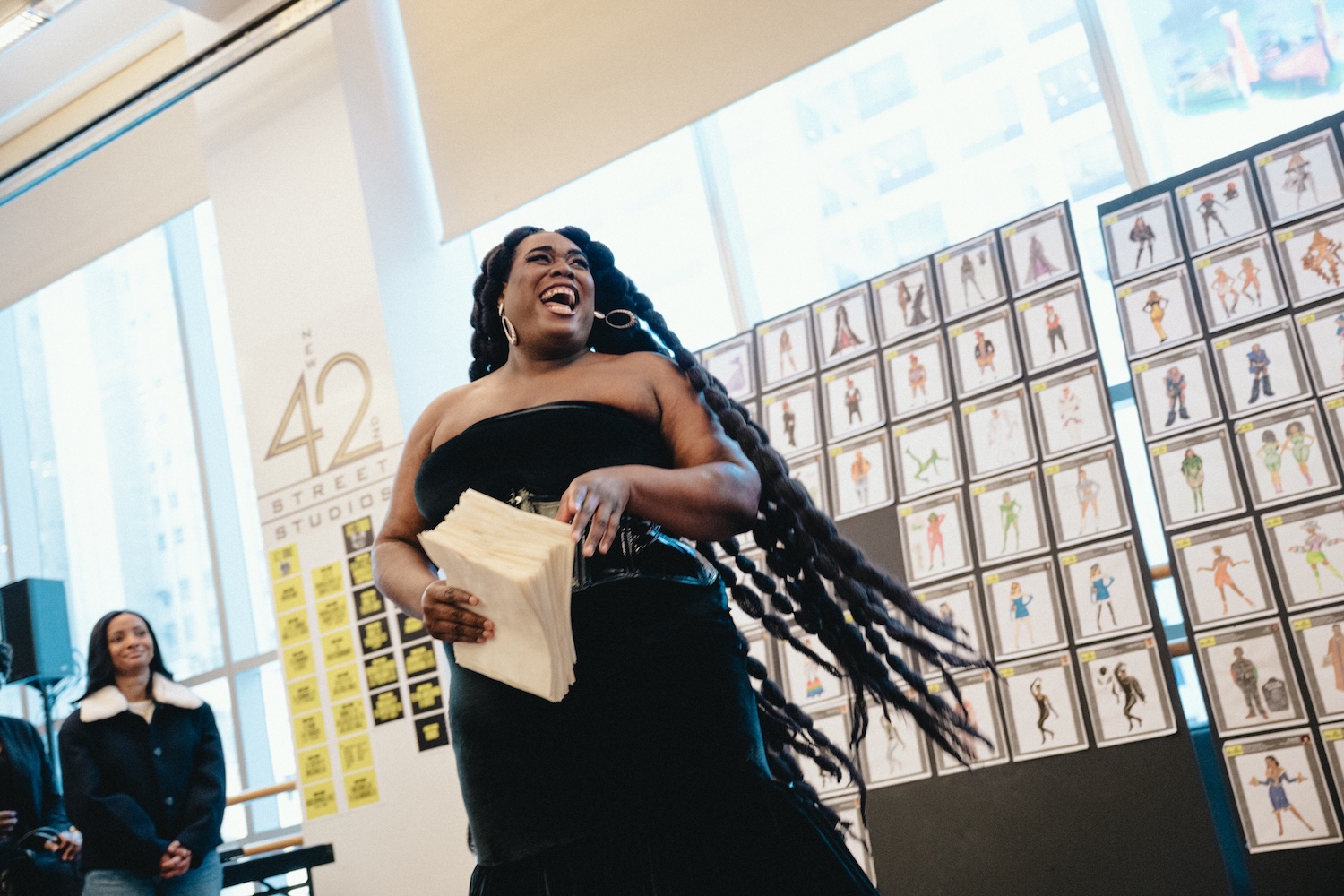
“There are so many incredible Black queer femmes and folks in this industry who are talented and incredible storytellers. I personally feel that Black folks are oftentimes the best storytellers. It’s part of our bone marrow. It’s part of our legacy. It’s part of the ancestral anointment we’ve been bestowed from past generations. We’re taking up our space in this moment.”
With the 79th Tony Awards happening this Sunday, June 7, and Pride Month beaming bright, Queen Jean opens up to EBONY about
EBONY: You earned Tony nominations for two very different productions, Cats: The Jellicle Ball and Liberation. What was your reaction when you heard the news?
Qween Jean: For a young Black artist in this city, many of us who’ve made many sacrifices, this recognition has meant so much. For me personally, for the community, for all of the mentors, teachers, and guardians who have poured into me and sold into this mission, it has really felt like a dream come true. I’m elated. I don’t even know. Everyone keeps saying, ‘I think this is quite epic and historic,’ and that feels special. I also know it shouldn’t be the last. Sometimes I still feel like, “Is this real?” Then I’ll go into the bodega, and the guy’s like, ‘Yo, two nominations.’ Even the homies at the deli are excited. For me, that’s part of the joy. That’s the manifestation of everything.
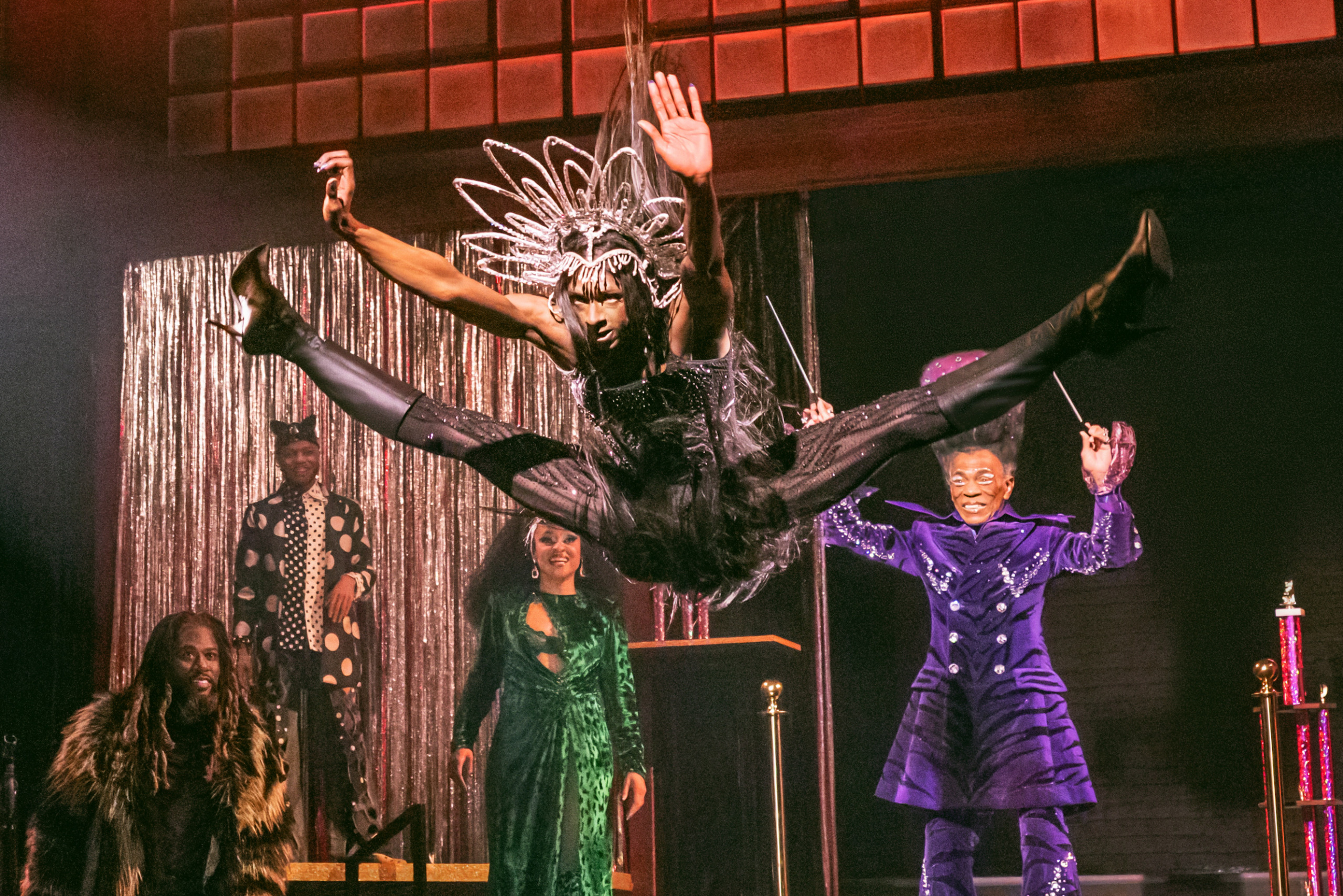
What drew you to Cats: The Jellicle Ball?
I get so emotional just thinking about it. I think oftentimes queerness has been represented as existing in only one age group. Like, queer people only exist from 16 to 25. But queer people grow up. They evolve. They flourish. They build families. They build communities. They sustain legacy. This production reminds the world about the importance of celebrating our elders.
What is really magical is that we’re celebrating our elders and giving them their flowers. That’s something our community innately does because, as we celebrate and rejoice, we’re also mourning. Oftentimes, folks aren’t able to become elders. So what a gift it is when they do. Our queer elders deserve to be appropriately celebrated.
You are working with icons in the community who are starring in Cats.
Hearing Junior Labeija’s voice as soon as the show begins is like a sermon. It’s stirring. It is a provocation of what you’re about to experience. Having their voice launch us into this revolutionary theatrical performance is so correct.
I think about [Tony nominated] André De Shields, Broadway deity and icon, whom I have admired my entire life. To be able to dress them in this way, I didn’t even dream this far.
I think about Tempress Chasity Moore. Honey, she is the face, the card, the mug. She is the beauty on Broadway. To be able to dress her feels absolutely amazing.
I also think about O’Shae Sibley, who was murdered three summers ago because he was voguing to Beyoncé at a gas station. We took to the streets immediately and held an entire ball at that gas station in the name of love. Voguing is not a crime.
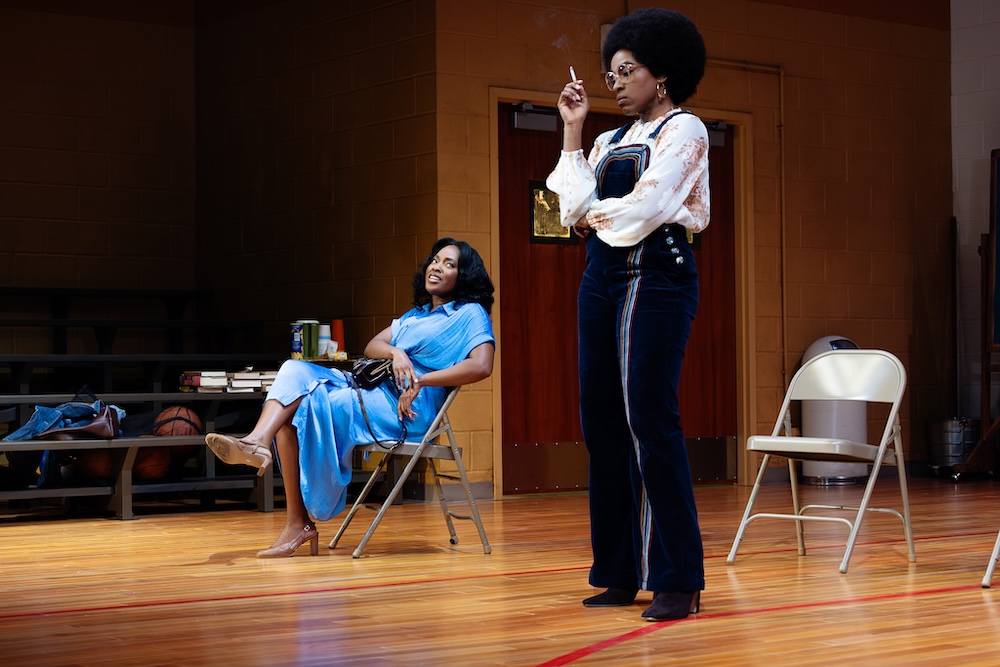
Moving over to Liberation, how did you use costuming to tell the story of women finding their voices and empowerment?
This question really resonates because of my own upbringing. I’ve always been around powerful women. I grew up seeing women in leadership. It wasn’t until women showed up that things started to change. Seeing my mother do that in her work and congregation, seeing my sisters manage their children, go to work, run households, pay bills, help with homework, show up for recitals and practices, make lunches—I was always in awe. They were the engine of our lives. The battery pack on our backs. They pushed us through and served as so many points of faith. That shaped my understanding of women and my love for women.
Going into Liberation, I thought, we actually get to illustrate this to the world. We see women of all backgrounds and ages. Some are breaking into industries and trying to shatter glass ceilings. Others are domestic engineers trying to break out of prescribed roles. But the truth is, they were always the leaders. We also see women stepping into caregiving roles while confronting economic, racial, and environmental injustice. Reading the script, all of these images came to mind. I kept asking, ‘How do we enhance these portraits of women?’ The answer was if we can enhance, beautify, and reveal the authenticity of women’s power, and that is innately connected to the women’s liberation movement.”
What do you hope audiences take away from the celebration of Black queer joy we’re seeing on Broadway this season?
I hope people take away what I’ve always known to be true: it is our duty to fight for our freedom. It is our duty to win, as Assata Shakur reminds us. We must love and support one another, and we have nothing to lose but our chains. On Broadway this season, we are seeing unbound, unshackled, untethered artists living their best selves, dreaming and singing their songs without persecution, fear, or reservation. They’re doing it with a loving spirit.
For those of us actively engaged in this fight, it’s remarkable to see the impact in real time—from audience members, churches, schools, and community organizations showing up by the busload. That has been a deep-seated confirmation. We are not only seated in our purpose. We are empowered with pride.”
It’s Pride Month. How will you be celebrating?
“I might be outside every day. I’m known to be outside. But I’m also known for reminding folks that Pride has always been a protest. We are in a moment of deep, unbearable pain and agony in this country. Divisive rhetoric continuously impedes our joy. There are attacks on all of our communities and the intersections we occupy: Black, queer, trans, Indigenous and immigrants. For me, it feels as if the system is trying to usurp our liberation. I think it’s up to all of us to say no. To say this is not acceptable. We will not allow humans to be treated this way.
Young folks need medical attention, access to therapy, and support. Oftentimes, young queer kids have had to become survivors of trauma, and sometimes that trauma is inflicted by their own loved ones. People need a way to heal. That’s what Pride means to me. It’s actively reckoning with the fact that there is still so much more work to be done. The facade or distraction of a parade is just that. There are still lives being impacted. Black queer lives still need resources. We still need housing. We are still being persecuted.
For me, these issues are always at the forefront of my mind because I know that as a Black queer person living in this country, every day, something has tried to kill me, and it has failed. It is up to all of us to show up for our neighbors. We cannot be distracted. We cannot be bamboozled by people trying to celebrate us during Pride while ignoring what happens on July 1.
We are deeply honored to be celebrating on Broadway right now, but for us, the next step is not only visibility. We must focus on vitality and ensure our elders can grow, be supported, and be cared for from 8 to 88 and beyond.