
Lisa E. Davis is a premier entertainment attorney and now an author with decades of experience working with creative visionaries to help them secure the best deals possible. The veteran attorney grew up in the New York City suburbs, enjoying arts, culture, and entertainment. She also always wanted to be a lawyer, so she figured out how to combine two things she loved. Her brilliance in law, where she represents people in film, television, publishing, music, theater, and sports, comes with a breadth of knowledge that is especially important in the digital age, where the lines of theft and ownership have gotten even more blurred.
“My mission in having this career was to protect all artists, but Black artists in particular, and have someone that could translate for them, the arcane ways of the business, the ways that money flows in the business, and the underlying thing that Black people have always created that is so incredibly valuable, which is intellectual property, and that takes all kinds of forms,” Davis told EBONY.
The Black history of intellectual property in America dates back centuries and is still being written; these days, it’s unfolding online. There are examples of AAVE exploding on the internet, but then being repackaged as “Gen Z slang,” or AI videos perpetuating negative stereotypes, and more.
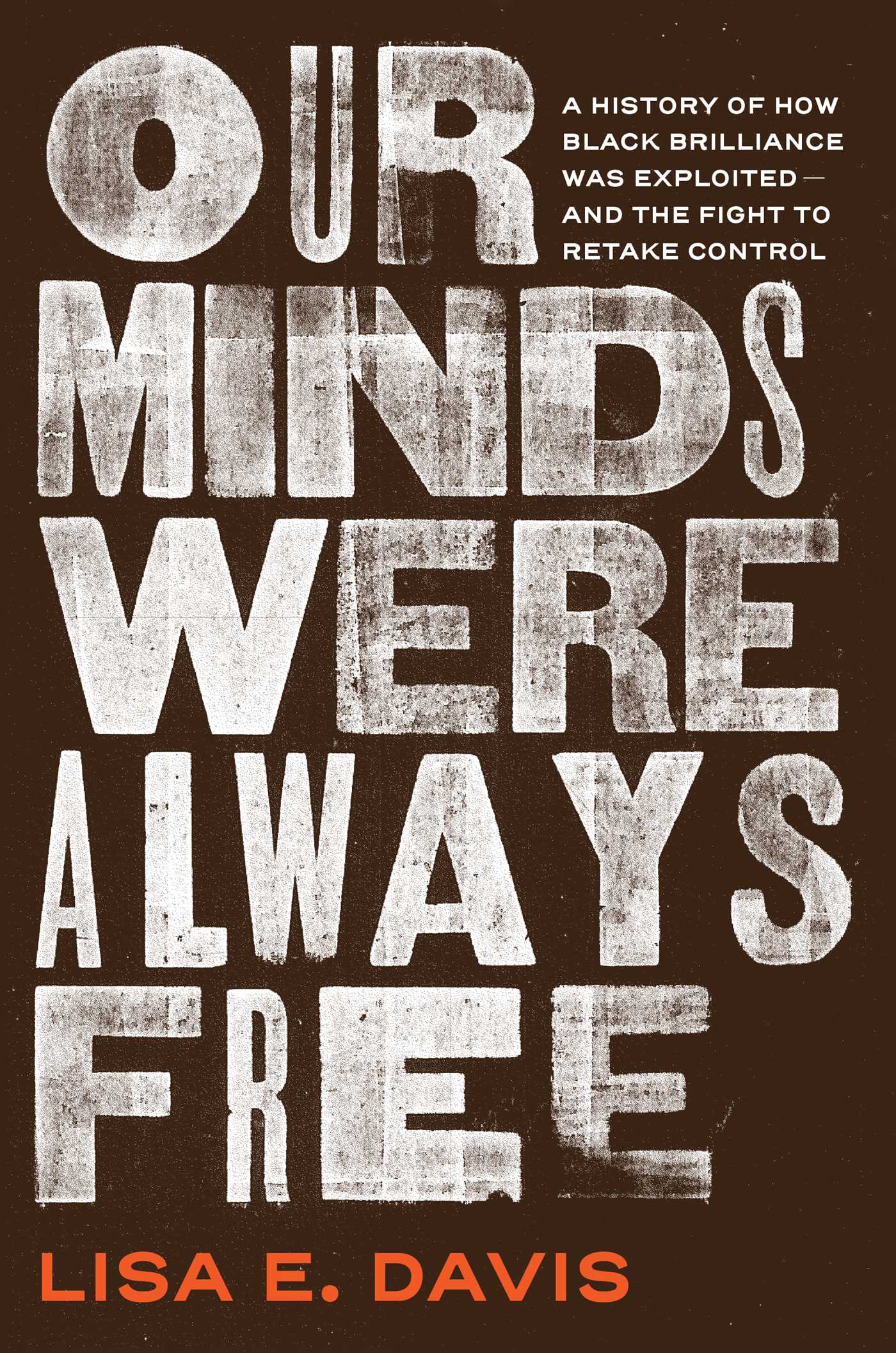
We’ve been here before, but it’s time we learn from past events, and that’s where Davis’ new book, Our Minds Were Always Free: A History of How Black Brilliance Was Exploited, and the Fight to Retake Control, comes in. It’s a history of peaks and valleys throughout the world of Black ownership, from the enslaved man in 18th-century Boston whose knowledge of smallpox inoculation led to the vaccine, and Thomas Jennings, the first Black man to get a patent, all the way to the digital age. The point of the book is to provide not only knowledge but also empowerment, so that creators can learn to take ownership of their ideas.
EBONY caught up with the legal dynamo to break down the brilliance of and within her debut book.
(This interview has been condensed and edited.)
EBONY: It took five years to put the book together, so tell us about that journey and how your life’s work influenced the content.
Lisa E. Davis: I’ve spent more than three decades of my career doing these deals, working with creative people, trying to get them the best deals, trying to preserve the integrity of their voices as much as possible. And then two things happened. One, when Trump was elected in 2016, it was a shock to the system and a gut punch for everyone. And I just started writing about how everything he was doing was a departure from the Constitution, federal statutes, and custom practice, and I was particularly concerned about how this was impacting Black people and the most marginalized people. So, I decided to turn the lens on the area of the law that I’ve been practicing for these many years, and widen the lens and go back because a lot of this is racism. Racism is born of either people who are ignorant of what we’ve accomplished, or people who know and what to use it against us.
In the five-year journey, I had three incredible research assistants, three Black women law students, two of whom are practicing lawyers now. But I would say, for example, “I want to know the legislative history of New York City’s cabaret card laws. The cabaret card laws are why Billie Holiday couldn’t perform for a decade. It’s why Thelonious Monk couldn’t perform for a decade in New York City jazz clubs. New York City was the epicenter of jazz. The clubs where people made money, and there was this power to just take those rights away from Black artists. They took them away from white artists, too, but I wanted to drill down that far to show people that it was usually informed by race, and when you do the research, you get the proof that that’s what was driving it. So, I wanted to draw a portrait of the things that we’ve done, and I learned that the first Black man to get a patent was Thomas Jennings. What he developed was the basis for dry cleaning that we use today. My grandfather had a dry cleaner. That’s how we, like the Jeffersons, got our little leg up, but I didn’t know this, and the fact that [Jennings] plowed the wealth that he made into the cause of freedom for Black people — at the end of the book, I say that all of these people have lessons to teach us, and I do think that when you go back and you look at how those of us who successfully were able to not only create intellectual property, but monetize it and benefit from it, how we used that power to either help the broader community or change the image of Black people — that’s what we have to be demanding of ourselves as artists and creators today, and of artists and creators that we love.
One of the themes I noticed throughout the book is that, in many instances, the law moved very slowly and wasn’t aligned with the technological advancements of the time. We’re also seeing that still play out today, especially with AI. Why has that been such an issue?
There are a couple of reasons for it. One, just generally, the process of making laws takes time, so when you have, as I talked about in the beginning of the book, the pace of technological change has always been faster than the law. We had a copyright act in 1909, then another in 1978. Here we are, almost 50 years later, and we’ve had amendments, but we haven’t had a wholesale overhaul of copyright law. And of course, the pace of technological change has exploded in the 21st century, so it’s even faster. The other problem is that we have a gerontocracy on Capitol Hill, and they don’t understand. If they’re using an iPhone, we’re lucky, and they’re not on TikTok. They might be saying, “My granddaughter’s on TikTok,” or something like that, but they don’t have any idea. Then, in addition, there has been a long-standing pattern in this country of stealing the creativity of Black people, erasing their origins, and rebranding it.
Part of the reason I wrote this book is that I want Black people to understand, for example, every platform they are monopolizing, your attention is the product, and they are all engineered to keep you on the platforms. We can talk about Twitter. What made Twitter sexy was Black Twitter, and then you get [Elon Musk] buying it and taking all the flavor out of it, and now we’re not there anymore. I don’t know if there’s still any value in it, but the point is our presence is creating value that we didn’t even get a piece of in the old days. When you had a record company, and you were a Black artist making a physical product of a vinyl record, or a CD — it may have been an exploitive economic deal — but there were physical copies being sold, which could be counted, and you had a royalty that you were paid. In the last chapter, I did a whole illustration and showed the difference between the royalties artists made in 2,000 when we were still talking about physical copies or even on iTunes, where they are paying a higher rate versus what they get from streaming. So, I would say Black people, creative people, in general, regardless of race, need to be thinking about whether or not they can own their own intellectual property, and what platform they put it on. Because if you have platforms that are owned and controlled by people whose reason for being is to erase and persecute everybody — they want to create a society of serfs and overlords, and they will be the overlords and everyone else will be a surf — and I know it sounds like I’m a Luddite, but I’m saying, of course, you want to get to an audience, but you need to think about if there is a parallel system that we can think about building.
Some of the stories of theft in the book are infuriating, but there’s also an underlying message of hope throughout. Talk about that.
I worked with a sister named Lori Tharps, who is a writer [and] she said, “For each of your chapters, you should pick a winner and a loser, so that you thread because it’s not because it’s going to make the book more balanced and more helpful if people realize we didn’t always get taken advantage of. A lot of times, we figured it out, which means we’re capable of not only coming up with an incredible new genre of music but also protecting it, getting credit for it, and monetizing it. So, she helped me think of it that way. And so every chapter was like, okay, you’ve got Billie Holiday, but you’ve got Monk. Yes, it’s, unfortunately, a lot of times it’s the women because the burden of racism and misogynoir is a lot to overcome, but even with Bessie Smith, she got taken advantage of, but she was one of the highest-paid performers while she was alive. The issue was that, because she was taken advantage of, her ability to make all that money died with her, so that’s the difference.
Finally, what do you hope people take away from the book?
I hope people take away a greater understanding of the genius of Black people. It’s not simply that they picked cotton or even that they make great music. It is in every area. We were always making a way out of no way and coming up with things that were what make America America. It’s the music, the food, the rhythm, the swagger, the style, all of it is us, and a lot of it is things that we can actually copyright or trademark or patent and can get credit and money for, and then we can plow that back into our families, and our communities, while making the country and the world a better place.