Congressional Black Caucus Condemns EEOC Rollback of Workforce Data Collection
The Congressional Black Caucus condemned the Trump administration’s decision to end a decades-old requirement that employers report workforce demographic data to the Equal Employment Opportunity Commission, calling the move a threat to civil rights enforcement that has for more than 60 years helped identify patterns of workplace discrimination against Black and minority communities. The CBC said the administration should be strengthening accountability for employers, not weakening it, and called the decision to dismantle a key oversight tool “outrageous.”
The Impact: Losing the EEO-1 data would eliminate a tool researchers, regulators and employers have used for six decades to track discrimination by sex, race and ethnicity across job categories. Without that visibility, workers may bear more of the burden of proving discrimination, even as employers face less compliance exposure. Civil rights groups warn the change could make disparities in hiring, pay and promotion far harder to document nationwide.
Black Candidates Score Key Wins In Michigan Democratic Primaries
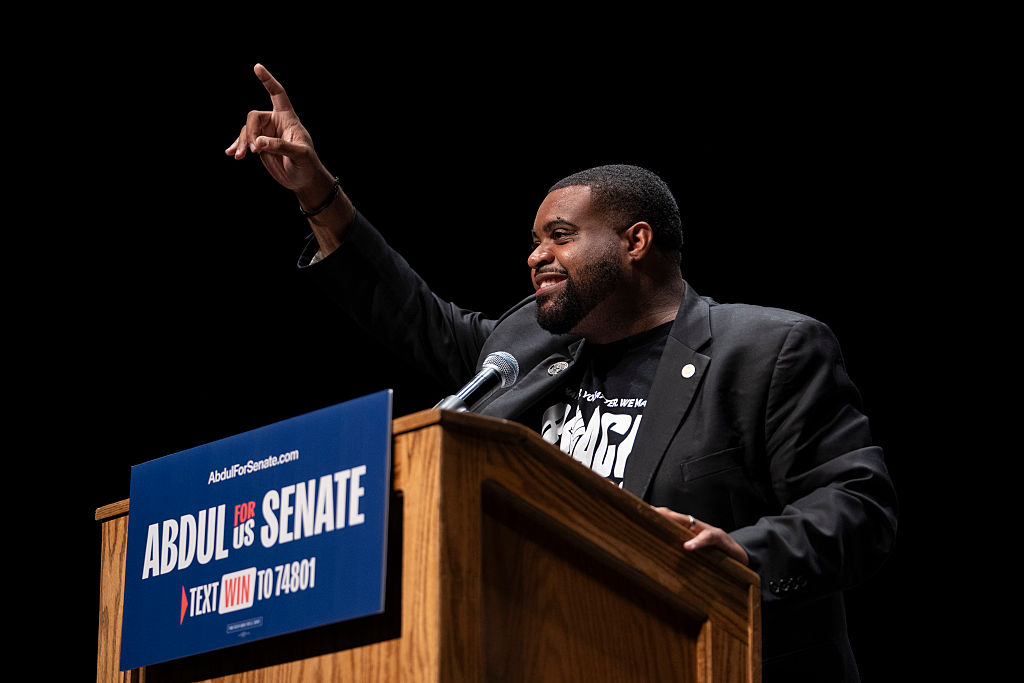
As midterm elections heat up, Michigan Democrats delivered victories for the party’s progressive wing Tuesday, as Abdul El-Sayed won the Democratic nomination for U.S. Senate and Donavan McKinney defeated U.S. Rep. Shri Thanedar in the Democratic primary for Michigan’s 13th Congressional District. El-Sayed narrowly defeated U.S. Rep. Haley Stevens by less than 1 percentage point, according to The Associated Press. McKinney defeated Thanedar 52% to 48%, according to unofficial results. McKinney, a state representative, campaigned on restoring Black representation to a Detroit-based congressional district.
What’s Next? El-Sayed will face Republican Mike Rogers, a former congressman who lost the 2024 Senate race to Democrat Elissa Slotkin, in November. The contest could help determine control of the Senate. McKinney is expected to be heavily favored in the November general election in the heavily Democratic 13th District. El-Sayed previously served as Detroit’s health director and ran unsuccessfully for governor in 2018. McKinney has served in the Michigan House since 2023 and represents Detroit and Hamtramck.
Former AG Eric Holder Endorses Keisha Lance Bottoms For Georgia Governor
Former U.S. Attorney General Eric Holder has endorsed Democrat Keisha Lance Bottoms for governor of Georgia, bringing a prominent voting rights advocate into a closely watched 2026 statewide race. Holder, the nation’s first Black attorney general, said Georgians have an opportunity to push back against Republican efforts to manipulate congressional maps and protect voting rights. The endorsement comes as redistricting battles continue across the South this year.
Looking Ahead: Bottoms will face Republican Rick Jackson in the Nov. 3 general election. Jackson, a billionaire health care executive, defeated Lt. Gov. Burt Jones in a June GOP runoff to secure the Republican nomination. Georgia’s incumbent Republican Gov. Brian Kemp is barred from seeking a third consecutive term. Bottoms served as Atlanta’s mayor from 2018 to 2022 and later served as a senior adviser to President Joe Biden. She won the Democratic nomination outright in May with 56% of the vote, avoiding a runoff.
Senate Moves To Advance Protect College Sports Act Amid Concerns Over Impact On Black Athletes
The Protect College Sports Act moved closer to a Senate vote Wednesday after Majority Leader John Thune filed cloture on the bipartisan legislation, setting up a potential floor vote before the August recess. The measure passed the Senate Commerce Committee 19-9 in June and would establish federal rules for college athletics, including national protections for athletes’ name, image and likeness (NIL) rights.
The Bigger Picture: Sens. Maria Cantwell, D-Wash., and Ted Cruz, R-Texas, introduced the bill May 27 over NIL, transfers, revenue sharing and the future of the NCAA. The legislation would create a $22.5 million retention fund, guarantee scholarships for 10 years after eligibility and require Division I schools to provide medical coverage, while also limiting athletes to one transfer without losing eligibility. The Congressional Black Caucus has urged lawmakers to pause the bill, citing concerns about athlete protections and college athletics’ response to attacks on Black political representation and competitive fairness.
The SAVE Act Is Stalled. Why Black Voters Should Still Be Watching
President Donald Trump has escalated pressure on Senate Majority Leader John Thune to pass the SAVE America Act before the August recess, a bill requiring proof of citizenship, typically a passport or birth certificate, plus photo identification to vote. Trump told Thune not to let the Senate leave town until it passes the bill or eliminates the filibuster. Senate Republicans remain divided, with a handful joining Democrats in opposition throughout 2026.
Why It Matters: The bill could disenfranchise roughly 20 million Americans who lack ready access to citizenship documents, experts say. That burden would fall hardest on Black voters: research from the University of Maryland, VoteRiders and the Brennan Center found citizens of color are three times more likely than white citizens to lack documents like birth certificates or passports, and roughly two-thirds of Black adults don’t have a passport. Advocates note birth certificate access is especially uneven for Black Americans born in the Jim Crow South. Nearly half of Black Americans under 30 lack ID bearing their current name and address, adding another registration hurdle ahead of the midterms.