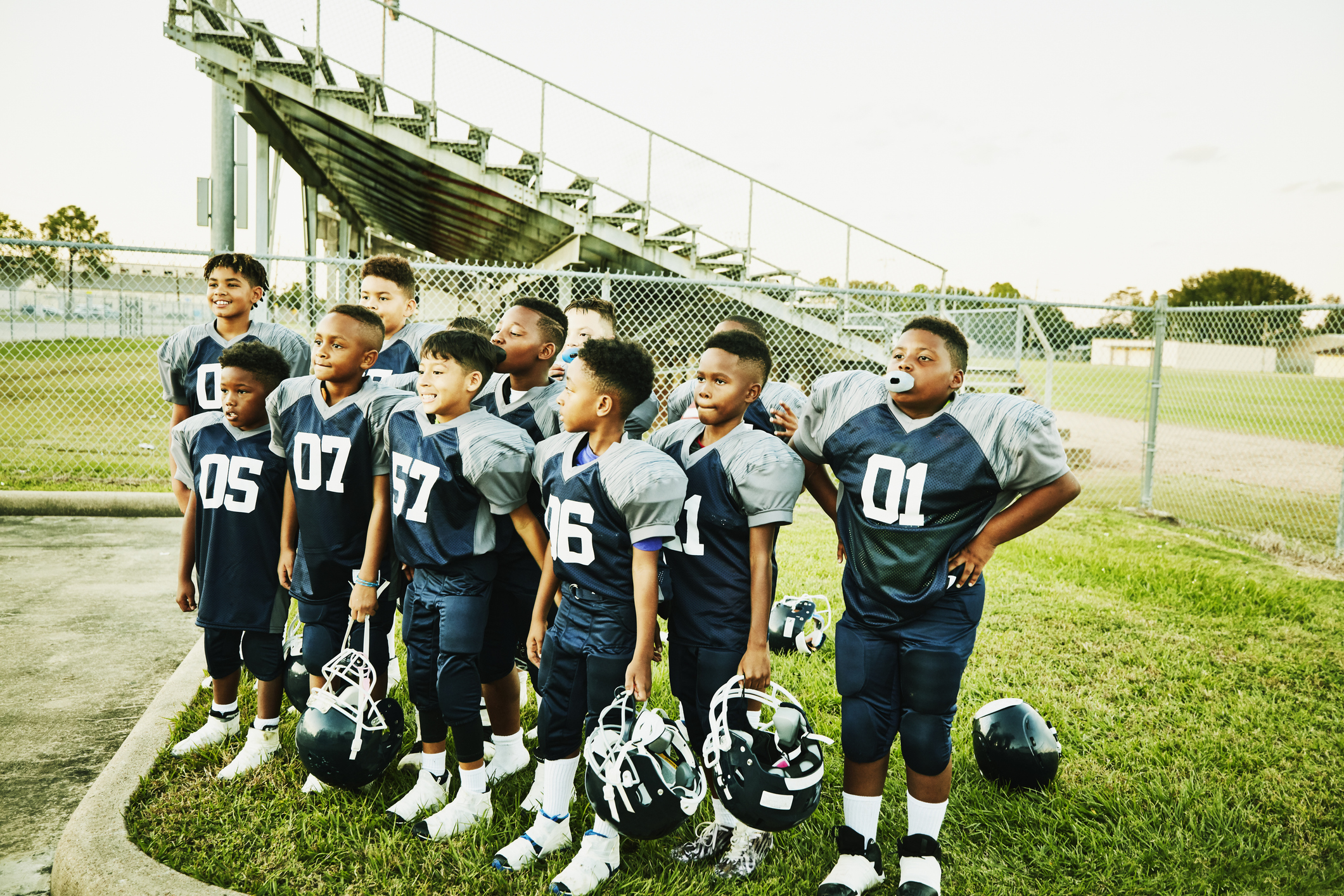
Before returning to the Tampa Bay Buccaneers in 2025, at the time, retired NFL quarterback Teddy Bridgewater took a short stint coaching at Miami Northwestern High School. This act of public service, however, did not come without controversy. After covering rides to and from practice and providing meals to his players, Bridgewater was suspended in 2025 for “impermissible benefits”.
These acts were cited as a violation of the rules of the Florida High School Athletic Association.
“When I decided to coach, those players became my sons and I wanted to make sure that I just protect them.” – Teddy Bridgewater
This is what we’ve come to as a society, or have always been. Acts of care and concern in circumstances where they are needed are viewed as practically a form of cheating or unfair advancement.
Thankfully, in Bridgewater’s case, as of this year, the ‘Teddy Bridgewater Act‘ was passed, allowing coaches to use personal funds to support players. Bridgewater, among others are those who understand something major in the professional sports industry overlooks: the field, the courts, the tracks (and other sports) are often the only structured space and support that some kids have.
WHO GETS TO PLAY? WHO GETS LEFT OUT?
When most kids join a team, they’re usually looking for a physical outlet. Maybe their parents hope they make a new friend, or perhaps they’re just getting them to participate in some extracurricular activities.
However, for a certain few, that very decision can be a matter of life and death. Football, basketball, and track are the cornerstones of urban/low-income communities, leading the development of discipline, structure, and camaraderie. For many, sports are a one-way ticket out.
That dream doesn’t happen without the men and women who ask for absolutely nothing in return. Some call them coaches, but to others, they’re much more than that. Often dubbed as parental units.

This is the cultural layer that goes beyond the scoreboard, yet still makes its impact in professional sports. For starters, Black players in both the NFL and the NBA have historically and currently make up the majority of both sports, with the majority of NFL players coming from lower-income backgrounds, according to the Human Kinetics Journal.
The NBA is in the midst of a major uprising, as the face of the game is evolving from inner-city youth, doing whatever it takes to “make it,” to families who have the means to enroll their kids into controlled leagues (AAU). This is all because funding has been snatched from said inner-city programs when community funding was ample. There were community centers, staff that ran them, games, and coaches. Equipment and travel were even covered in many cases. More recently, there’s been an obvious drop off.
THE CASH SHIFTED
According to Beyond Sport, public funding for youth sports has been on a steady decrease since the 1970’s, thanks to municipal budget cutting across the U.S. This has left communities with a pay-to-play model, leaving lower-income families without other options in many cases.
The question then becomes unavoidable: Have controlled leagues priced those from lower-income homes out? And is it intentional?
For decades, instead of accepting the gap, community organizations, churches, and individual coaches doubled down. Even more so, it’s been the generosity of coaches sustaining youth sports in these communities. Many of whom see these acts as a calling.
From creating independent leagues, crowd-funding equipment and building programs from nothing, the labor of love these coaches emit goes mostly unnoticed and sometimes punished.
These makeshift moves proved to be more than about wins, but moves that ensured leadership, scholarship, and self-value. Matters of safety and love have also found their way to these spaces.
Like Bridgewater, longtime Coach and Athletic Director, John Beam of Skyline High School and later, Laney College has made huge strides with his players. Holding a 90% transfer/graduation rate and getting roughly 20 players to the NFL, Beam was known for being a touchstone in Oakland, a loving constant, and the primary motivator for many student athletes.
[He was] someone I could confide in. Beam stepped in as a father figure. – Nashon Wright, New York Jets, Cornerback
WHAT THIS ALL MEANS
Young people are having a drastically different experience within sports because of money, per the Project Play Aspen Institute: State of Play report from 2022. With travel being the costliest feature in youth sports, where parents in the wealthiest households spend about four times more than lower-income families.

Talk about a gap.
This all feeds the notion that access to quality coaching was, at one time, a strong predictor of college recruitment/potential for scholarships. College means structure that feeds into adulthood. Ok, college isn’t for everyone…but for those in underserved communities being fed into an educational setting where motivation is around you 24/7, how could the potential for it be a bad thing?
WHAT THEY MEAN TO US
Everything. And they need support.
Local sports and coaches are radical. Pushing the needle, going beyond expectation, getting one more to the finish line. Providing these kids structure, disciple and tough love takes a village.
LeBron James. Sha’ Carri Richardson.
The true foundation behind these talented athletes and many others is the community that demonstrates to them that they are worth investing in and that their futures matter. Underscoring the fact that love and investment aren’t transactional.
That’s the first and last line of defense.