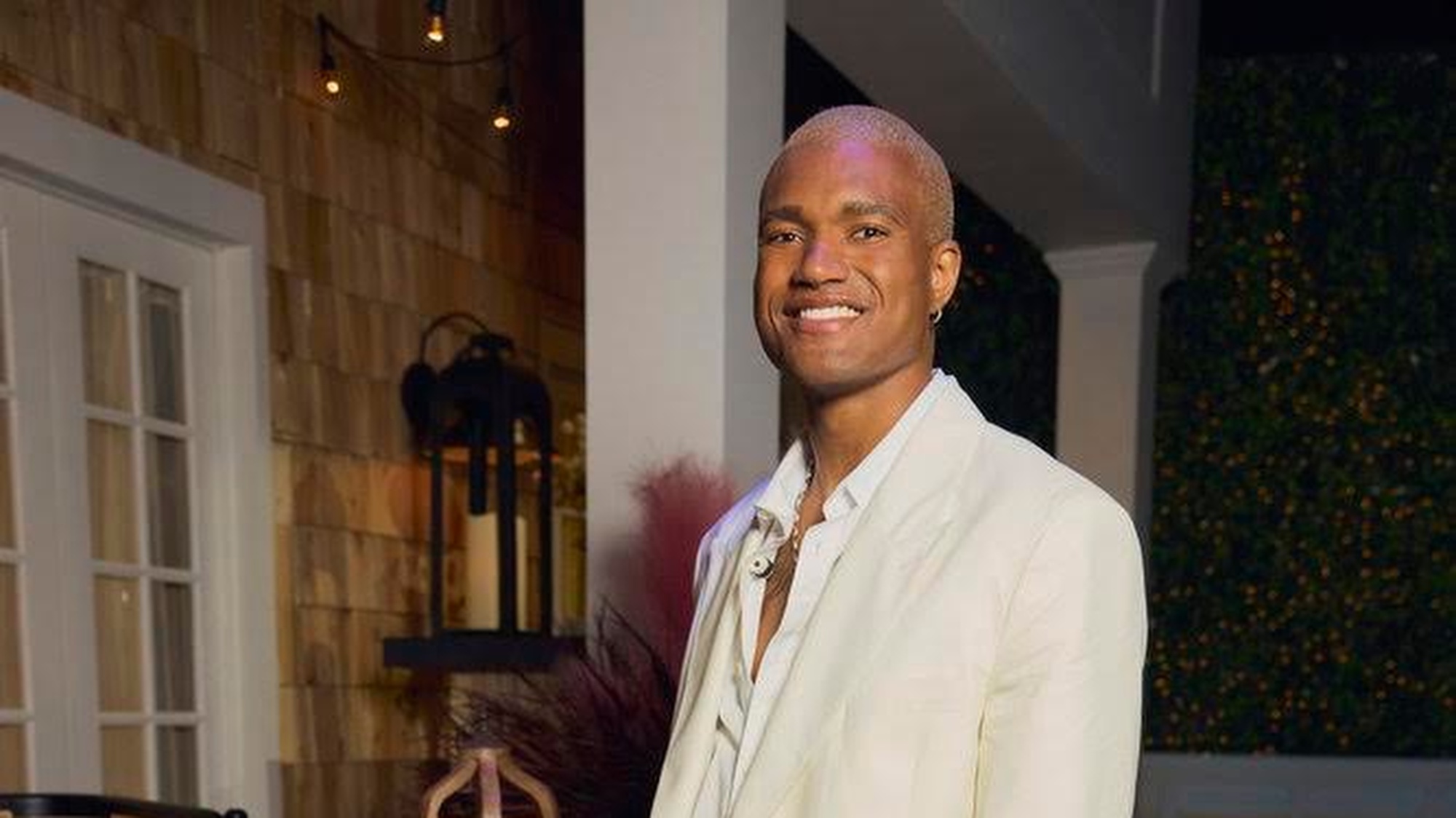
What does it mean to be the first Black man on Summer House? Just ask KJ Dillard. When the 28-year-old joined the Hamptons-based reality television series, he did not enter with an appetite for debauchery and partying all night long. There was no intent to capitalize on his success as a Bravolebrity to pivot into brand deals and sponsored content. The typical route of a newly minted Bravo star was the furthest thing on his mind. He was simply trying not to mess it up and be at ease under such great pressure.
Unknown to the average Bravo viewer, Dillard was saddled with an unrealistic set of expectations for a first-time reality star: the weight of being the first. There’s a new weight on your shoulder when you have to carry the responsibility of representation. In an era of backlash and pushback against diverse representation in film and television, there’s an immense cultural and generational pressure to portray yourself as the brightest in the Black community to the world. Now, imagine the weight of that before turning 30.
In Summer House‘s reunion, part I, which aired on May 26, Dillard spoke candidly about an issue he’s had to deal with during his freshman season: his mental health. He revealed that he “actually had to go to the hospital for self-harm” after the first season. Luckily, he had a strong support system rooting for his recovery. “Mia and Ciara were there almost every day,” he revealed.
For Dillard, his choice was to share his most intimate moments with the world at the Summer House reunion stage as a way for others, particularly Black men, to address their mental health. His decision went against the grain; he became the most beloved and real reality star.
Here, Dillard speaks candidly about his first season and the support he received to get through it.
Trigger warning: this story has mentions of self-harm, suicide, anxiety and BPD
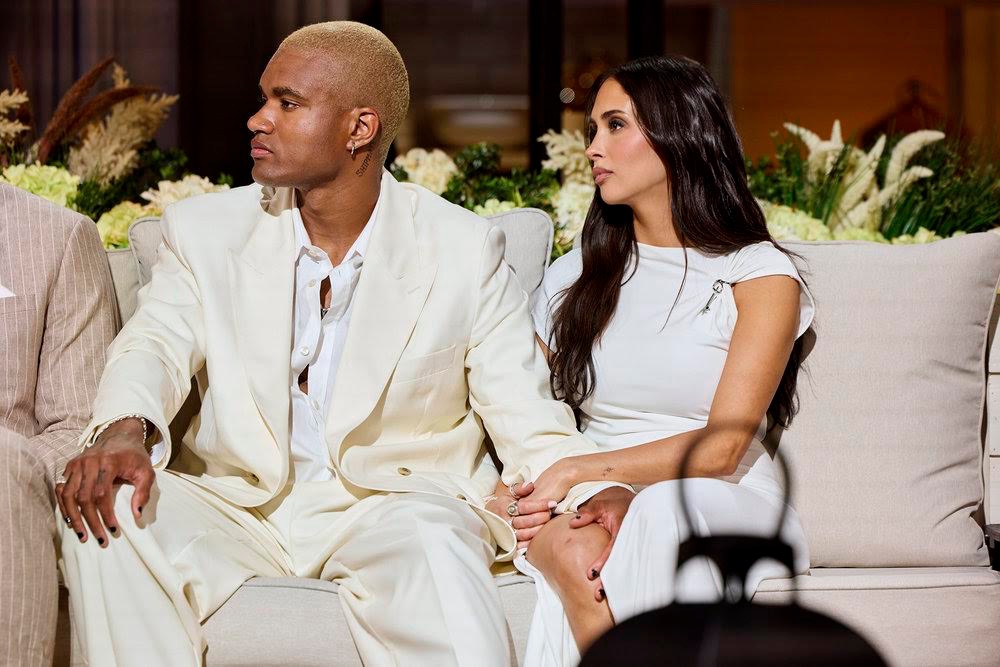
EBONY: The first part of the Summer House reunion aired last night. How does it feel to have completed your last step as a Bravo newbie?
KJ Dillard: I accomplished what I needed to this first season. I came into the house not knowing what would happen: If I was going to get along with everyone. If I was going to be accepted or not. Looking back now, I did everything I was supposed to do, but also felt the need to do.
We just watched the reunion. How was that experience?
The reunion was a lot for me. A lot of anxiety, a lot of sadness, and anger. I was able to share a part of what I went through in the fall with my mental health. Towards the end of the filming, I started to shut down mentally and emotionally. I knew it was coming to an end. Even though it was a temporary end, because we have this season coming up, I had put everything into filming, I gave every part of me, I opened up, and I knew it was going to be different in the off-season. The relationships were going to fade. Everyone was going to go back to their normal lives. For me, that hurt because filming was what I had going on. Once the fall hit, I didn’t have much going on because modeling was slow for me, and money was rough.
I didn’t have any stability at all, and it took a toll on me; it took a toll on my relationship with Dara [Levitan]. I struggled a lot mentally and emotionally. I started to hate myself from within, and it started to show up in my relationship. I started distancing myself in friendships. I acted like everything was all good when in reality it wasn’t. During the reunion, I shared about myself having to go to the hospital because I had self-harmed. I was in a place where I needed help, but I didn’t know how to ask for help because I was just like, “Oh, I just got done filming this reality show. I want to make sure everything looks a certain way.”
Having to show up as the first Black guy this summer, I didn’t wanna show any signs of weakness. I felt really weak. I was holding all of that in until it all came out. I went to the hospital with Ciara, Mia, and Dara. I checked myself into the psychiatric unit and was there for a week.
After that, I went to recovery in Westchester for a few months. It really changed my life because I started to learn what self-care and self-love look like. I realized that it’s okay to not be okay. As a Black man in a world where we feel like we have to show up and be tough, being tough is talking about your emotions, and not holding the weight of the world in.
I would love to hear more from you about acceptance. You’ve spoken eloquently about your struggles with anxiety this season, as well as the need to adapt to different places since you moved a lot as a youth. What was it like to receive acceptance from your fellow cast members, particularly the Black women on the cast, like Ciara Miller and Mia Calabrese?
Anybody who is new is going to have a hard time being accepted into the house because you have a group of friends who have known each other for a while. I was the new kid in school because we moved a lot growing up, so for me, it was just another move. I felt the most accepted by Ciara out of everyone, then Carl Radke. They embraced me as soon as I got into the house.
A highlight of the season was the one-on-one conversations between you and Ciara about family, and what it was like for you to grow up as the sole Black boy in a house of Black women. Do you feel that by her taking on a big sister role towards you in the house, you felt comfortable not only physically but mentally towards your cast members?
As soon as I saw our dynamic, I felt very comfortable with Ciara.
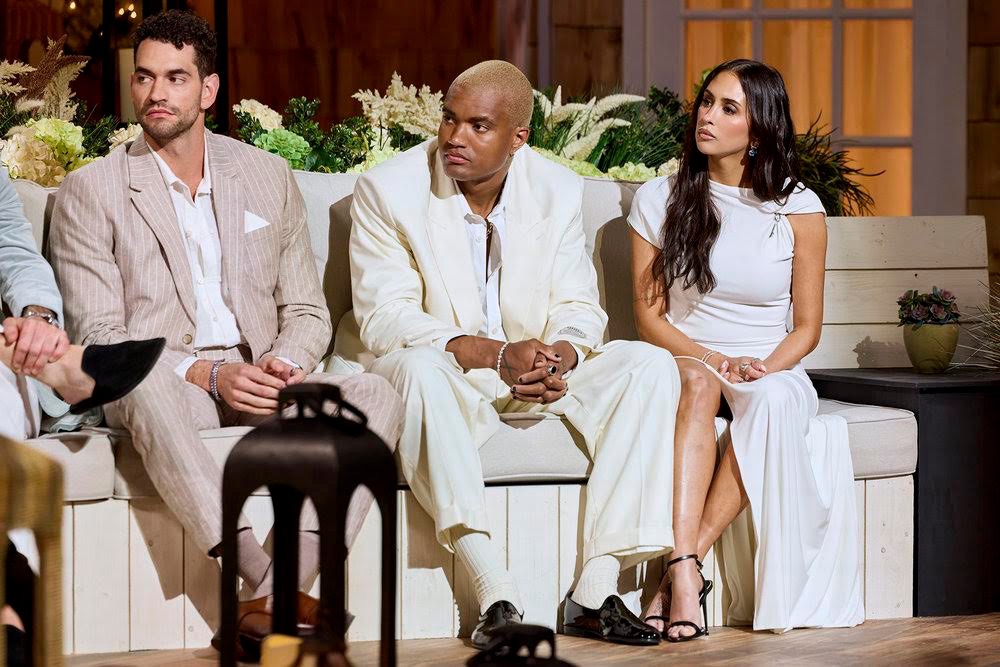
You have two sisters in the house: Ciara and Mia, who was a new cast member like yourself. In addition to that sense of racial kinship that all of us feel as Black people in predominantly white spaces, do you feel as if you were able to bond and talk about being first-timers?
If we are out in public and we see another Black person, we give the nod. It’s one of those unspoken things in the Black community. We look out for one another. Once Mia came into the house — which, by the way, I had no idea we had a family connection because my mom and her sister were roommates in college — it felt like an immediate, very special connection. It was destined.
Many Bravo viewers, especially Black viewers, enjoyed the family you, Ciara, and Mia created. It is difficult to be a Black person in the U.S. right now, coupled with being on reality television as a Black man, which is an experience that is limited in coverage and representation on TV. Did you have any thoughts about Summer House as its first Black male cast member?
I talked about this a little bit this past season, the pressure that I felt. I had other Black people going into this who told me, “You’re representing us… don’t ef it up.” My response was “I know.” I have to come in here and not only portray myself as, but just be myself…What’s the word? You know I mean.
The added weight of responsibility.
It was a lot on me. I grew up around many different types of people, so that never bothered me, but I knew from conversations with my grandma and grandpa that I was held to a different set of standards: “You’re not looked at as the same as your white counterparts. You have to be two times better. If you get in trouble, it’s going to be two times worse. If you are on a job interview, you have to make sure to be overqualified.” White people are not having those conversations. Coming into the house, there was a lot of pressure on me because I knew I had to perform above and beyond.
Were you able to connect with Ciara, who was the first Black person on Summer House, or with Mia about that weight? A responsibility like that is meant to be shared.
Both of them understand that weight. They’ve both done reality TV and understand the responsibility of being Black on TV and how much weight that carries. I was able to confide in them and lean on them when I felt confused.
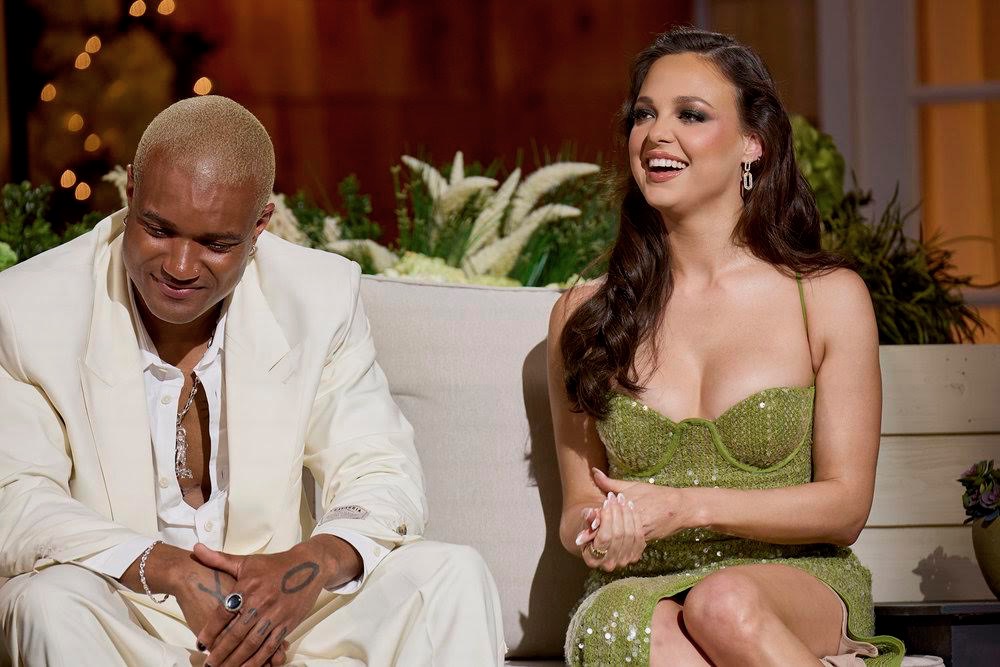
Number one, I’m so happy that you are here with us.
Thank you.
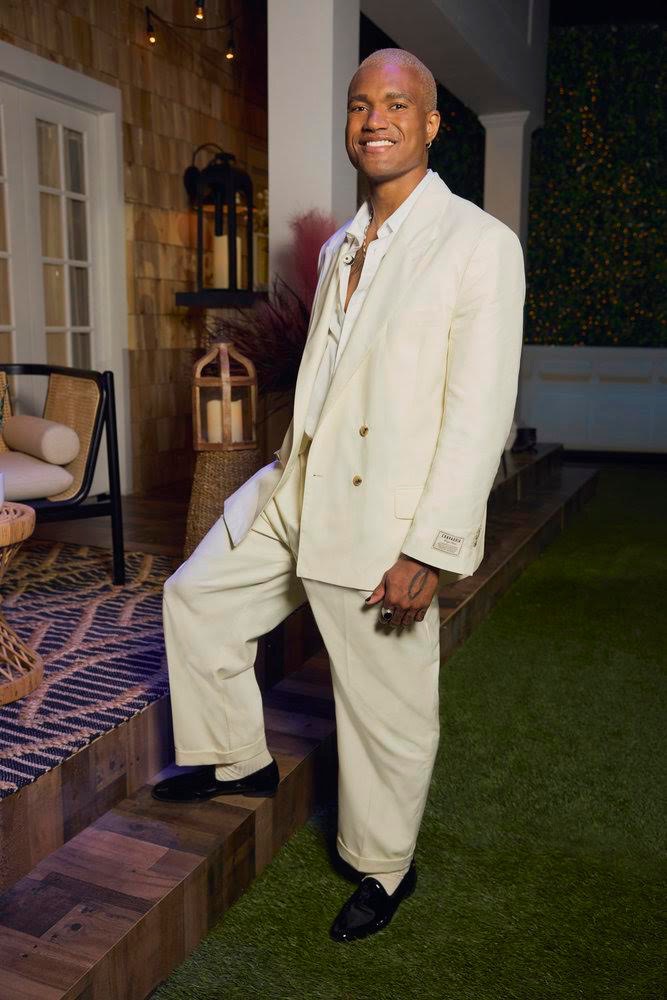
One thing we don’t talk about in the Black community is the weight of responsibility and the internalization of the “twice as good” mentality. So many of our elders are undiagnosed or were diagnosed and didn’t want to accept the diagnosis out of fear of being institutionalized. Because of that fear and lack of acceptance, there was a lack of modeling of what mental health looks like. The mentality was we have to survive, so I’m so proud of you for doing that work. You have yet to see the impact of your sharing at the reunion.
We hold so much in, and doing the work is hard. Looking in the mirror and saying to myself, “I have a lot of trauma,” and being Black in America, we unintentionally take on things that we don’t realize. I had to dig deep to understand why my whole life, I’ve been running from myself. Why I hate myself. Why I’m not comfortable in my own skin.
I got diagnosed with Borderline Personality Disorder (BPD) while I was in the hospital. Understanding what BPD is, it makes sense of my behavior. At the same time, it’s like a mix of everything. Men, especially, it doesn’t matter if you’re Black or not, they do not want to admit when they are not good.
Black masculinity comes with a trauma response of hypervigilance. There is pressure to be the man of the household, when in actuality, Black men also break down, and that’s part of being human.
That’s what happened to me in the fall. I broke down. It was years and years of hurt and pain, and all these things just bundled up. It got the best of me, but I’m glad it did because now I can share my story, and others can relate to it, hopefully.
This conversation has been edited for clarity and brevity.