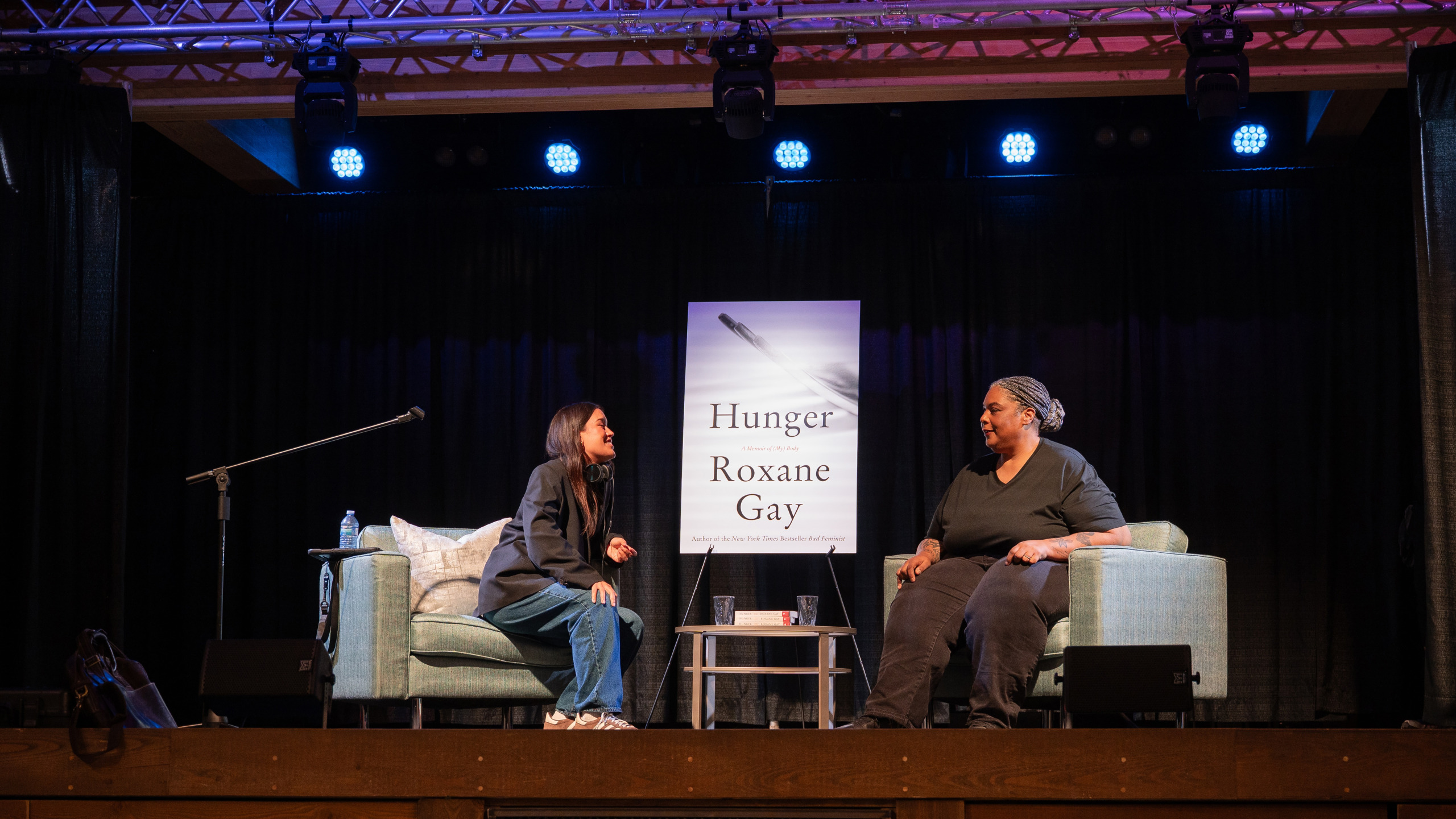
Roxane Gay doesn’t mince words. And if my observation serves me well, I believe it is due, in part, to the amount of time she spent holding back.
Roxane Gay’s biopic, Surviving the Silence: The Roxane Gay Story, made its television debut on the Lifetime channel on Saturday, September 5. The film is based on Gay’s New York Times best-selling memoir, Hunger: A Memoir of (My) Body, published in 2017. Within the first five minutes of the film, Gay makes its intent very clear. Surviving the Silence is not a story of triumph; it is about the truth of Gay’s experience. When she was 12 years old, Gay was gang raped. After researching how she depicts the event and watching the film, I find it necessary to describe her experience just as she does. As a renowned writer and societal thought leader, Gay doesn’t mince words.
To give the film its due attention, it requires an in-depth look into some of its events. Spoilers are ahead.
The film opens with 11-year-old Roxane Gay, played by Hilda Martin, moving into a new home with her family. At this point, her only worry is sneaking to stay awake after bedtime to read. She is shy, reserved and academically gifted. But as Gay’s family transitions into a new neighborhood, she meets the boy who will ultimately become one of her attackers. After the assault, we’re thrust into the visual transition of how the experience shifts her everyday life. In the aftermath scene of the rape, Gay narrates, “Those boys killed me, but somehow my body survived.” Having grown up Catholic, Gay understood sex primarily through the framework of sin when practiced before marriage. At that age, she didn’t have the context to understand that what happened to her wasn’t her fault. She just thought she had sinned.
That misunderstanding becomes consequential. Gay didn’t have the conversation about being gang-raped with her parents until she was well into adulthood. In the years between the assault and her eventual disclosure, silence became less of a choice and more of a way of existing. The film doesn’t waste time on filler scenes that don’t serve the larger message at hand: how the initial assault spiraled into a silence that nurtured a sinkhole of issues Gay would have to work through.

Perhaps the most visible manifestation of that unresolved trauma was her relationship with food and her body. Gay’s hunger is a result of not only what happened to her, but how she knew at the time to protect herself. She came to believe that if she got to a certain size, what happened to her would never happen again. Eating became an outlet for feelings she didn’t know how to process and, ultimately, a way of making herself feel less vulnerable to the world. Her body became both the evidence of her pain and the armor she believed could protect her from experiencing it again.
But that armor came with a cost. The same unprocessed feelings that shaped Gay’s relationship with food also followed her into intimacy. Whether she dated women or men, allowing another person to truly know her remained difficult. Her struggle wasn’t simply about sexuality; it was about vulnerability. How do you allow someone access to parts of yourself that you have spent years protecting, even from yourself? The film suggests that Gay’s romantic relationships were complicated not because she lacked the capacity for love, but because intimacy required her to confront the very vulnerability she had spent years avoiding.
She didn’t want to write Hunger at all. But when you exist as a fat person in the world, people make assumptions regarding who you are based solely on your appearance. Gay’s body had already become a story other people felt entitled to tell. Writing the book meant reclaiming that narrative and, perhaps more importantly, examining the ways her body had carried what she could not yet say aloud. This isn’t a story about overcoming trauma or even how Gay found success as the author of Bad Feminist and Hunger, a columnist and self-proclaimed “bad feminist.” It is about witnessing the life she left behind before the incident and the person she became after it. Surviving the Silence ultimately asks us to consider what survival looks like when the strategies that once protected you eventually become the things you have to unlearn.