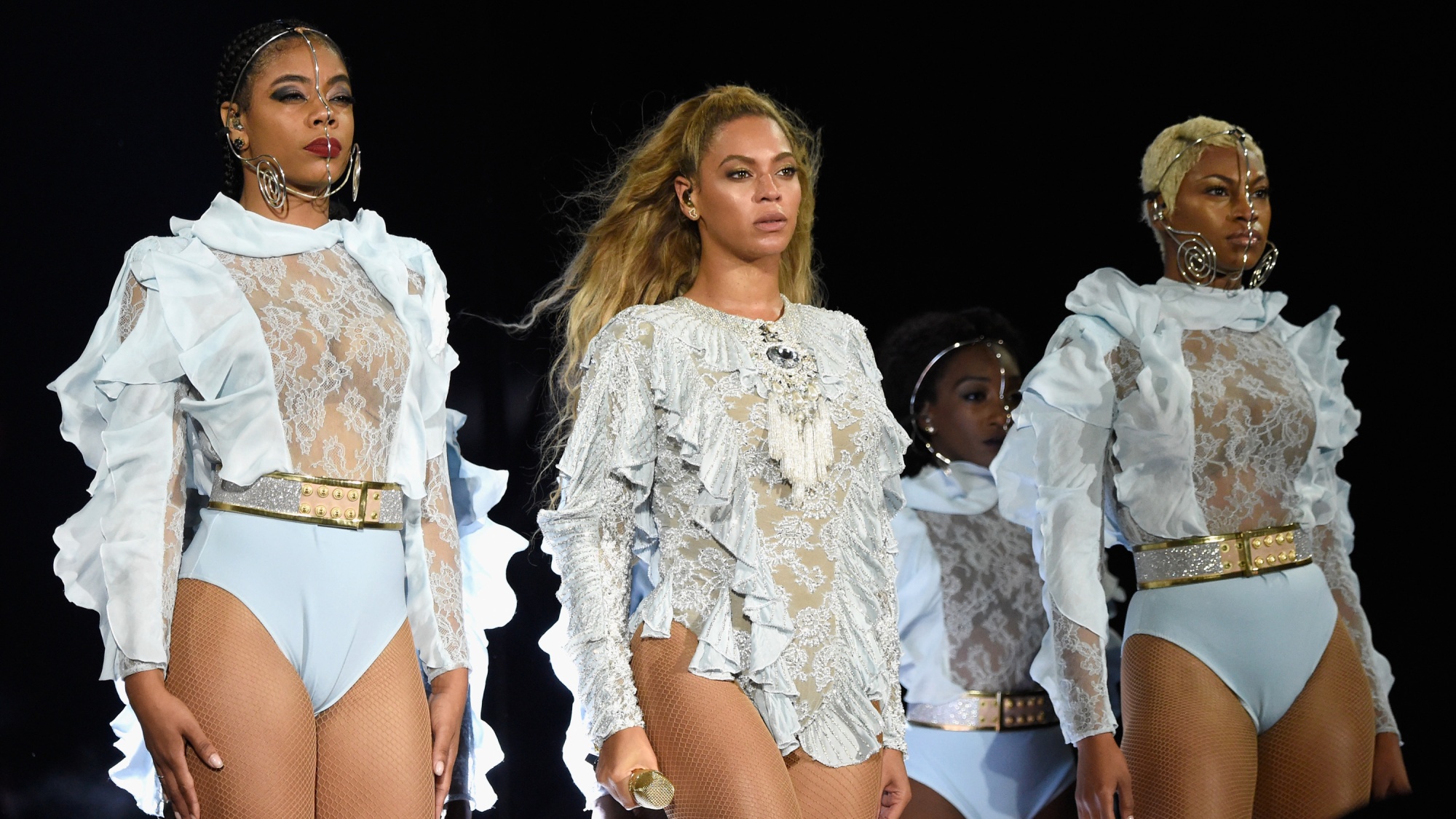
When you think of 2016, many things come to mind, from Snapchat filters to the peak era of the beauty and natural hair spaces for Black women. So many memories hit the mind, and on the music side, it seemed like there was a shift in storytelling, and we started seeing the artists of our youthful soundtracks come into their own and take things to the next level. 10 years ago, Beyoncé released what some would deem as her Magnum Opus: Lemonade.
For me, this album came out during a time when I was tapping into my self-love journey and coming to understand the power of being a young Black girl growing up in Atlanta. Beyoncé’s sixth studio album came on the heels of breaking the internet with her self-titled Beyoncé album, when we all were waiting to see how she was going to top herself next, and she did not disappoint. If we’re comparing the self-titled era, which symbolized the story of a woman coming of age, to Lemonade, this round felt like the next layer of vulnerable womanhood.
In true Queen Bey fashion, she paired her album with a visual film that premiered on HBO, which changed the way we consumed music and added another layer to storytelling. From the Lemonade braids to the stripped-down essence. “Showing off natural texture was intentional,” Hairstylist Kim Kimble told The Cut. “It wasn’t about humidity or difficulty to manage, but about historical time periods.”
The album commanded a conversation at a time when Black culture was trying to be rebranded from conversations of “Boxer Braids” and appropriation being at an all-time high. “There was such a powerful energy around reclamation and taking back this country,” said writer Brea Baker.
Starting from the beginning with “Pray You Catch Me,” you can hear a new side of Beyoncé: unsure, anxious and gloomy. The lyrics “You can taste the dishonesty/ It’s all over your breath/ As you pass it off so cavalier/ But even that’s a test/ Constantly aware of it all,” she sings. The track almost feels like an intimate diary entry you shouldn’t be hearing, but it sets the tone for the ride we’re about to take with the songstress, who was 34 years old at the time.
For Tishayla Williams, Workplace Psychologist and CEO at The TW Collective, this 10-year anniversary also feels like a time where she truly understands the body of work. “Back then, I heard Lemonade. Now, at 32, I understand it. As a Black woman, what stands out to me now is how the album quietly sets a standard for Black love, one that requires vulnerability and accountability, especially from Black men. Not perfection, but presence. Not just love in words, but love in action. Accountability not as apology, but as change.”
Beyoncé’s Lemonade stood out not only for its innovative sound and unapologetic Blackness but also for its deep exploration of themes of identity, womanhood and how to navigate uncertainty. “What Lemonade gave us, more than anything, was permission to be vocal about our betrayal,” said the founder of Charlie’s Toolbox, Charlie Taylor.
She takes us through a story that, while it feels like a concept, feels deeper, pulling from more personal experiences. With songs like “Hold Up,” “Love Drought” and “Sorry,” you’re hit with the ebbs and flows of heartbreak, generational trauma and rekindling within relationships that Beyoncé pens from a very introspective space where this era reminds us that she’s a woman dealing with the burden of life and insecurities. “But you my lifeline, think you tryna kill me/ If I wasn’t B, would you still feel me?/ Like on my worst day? Or am I not thirsty enough?” she sings on “Love Drought.”
“She put her pain in the open for the entire world to witness, and that act alone was a blueprint,” Taylor said. “For me personally, that blueprint showed up in the smallest but most significant ways. It empowered me to say very clearly, “That hurt me.” To say “I can’t believe you said that” or “that bothered me” instead of being nonchalant and performing an unbotheredness I did not actually feel, because I am bothered.”
The era surrounding Lemonade was marked by young people beginning to embrace and express their identities more authentically and removing conformity from themselves. “We’re seeing visuals of Beyonce glorifying thick, not just curly hair, but kinky hair, and not just Blackness in theory, but being very explicit about who she was showing love to, and it just took you to a place that made you really proud to be Black,” Baker said.
Beyoncé’s exploration of personal and collective struggles mirrored the journey of many Black women navigating the complexities of generational trauma and societal expectations. It is in this context that the album’s brilliance shines; it captures the raw emotions of love, heartbreak and healing, offering a relatable soundtrack for those having self-discovery.
“Lemonade was a reminder that naming the hurt out loud is not weakness, it is a witness,” Taylor told EBONY. “As Black women, we have to keep doing exactly that on every level, personal and political. We have to keep being honest and vocal about the ways we are harmed, because no one should be allowed to look away or minimize our experiences just to protect their own comfort.”
When listening to it for the first time at 17-years-old, I felt like I got a closer look at Beyoncé that wasn’t just being a performer, and 10 years later, as a 27-year-old, I understand her even more, as she truly dropped a major gem in adulthood, which is you cannot create your best work until doing some serious unpacking and healing, even when you know you’re about to reveal the ugliest parts of yourself. The raw honesty in tracks like “Daddy Lessons” and “Don’t Hurt Yourself” highlights the emotional complexity of relationships, intertwining themes of love, pain and anger.
“’Daddy Lessons’ forced me to reflect on my own wounds around fatherhood, the impact of absence and inconsistency, and how those experiences quietly shape how you love and who you choose,” Williams said. “It also made me recognize how those same experiences shaped me into someone relentless and hardworking and, as a fellow September Virgo, how they taught me to see the world for what it is and still move through it with confidence.”
The album pushed boundaries, encouraging a reexamination of relationships and cultural norms. When she dropped “Formation,” not only did the catchy lyrics quickly become the summer anthem, but it also signaled to Black women that they should remember who they are and embrace all things rooted in their Blackness. “I like my baby heir/ With baby hair and afros/ I like my negro nose/ With Jackson Five nostrils/Earned all this money/ But they never take the country out me,” she sings. “It has given me moments of confidence and energy when life feels heavy, a reminder of who I am when the world tries to make me forget,” Williams said.
She balanced a fun, confidence-boosting song with visual elements that challenged and questioned where we were socially. “You see a police car sinking in flood water, and that level of political critique in such a mainstream project was so powerful and felt like it was ushering in an era that was gonna mirror that, and then it wasn’t,” Baker said.
The album’s film imagery, filled with historical references and powerful symbolism, invited viewers to reflect on the introspection between personal narratives and societal issues. Each song became a chapter, revealing layers of vulnerability that prompted listeners to confront their own experiences.
As we reflect on the culture of 2016, it’s impossible to overlook the times we were in, which, ironically, don’t seem far from where we are now. A constant fight for the advocacy of Black and brown people, equality, and the concept of everyone loving Black culture without giving it its due. “Lemonade was a landmark work, but we have to be honest that it did not move the needle as far as we needed it to. Nearly a decade later, we are still running test cases on Black films with Black female leads, still being asked to prove our worthiness in spaces we built,” Taylor said.
Ultimately, Lemonade was not just an album; it was a movement that celebrated Black femininity and its strength, leaving an enduring impact on the music industry and its listeners. “Ten years later, Lemonade still resonates because it captures something real,” Williams said. “Freedom often comes through loss, through endings, through choosing yourself even when it hurts. And once you make that choice, you do not go back.”