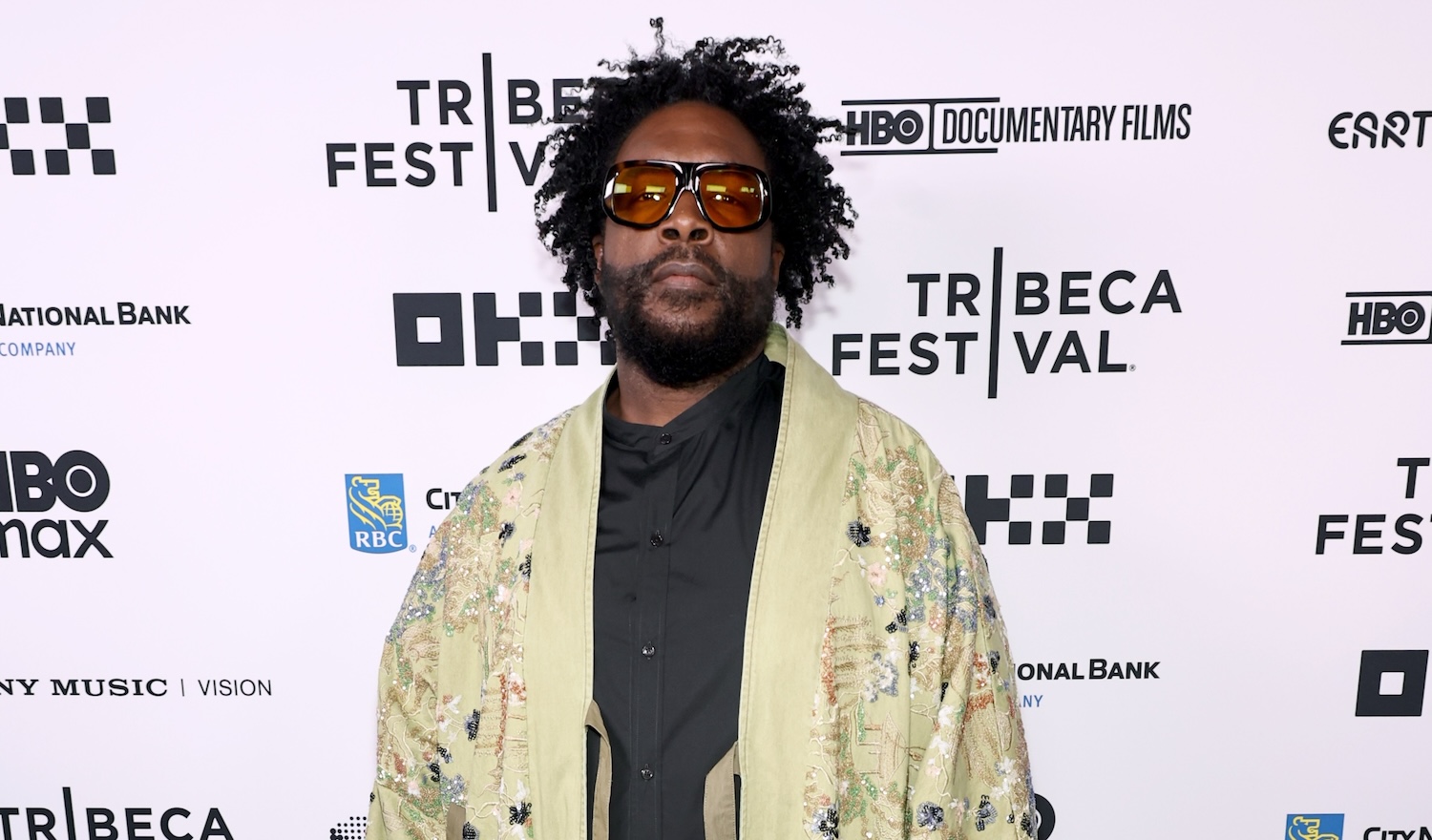
“September” by Earth, Wind & Fire holds a universal place on the playlist at African American cookouts and wedding receptions nationwide, instantly recognizable to everyone in attendance—Black and white—at the opening night of the Tribeca Film Festival. A sold-out crowd at NYC’s Beacon Theatre celebrated the release of the Questlove-directed HBO documentary Earth, Wind & Fire (To Be Celestial vs. That’s the Way of the World).
Backed by hip-hop’s legendary Roots crew, Earth, Wind & Fire members — Philip Bailey, Ralph Johnson and Verdine White — kicked off the screening with rousing performances of the greatest hits, including “September,” along with “That’s the Way of the World,” and “Shining Star.”
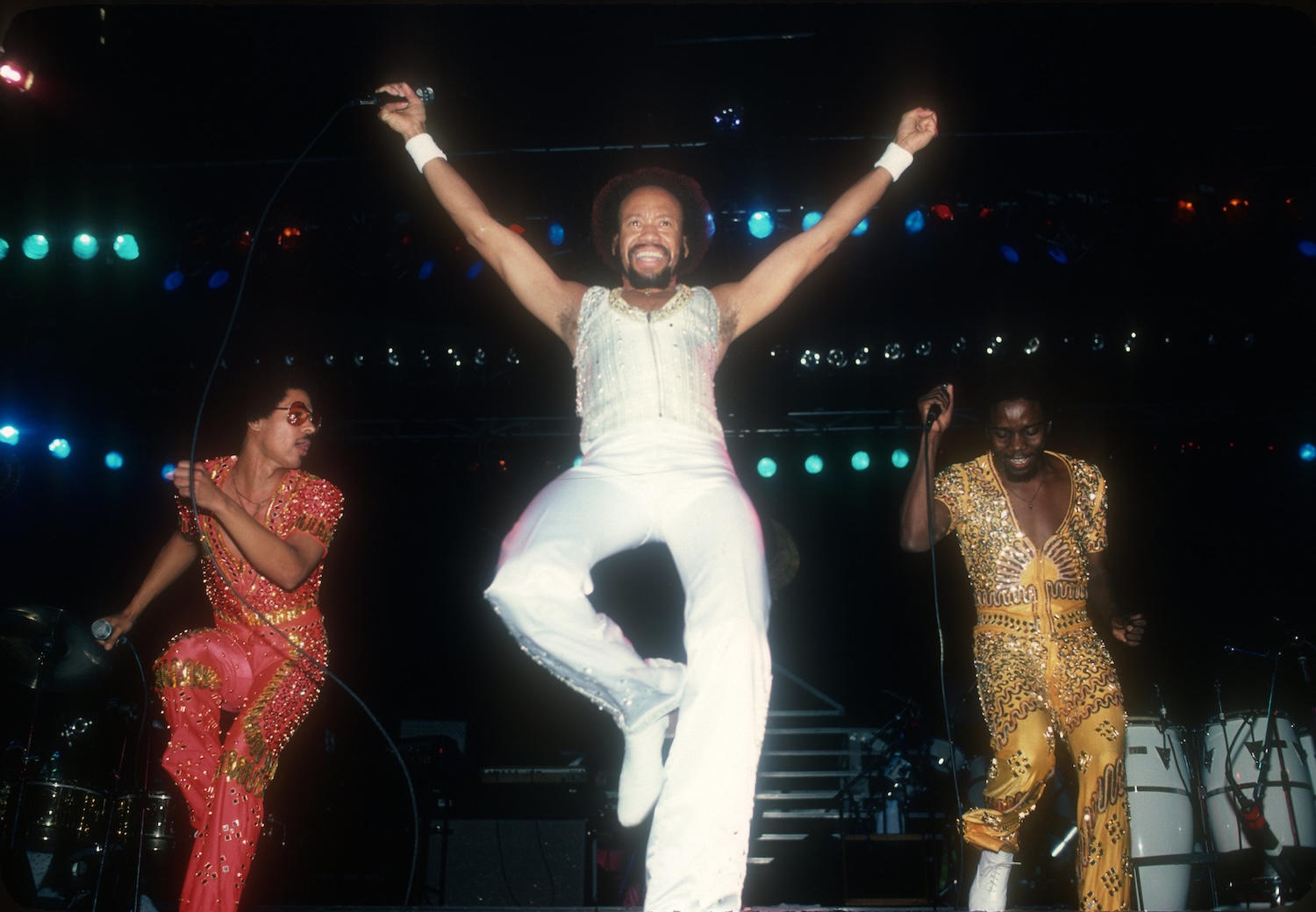
With his Oscar-winning Summer of Soul, Sly Lives! and Ladies & Gentlemen… 50 Years of SNL Music, Ahmir “Questlove” Thompson stands at the vanguard of directors from hip-hop culture (including Boots Riley, RZA and Nas), using his musicologist instincts to educate audiences about the legacy of icons like Sly Stone and Earth, Wind & Fire visionary Maurice White.
With a near-encyclopedic musical memory — just see his iHeartMedia podcast The Questlove Show for proof — Questlove has always been uniquely qualified for the job. The insanely busy drummer-turned-filmmaker spoke with EBONY days after premiering his latest doc, which is now streaming on HBOMax, drumming live behind EW&F at the Beacon and deejaying his own afterparty, to talk about artistic inspiration, Stevie Wonder, the metaphysics of Earth, Wind & Fire and more.
EBONY: “Fantasy” was inspired in part by Spielberg’s Close Encounters, right? And in turn, kind of inspired Stevie’s “I Wish.” Has this happened to you, artistically with D’Angelo or the Roots?
Questlove: The deal is basically songs being derivative of other songs; it’s how music morphs. Someone asked me to make them a quickie summertime mix of songs that sing about the summer. And I was jaw-dropped at how the quote, unquote “Chuck Berry intro” was at the beginning of all these surf songs, like at least eight Beach Boys songs. “Fun, Fun, Fun” and “Johnny B. Goode” are damn near the same song. The idea of one song birthing another song has been sort of the history of men.
I recently found out that what I thought was the saxophone on Public Enemy’s “Rebel Without a Pause” is Clayton Gunnel’s trumpet. He wasn’t much of a soloist, but he was kind of a one-trick pony that knew how to make a trumpet squeal, kind of like Maynard Ferguson. Only for me to find out that the song from which that squeal comes, “The Grunt,” is really just an Isley Brothers song called “Keep On Doin’.” I’m obsessed now, because this makes five Isley Brothers songs that James Brown will jack and claim as his own.
Sounds like you’ve gone down the rabbit hole.
When I did my investigation, I also found out [Brown] was very angry at the idea of “It’s Your Thing.” He didn’t see himself as “I’m an innovator, and I’m so influential that everyone’s going to do my style of music,” which is funk. He just wanted to kick ass and take names. Like, “He was biting me. He was copying me.” There comes this period between ’69 and ’74, which James Brown … we’ll say “bite.” If you listen to “J.B.’s Monoaurail,” it’s BT Express’s “Express.” When you listen to Fred Wesley’s “Makin’ Love,” that’s just “Skin Tight” by the Ohio Players. Marva Whitney’s “It’s My Thing”—the very horns we get “Bring the Noise from Public Enemy—that’s [Brown] giving a middle finger to the Isley brothers because “you stole my song.”
The reason why I wanted Stevie in this doc was that I’ve heard this story of how he recovered from that coma back in 1974. If you remember, the day after Innervisions comes out, Stevie’s in an accident that puts him in a coma for three months. And his brother Calvin says, “Music’s gonna wake him up.” So they bring in a record player, his speakers, and I know that That’s the Way of the World was routinely on rotation. I didn’t plan that moment. The camera just happened to be rolling; we were testing for light. I was just playing the drum stems for “Fantasy,” and when the drums were up, Stevie Wonder started playing along and shared the story.
How would you approach a Stevie Wonder documentary?
I feel like there are four really important stories to tell the totality of Stevie Wonder’s life from soup to nuts. It would almost require a nine-episode doc, which I don’t think he personally has the patience for. Artists don’t analyze. This is why sometimes I don’t feel like a true artist: I have one foot in your world, which is, like, I want to critically look at what this means for history. And then there are artists who just create right now, and tomorrow they want to do something new and forget what I did the day before yesterday, like “let’s go to the new thing.”
If given the choice, I would say that [my thesis would be] Stevie’s development and the technology we’re using. Meeting Bob [Margouleff] and Malcolm Cecil—their Tonto synthesizer system will be the musical backdrop of his four albums from Music of My Mind to Fulfillingness’ First Finale. So, a study of his technology there. The accident: how he came to light. There’s an album called “Rainbow something” that he scrapped. I got to hear five songs from it. He had a better vision for an album about God, which, of course, became Songs in the Key of Life. He made the right choice.
There’s a story of him getting out of recovery from a coma and the challenge of making the departure album, Journey Through the Secret Life of Plants, which is secretly my favorite Stevie Wonder record. I’d want to probe further on why did he feel the need to make that. Was that a psychological move of, “I can’t top Songs in the Key of Life, so let me do the opposite of that.” And lastly, his political work for getting the King holiday acknowledged. Those would be the four [phases] I’d concentrate on.
Which came first: The P-Funk mothership or Earth, Wind & Fire floating pyramid?
It’s kind of hard to really pinpoint it, because they were both happening at the same time. However, I do believe, in terms of theatrics, Earth, Wind & Fire. Their first act of theatrics occurred in early 1975 when Verdine White was always levitating. In terms of adding theatrics to the show, Earth, Wind & Fire was first. P-Funk was the first to have an object, with the spaceship. However, it was always Earth, Wind & Fire’s intention to do high theater, like we’re presenting something to you. Earth, Wind & Fire gets P-Funk by seven months. But as far as the object, yes, the spaceship came first.
This is a metaphysical film, given that Maurice White considered music his purpose. How does making these types of documentaries align with your purpose?
I want people, specifically our people, to not dismiss our dreams. I think we like what we know. And oftentimes we choose what we know and abandon what we don’t know. And sometimes when good things happen to us, the first thing we do is doubt it. We don’t trust it. “When’s the other shoe gonna drop?” When we get a good thing going, we don’t want to rock the boat. We don’t want to drop the bag: safety, hustling, security. And sometimes, man, we gotta dream. We gotta dream more than we’re dreaming right now.
What do you want people to get out of this film?
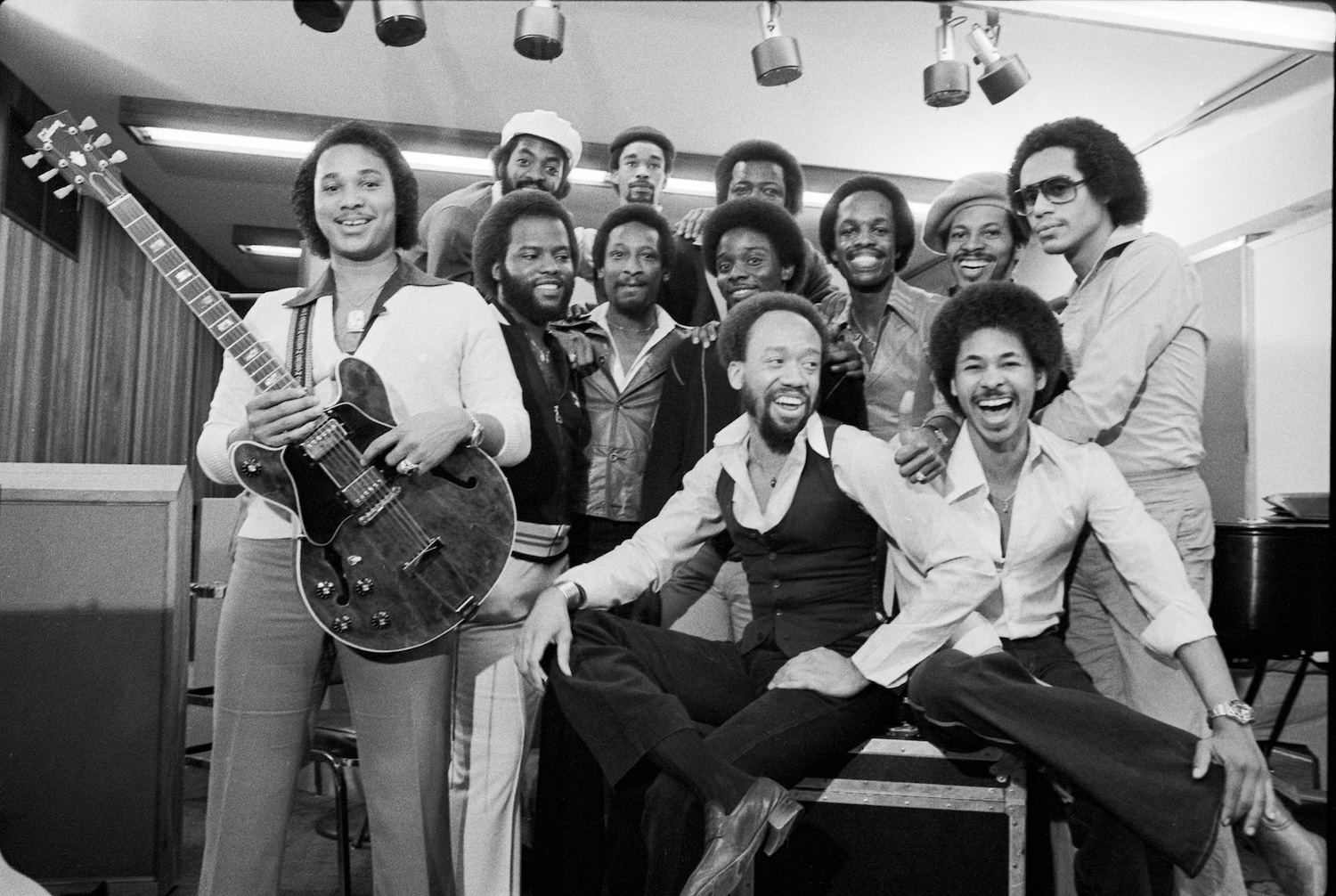
This [film] will help us kind of rediscover who we really are. I want this film to serve as a seed-planting device, if you will, to teach people how to dream and to write down their goals. Again, I thank God for the Michael movie, because I was really scared, like people were going to be like, “Oh, man, that’s too woo woo. I don’t trust that stuff.” But the Michael movie had so many people in conversations about his intentions: “I want to be the biggest artist of all time. I want to sell this many units.” Those things help. I would love for it to be like, “well, you’ve been in show business since you were 5, and your father and his record collection,” and all this. But I promise you, the things I’m doing now have nothing to do with any breakbeats I studied. I’m absolutely learning on the spot what to do, but that’s the whole purpose [of being] here.