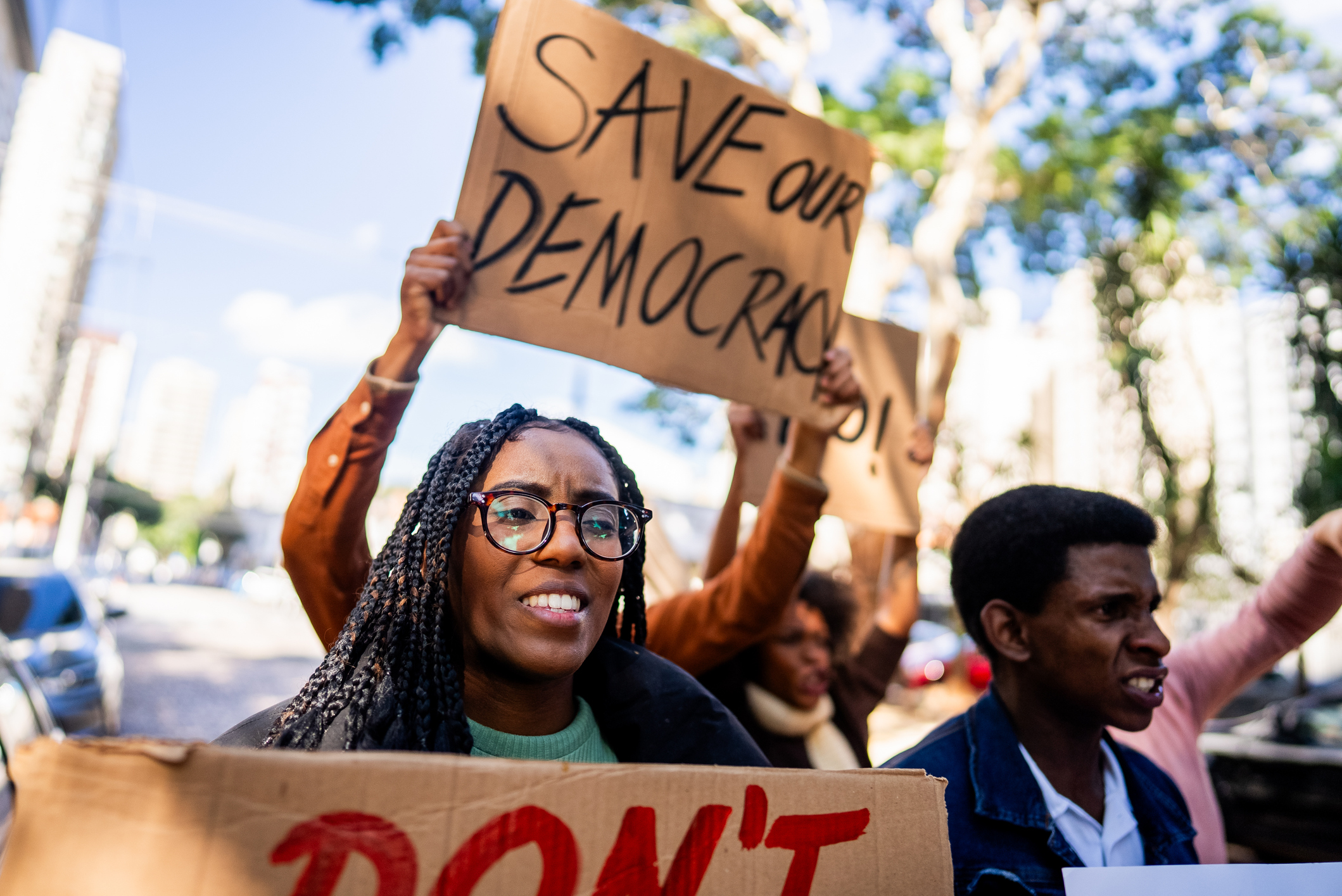
Right now, much of our political energy is focused on what we fear losing, and that fear is real. Rights that generations fought to secure are being stripped away, so our instinct is understandably to protect what we have. Yet, there is a difference between feeling fear and letting fear determine how we organize. I worry that we have become so focused on saving democracy that we are not spending enough time imagining the democracy we actually need.
“Save democracy” is an urgent call, but it is not a big enough vision. When we talk about getting our democracy “back,” we should ask what we are returning to and for whom that version of democracy was actually working.
American democracy was not designed for all of us to exercise equal power. Black people had to organize and fight for rights this country deliberately denied us, while women were excluded from political participation for generations. Today, women, immigrants, queer and trans people, and others marginalized in our society are still fighting to hold onto hard-won rights. We should preserve those gains without making restoration our ultimate political aspiration.
Black folks have a long tradition of imagining something beyond the institutions that excluded us. Afrofuturism asks us to look beyond the limits of the world as it exists and imagine futures in which Black people can live with freedom, agency, and possibility. I keep coming back to what it would mean to bring that same imagination to our democracy. What if we designed our institutions and systems of governing so that Black people and others historically pushed furthest from power could not simply participate, but thrive? What if pro-Blackness and abundance were starting assumptions rather than aspirations we tried to layer onto systems built without us in mind?
None of us knows exactly what that democracy looks like, but that uncertainty should make us more curious, not less willing to imagine. We must question what we inherited and admit when we do not know the answer. And “I don’t know” doesn’t have to be an admission of failure. It can open us to a different question. Instead of asking only how we protect the institutions we inherited, what would we create if we were building a democracy capable of delivering real power, dignity, and possibility for all of us?
This moment is giving us plenty of reasons to ask. In 2022, the Supreme Court overturned Roe v. Wade and Planned Parenthood v. Casey, ending the federal constitutional protection for abortion those precedents had recognized. We have seen how money in politics shapes who gets heard and who holds power, and we still elect presidents through an Electoral College that can produce a winner who did not receive the most votes nationwide. Battles between the federal government and states are also reminding us how consequential state power remains.
The political crisis we are living through is not only something to survive. Fear asks how we get back to normal. Curiosity asks what normal failed to provide in the first place.
Once we start asking that question, some of the structures we have been taught are inevitable look a little less so. Does a two-party system serve the democracy we want? Why should the Electoral College be permanent? What would representation look like if people had more meaningful choices? What could political participation become if it did not effectively end after Election Day? What have we rejected simply because we have never done it before?
It is hard to imagine a future we have never seen, and there is security in sticking with what we know even when it is flawed. However, familiarity is not the same as safety. We know where authoritarianism can lead, and we know the familiar system did not work for everyone. I would rather risk building something better than retreat to what we already know.
We don’t have to imagine every alternative from scratch. I thought about that when I traveled to Ireland with More Equitable Democracy. Ireland uses a form of proportional representation in which voters rank candidates and multiple representatives are elected from each district, giving voters more ways to express their preferences.
Ireland’s system has flaws, and I don’t think we should simply import it wholesale, but seeing another model in practice reminded me how easily we can mistake what we are used to for what is possible. Ideas we dismiss as unrealistic here are already part of democratic life elsewhere.
Experimenting with different democratic models is already happening across our nation too. States and local communities are trying different voting systems, expanding ballot access, changing campaign finance rules, and finding new ways for people to participate. We do not need the entire country to agree on a specific structure before we start learning what works.
That is part of what liberatory organizing is about. It is building enough collective power for people to shape the systems around them, govern, and change the conditions of their lives. If we believe power can be built in states, then states can become places where we practice the democracy we say we want.
The right has understood this long game for decades. They invested in state legislatures, courts, candidate pipelines, policy, communications, litigation, and organizing. The campaign to overturn abortion rights showed what sustained state-by-state work could eventually do to national law. Political transformation is built community by community and institution by institution, often years before we see national results.
To be sure, we should not replicate the right’s agenda, but we should take the long game just as seriously.
Those of us in the progressive movement should ask whether our investments match the scale and duration of the transformation we seek. Philanthropy has a particular responsibility here. If funders want to support the people and infrastructure capable of building something better, they have to give organizers the resources, time, and freedom to build it. Twenty years of political transformation requires a different investment strategy than getting through the next election.
We invest heavily in elections, but we need to invest just as seriously in what elections are supposed to make possible. We need to get much better at the “and.” We have to vote and organize, vote and govern, vote and develop leaders, vote and build institutions, vote and hold elected officials accountable.
Because the day after Election Day, people still need affordable housing, groceries, child care, good schools, safe communities, and responsive government. We cannot spend enormous amounts of money mobilizing people to participate in democracy and then disappear until we need their vote again. Governing is part of organizing. So are legislative sessions, holding elected officials accountable, and helping communities exercise power between elections.
The answer is not to invest less in elections. It is to invest much more in what elections are supposed to make possible.
The democracy we need will not be built by protecting what we have and hoping it holds. We can defend the rights generations before us fought for without assuming the systems we inherited are the best we can do.
I don’t know exactly what the democracy we need will look like. That’s part of the point. We should be asking what we have dismissed as impossible without exploring it, what we can learn from other democracies, and what we would build if pro-Blackness, abundance, shared power, and liberation were our starting points.
That requires us to think beyond the next election and allow ourselves to ponder new questions. What would we invest in if we were thinking about twenty years of political transformation? What would we build if we gave ourselves permission to imagine something we have not seen before?
We know what we are fighting against. Now we have to get just as clear and ambitious about what we are organizing toward.
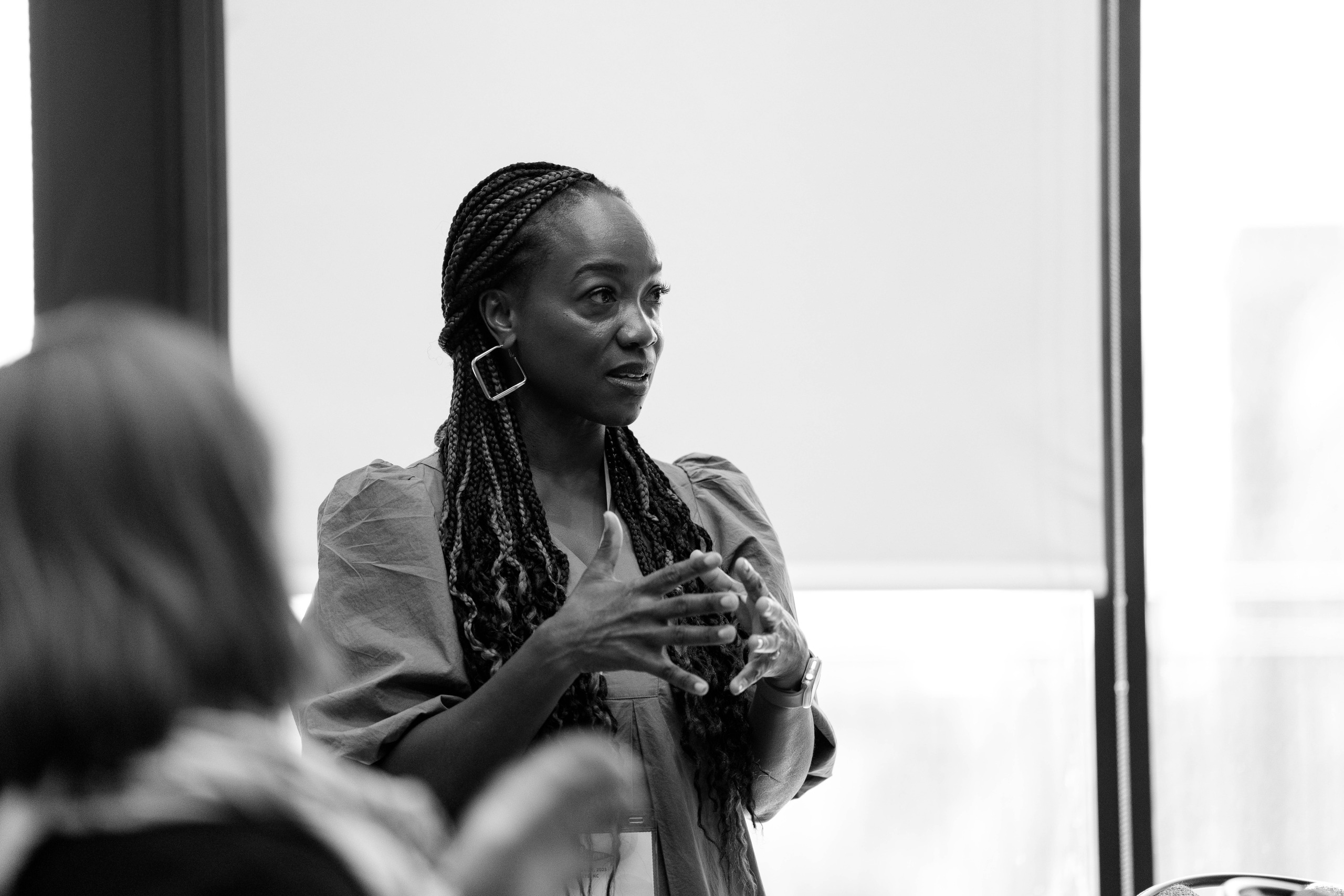
Karundi Williams is the executive director of re:power, a national organization building the leadership and organizing capacity needed for a multiracial democracy. She has spent more than two decades working at the intersection of civic engagement, liberatory organizing, and movement building.