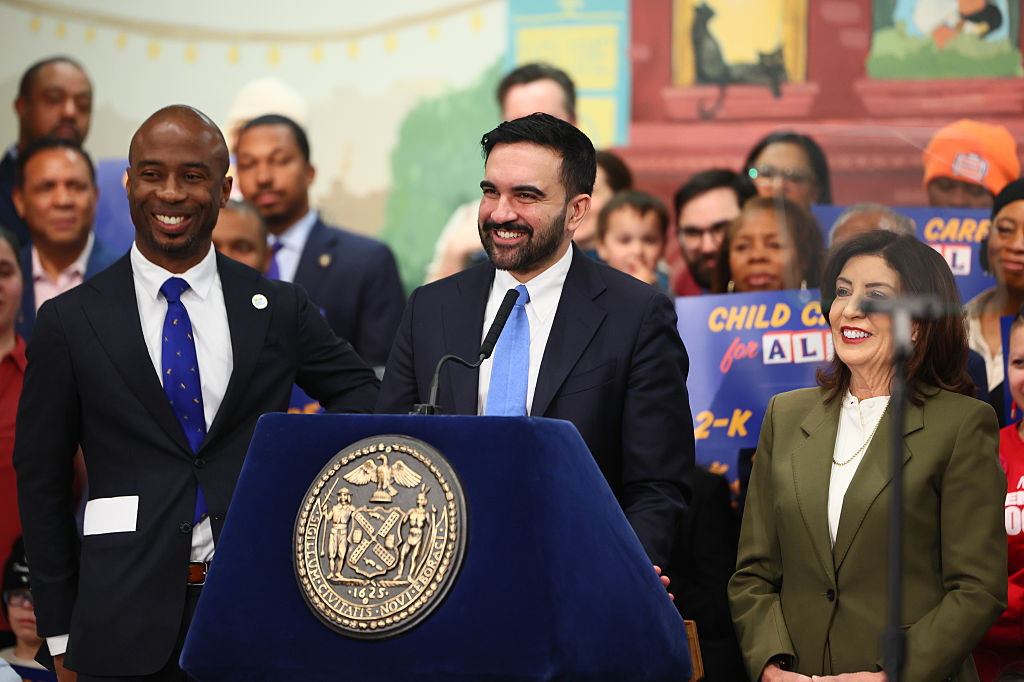
The looming danger of the literary crisis has festered for the better half of a decade. Its effects were exacerbated during the Covid-19 pandemic, and it is only getting worse. As a nation, we’re enduring a historic, all-time low. In a recent study conducted by the Program for International Assessment (PISA) it found that average 15-year-old U.S. student scores dropped fourteen points since the last exam given in 2022. To make matters worse, the achievement gap between U.S. readers was determined to be the largest among other countries included in the report (ABC News). Last week, Mayor Zohran Mamdani and Schools Chancellor Kamar Samuels announced a new year-long AI policy implementing a combination of strict guidelines and complete bans on use of artificial intelligence technology in the classroom for students in 2-K through the eighth grade. While there was a lot of information to unpack, there were a few components that stood out that aren’t being discussed in the greater online discussion that impact older students.
Biannual AI Critical Thinking Modules
Twice-yearly, high school students will receive a 45-minute AI literacy module to teach them what artificial intelligence is and what it isn’t. The program will also introduce students to concepts of AI-related biases, ethical use, and future impacts on careers and skills.
Screen Restrictions
Students will abide by age-appropriate screen restrictions to promote functional use of technology. This policy also seeks to prevent students from over usage of technology during the school day.
Limited AI Pilots For High School Students
Up to five classes per high school will participate in AI pilots under the supervision of a trained educator and through vetted AI tools that have passed the safety and privacy data standards. This program includes the usage of learning platforms including Quill, Edia, Brisk Teaching, Playlab, and Intel AI-Ready Schools. Each platform has time and frequency guidelines.
Responses to the AI policies effective for the 2026-2027 school year are mostly in favor. But those who disagree are arguing that the isolation of AI from the student experience, even at the early ages of 2-K through eighth grade, poses a risk of putting students at a disadvantage. The truth of the matter is that AI isn’t going anywhere. It is ingrained into the daily lives of everyone; age doesn’t equate to exclusion here. At some point, likely even now, we will all have to work alongside AI to fulfill daily tasks from the workplace to self-checkout at the grocery store. The future of AI as a constant presence in our daily lives is arguably inescapable. However, the generations prior to Generation Alpha had a unique advantage that children born during and after will likely never have. We had the opportunity to learn in the traditional sense. Tools like books, our environment, and good old-fashioned educational lectures were our meat and potatoes.
We had the opportunity to form individual opinions without the distraction of social media algorithms that subconsciously tell us what to think before we’ve organically decided. Today’s students carry the burden of having to learn with a lot more noise. As a former educator that is only two years removed from the classroom, I witnessed first-hand how the presence of AI tools like ChatGPT and platforms alike enabled students who were already academically lagging to complete coursework without genuine comprehension.
The route that Mayor Mamdani’s administration appears to be embarking on isn’t through total isolation. There’s no way to ignore AI’s presence when it’s growing by the day. And whether this approach will nurture better results is still undetermined. Instead, think of it like this: What do students have to gain by learning to depend on their own minds? Let’s also take into consideration that the proximity to AI has been an element within student experience for about three years. Reading and comprehension scores are still trending downward. So, what do we have to lose by trying another approach?