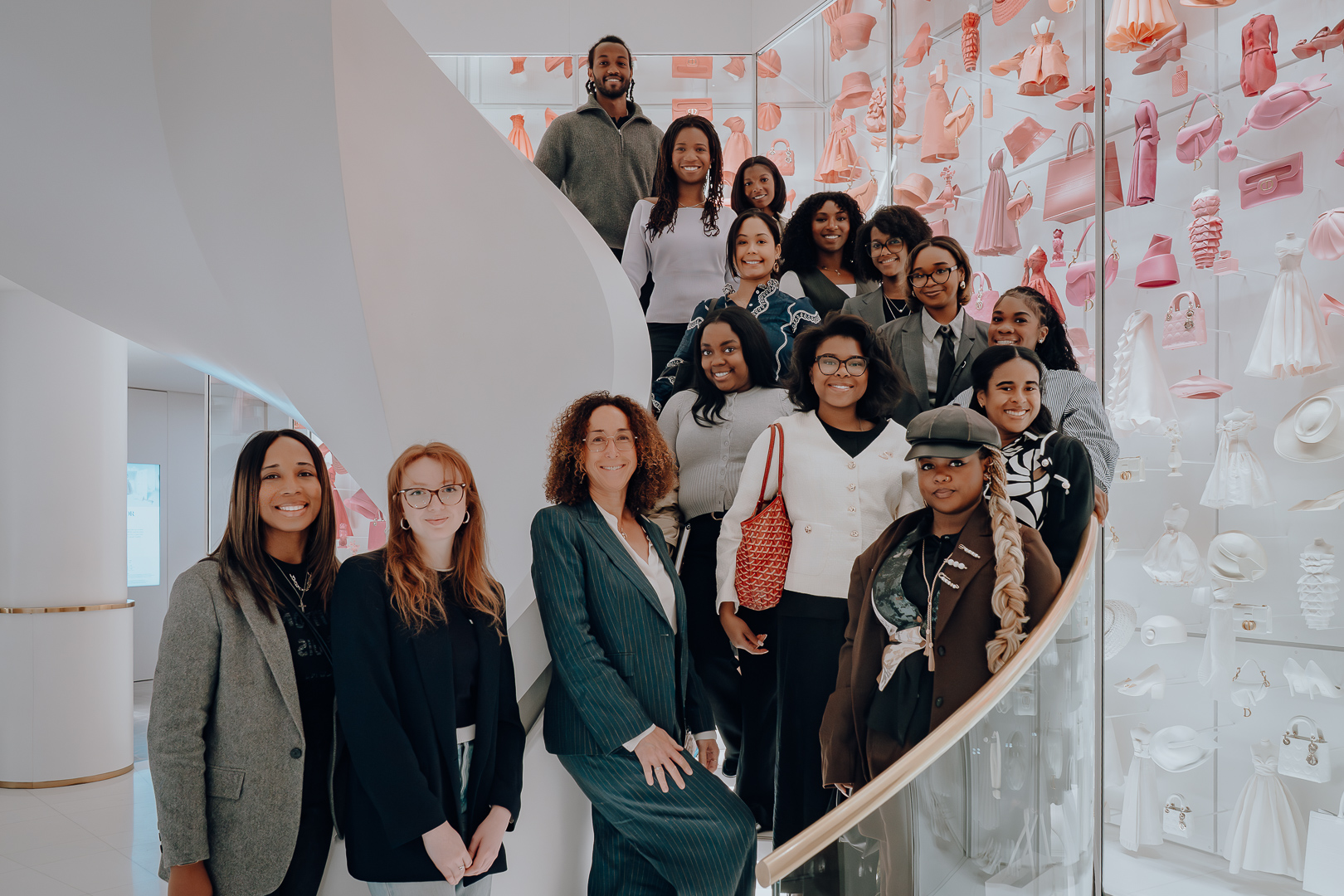
If you want to understand luxury, you do not start on the sales floor. You start where the codes are protected, archived and quietly reimagined. For a group of Spelman College students, alongside peers from Clark Atlanta University and Morehouse College, that meant stepping directly into the inner sanctums of LVMH in Paris.
Not as tourists. As future architects of the industry.
This is the premise behind the LVMH x Spelman College Art and Luxury Branding course, a program that does not just teach luxury. It situates it. Inside history. Inside art. Inside the kind of rooms that rarely open to anyone without a title.
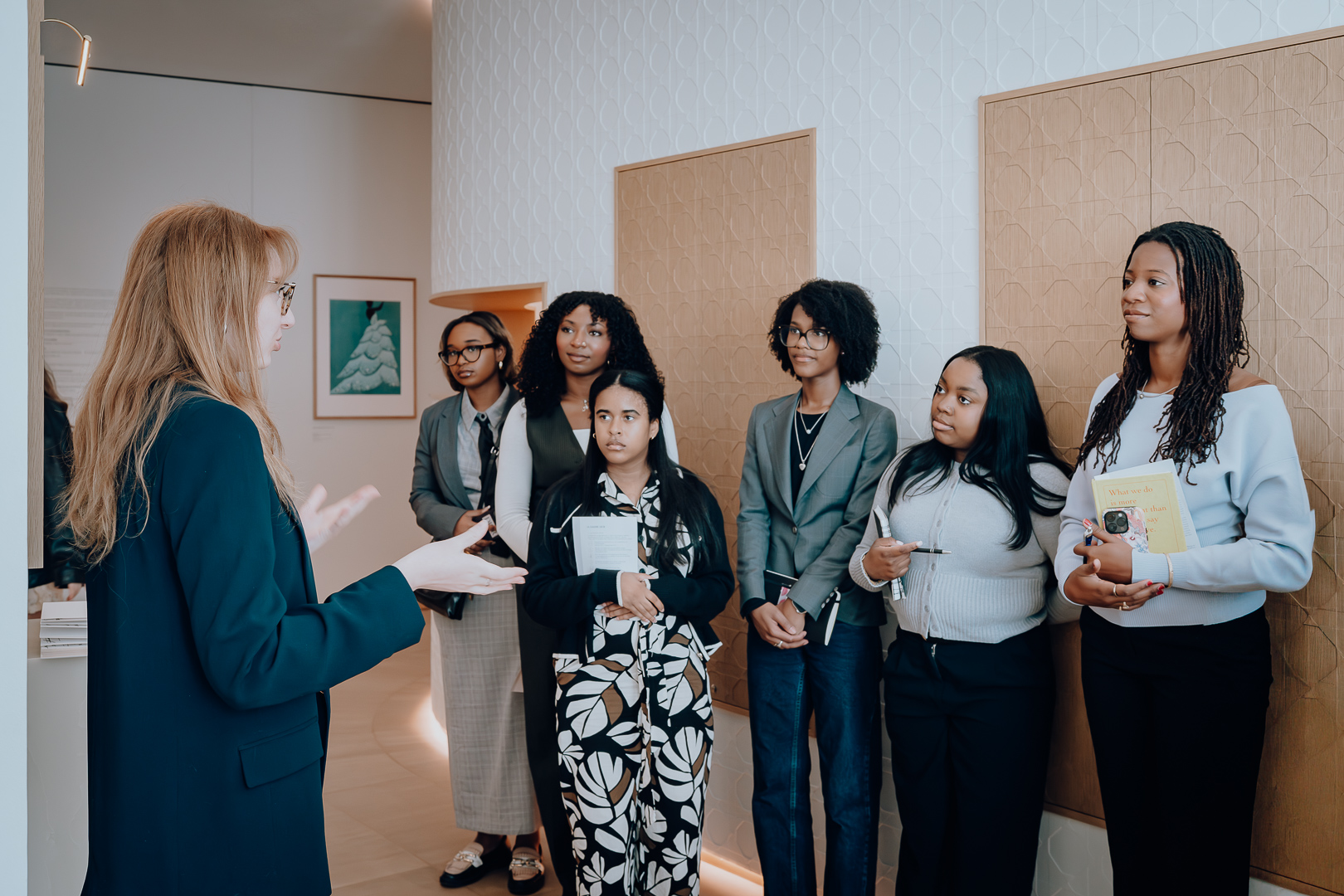
At the historic home of Louis Vuitton in Asnières, students moved through archives that hold more than trunks. They hold the blueprint of how heritage becomes currency. Here, savoir-faire was not a buzzword. It was tactile. Visible in craftsmanship. Embedded in legacy. And still, somehow, in motion.
Then came Ruinart under the Moët Hennessy umbrella, where the conversation shifted from product to cultural positioning. Art was not adjacent to the brand. It was the brand language. Through global art fairs, artist residencies and commissions, students saw how luxury extends beyond ownership into authorship.
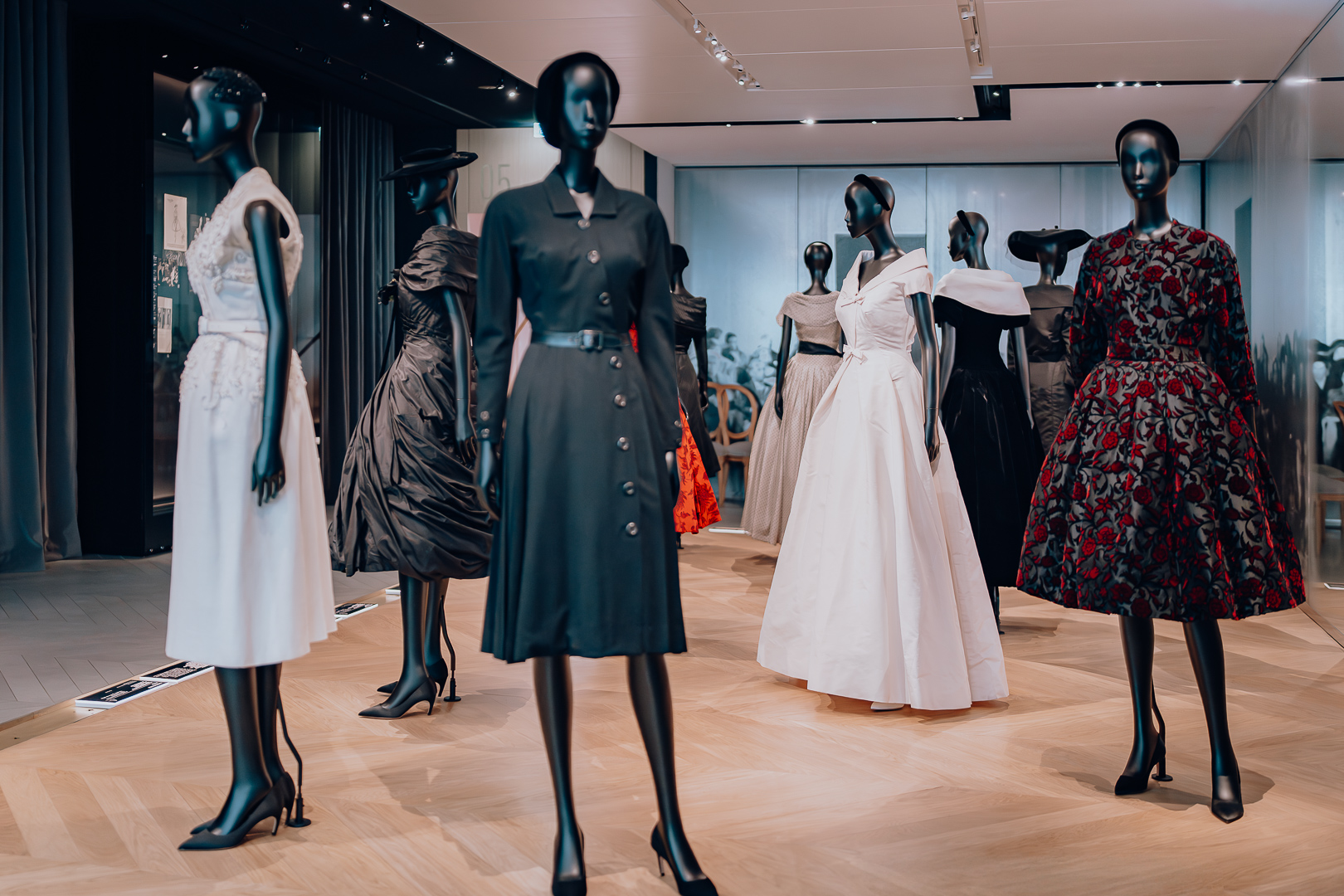
At Le Bon Marché, retail became gallery. At Givenchy, the atelier revealed the discipline behind elegance, with access to Hubert de Givenchy’s original office and archival pieces that still speak in whispers of precision. And at La Galerie Dior, the past did not feel distant. It felt curated, intentional and deeply instructive, especially through a rare collection of couture assembled by Azzedine Alaïa.
By the time students reached the Fondation Louis Vuitton, the message was clear. Architecture, art and fashion are not separate verticals in luxury. They are part of the same ecosystem, one that LVMH continues to invest in with precision.
But the real story is not just where they went. It is how the experience reframed what luxury actually is.
Sydney Shaw, a Spelman economics major, puts it plainly. Opportunities like this do not just open doors. They reveal doors students did not know existed. At an institution without a formal fashion or branding department, access becomes the curriculum. Exposure becomes the advantage.
For Aneres Wiggins of Clark Atlanta, the shift was conceptual. Luxury stopped being surface and started becoming symbolic. A system where design, marketing, logistics and even HR operate in sync to move culture forward.

And for Janiya Charity, also of Spelman, the experience filled a gap that traditional business education often leaves untouched. Luxury is not just commerce. It is narrative. Built on art history, shaped by heritage and executed through strategy.
That multidimensional approach is by design. The course, co-developed by LVMH and Spelman College, merges art curation with brand strategy, offering students direct access to industry leaders, real-world case studies and international immersion in cities like New York and Paris.
Cheryl Finley, director of the Atlanta University Center Art History and Curatorial Studies Collective, frames it as something more expansive. This is about placing students inside the global ecosystems where art, culture and luxury actually move. Not as observers but as participants who can see themselves within it.

And that might be the most important takeaway.
For too long, luxury has operated like a closed loop. Passed down, protected, and rarely interrupted. Programs like this do not just diversify the pipeline. They recalibrate it. They ask a new question. Not who gets to enter the room, but who gets to define it next.
What makes this experience resonate beyond a single trip is its intention. While the partnership is anchored between LVMH and Spelman College, the impact stretches across the entire Atlanta University Center, with students from Spelman, Clark Atlanta, and Morehouse all present, all participating, all claiming space in an industry that has not always made room for them. This is not just a course. It is a recalibration of access. A reminder that when luxury education expands its lens, it does not dilute the legacy, it deepens it.
And if this is what the future of the pipeline looks like, then the next generation of tastemakers will not be asking for entry. They will already be inside, shaping what comes next.