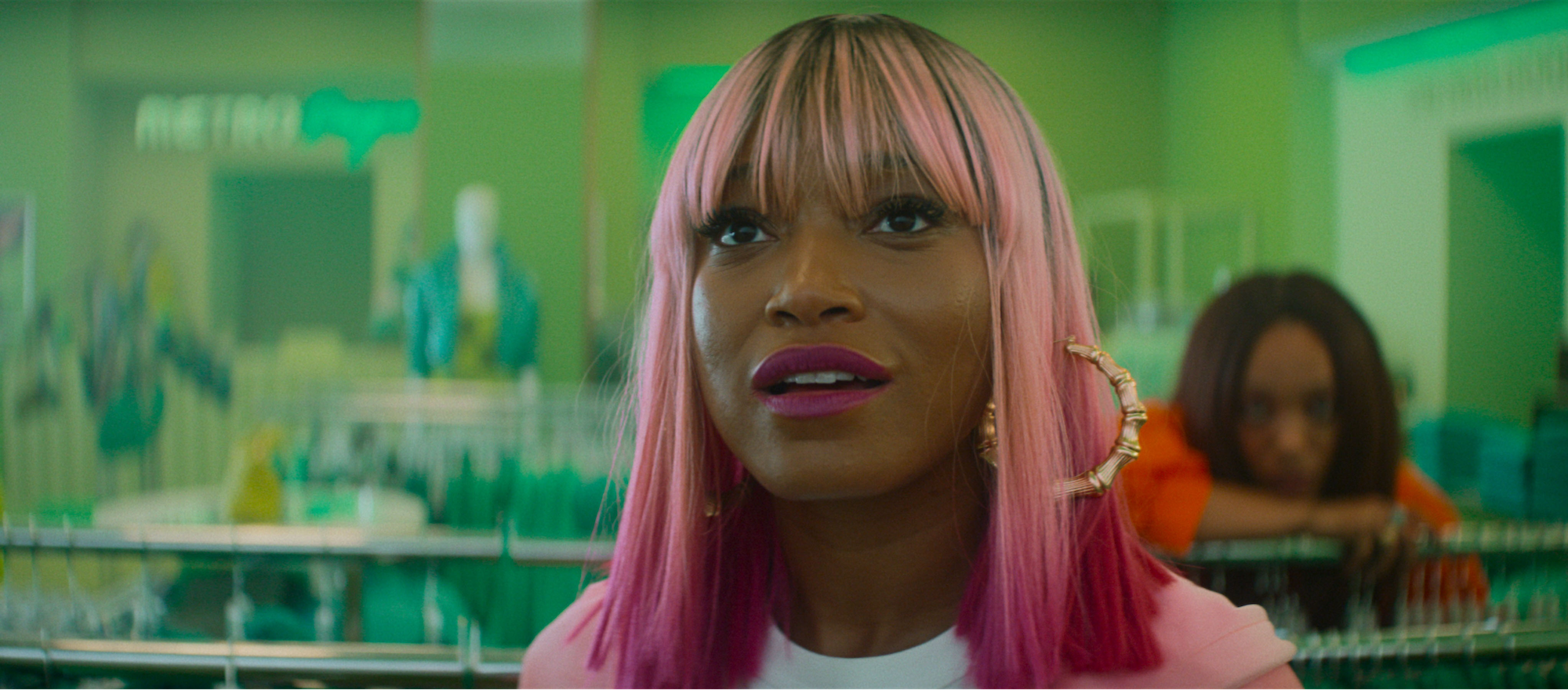
In I Love Boosters, audiences catapult into a multi-colored universe: bubblegum pink tracksuits, canary yellow storefronts and a rainbow of wigs flood the viewer’s vision. The cartoonish fantasy chases the Velvet Gang, led by Keke Palmer’s Corvette, who loot and resell high-end brands at a bargain. Director Boots Riley enlisted hair designer Jessi Dean to design the extravagant hairstyles, a project she described as “creative chaos.”
During one choreographed grab-and-go, her team used human and synthetic hair to create floral headpieces. Other looks were pre-customized, then cut, styled and dyed in-house. Dean speaks the loudest through hair design, she said, and Riley gave her free rein. “From the pixies to braids and twists, a polished bob, each style reflected a distinct facet of Black beauty and presence,” Dean said.
While Riley critiques the machinery of luxury fashion, the film quietly crowns Black hair as both disguise and declaration. Whether it’s a bob, bussdown or beaded braids, these styles function as camouflage as well as armor for women of color.
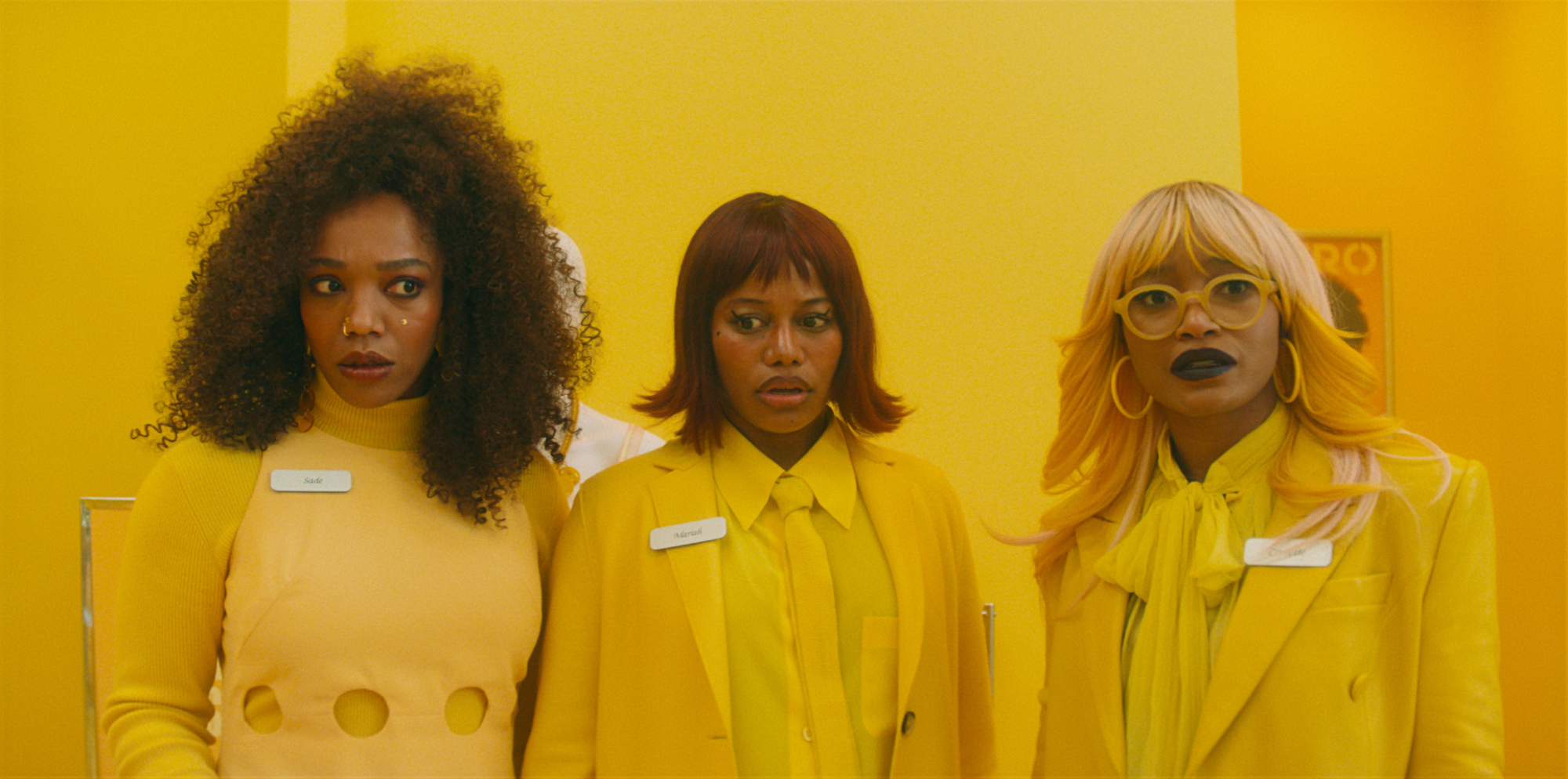
Over the course of two weeks, the hair team worked with more than 100 wigs, with Palmer’s character having more than a dozen hairstyle changes. Each wig worn by the Velvet Gang served a purpose. Some looks were pre-customized, like Palmer’s jet black pixie cut. Dean added a turquoise tail to add flair and uniformity. Sade, played by Naomi Ackie, wore natural styles from afros to braids embellished with beads. Whereas Mariah, played by Taylour Paige, sported layered bangs and mullets.
When the Velvet Gang looted the polychromatic luxury retailers, they donned their boosting wigs fitted with copper highlights and fuchsia finger waves. When they returned to their makeshift home, an abandoned fried chicken shop, they shed their exaggerated alter egos and tucked their natural brown curls beneath bonnets and headwraps.
“It allowed each world to exist distinctly: one that’s natural and the other that’s heightened expression and equally disguised,” she said.
The film’s exaggerated beauty also mirrors the very real negotiations Black women make every day when entering different spaces. Ingrid Banks, a Black Studies professor at the University of California, Santa Barbara, said that historically, white beauty standards have associated Black hair with inferiority.
“Regardless of how we wear our hair as black women, we catch hell because of intersectional injustice,” Banks, the author of “Hair Matters: Beauty, Power and Black Women’s Consciousness,” said.
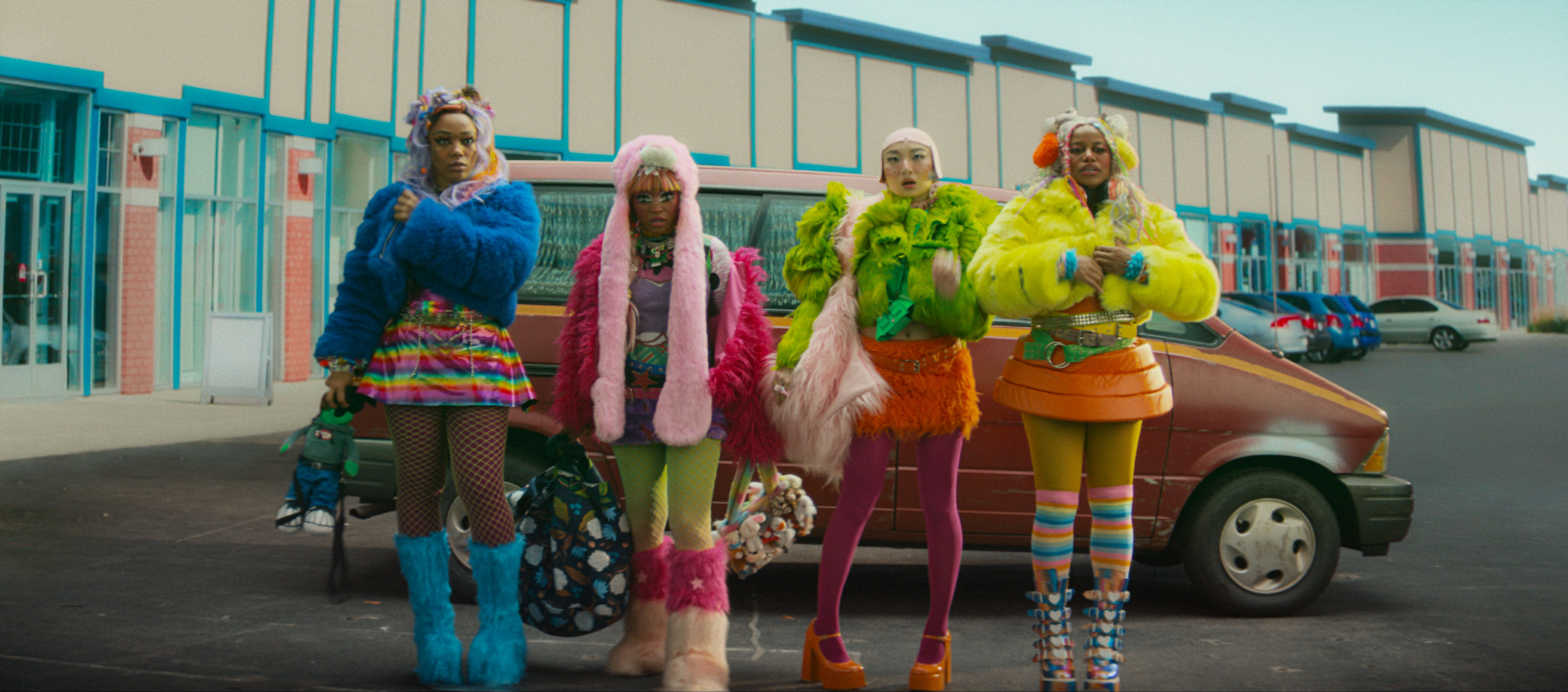
Despite this, Banks calls the diversity in hair styling a superpower. For Palmer’s Corvette, her ability to shapeshift through hair becomes part of her survival strategy. “We can fry, dye, lay it to the side, we can do whatever we want to our hair, even though there are these anti-Black beauty standards that have been around for centuries,” she said.
Dean still gets giddy over the custom cuts and colorful dyes she used in the film, a skillset she honed in her adolescence. She started braiding at age 3 and began styling the hair of family and friends at age 13.
“Hair is such an individual form of expression in itself, and specifically our hair,” Dean said. “We choose how we want to be seen, how we want to show up. We have the liberty.”
In I Love Boosters, hair isn’t just beauty language. It’s code-switching, performance art and protection all at once.