
Human trafficking happens worldwide year-round, but becomes even more intense during major sporting events, like the Olympics, Super Bowl and the World Cup. The 2026 FIFA World Cup matches in the United States are being played across 11 host cities starting June 12, and many of those cities are launching major initiatives to combat human trafficking during the competition.
Philadelphia is one of those cities.
“We know this is a $152 billion global illicit trade that is using people’s bodies without their permission and coercing them, whether it’s human trafficking, sex trafficking or labor trafficking, in both cases, and so this is a worldwide problem and significant issue in Philadelphia,” said Philadelphia City Councilmember Dr. Nina Ahmad.
People can be lured by advertisements, gaming platforms, promises of careers in sports, or false job opportunities. Knowing a concerted effort would be needed to fight these false promises, Councilmember Ahmad secured city funds to support it.
“I made a budget ask for doing an awareness and prevention campaign, knowing that we were going to have an influx of people coming in through FIFA, and other sporting events in the summer,” she said.
Philadelphia will host the World Cup, the 2026 MLB All-Star Game, and the 250th anniversary of the USA on July 4.
Her request to fight human trafficking was allocated $500,000. “So clearly, my council president thought this was a priority, because he’s the final arbiter of what goes for a budget ask, and the mayor thought this was of value.”
Human Trafficking, Defined
In June 2018, Nigerian authorities thwarted a human trafficking plot of children by preventing the unaccompanied minors, traveling to the 2018 World Cup, from boarding a plane that posed imminent danger. A year later, Nigerian women held hostage by human traffickers during the 2018 World Cup were rescued, while others were still missing, according to Reuters.
The U.S. Department of Labor defines human trafficking as “a crime involving the exploitation of someone for the purposes of compelled labor or a commercial sex act through the use of force, fraud, or coercion.” According to the Financial Crimes Enforcement Network, major events can create demand for licit and illicit services, and individuals visiting or residing near host cities may be vulnerable.
“If you do forensic analysis of financial data, you see people doing this,” Ahmad explained. “We actually have been talking to banks and others about tracking how this activity goes up in this time.”
Prepping for Fans; Fighting Trafficking
Other cities have made anti-trafficking efforts ahead of the World Cup.
SeattleFWC26, the local organizing committee for Seattle, responded to concerns about the daily risks of human trafficking and the elevated risk with large events.
The committee website states, “FIFA provided all sixteen host cities with a common FIFA Human Rights Framework.” Its Human Rights Advisory Committee, which has been preventing human trafficking as one of its five priorities, began working a year ahead of the tournament.
Camillus House, an organization in Miami that provides food, housing, and medical care to the hungry and the homeless, is adding 50 beds across Miami-Dade County to provide trafficking survivors with safe housing and support services, as South Florida prepares for the World Cup.
Law enforcement agencies have taken steps to stop trafficking at sports events. According to this FBI website, the agency conducted an operation in 2019 to raise awareness about sex trafficking leading up to Super Bowl LIII. Because of this, 169 arrests were made, nine juvenile sex trafficking victims were recovered (the youngest age 14), and nine adult human trafficking victims were identified.
The organization has conducted other investigations in Super Bowl host cities over the years.
“Victims of human trafficking can be anyone—regardless of race, color, national origin, disability, religion, age, gender, sexual orientation, gender identity, socioeconomic status, education level, or citizenship status,” states the U.S. Department of Justice website. However, Councilmember Ahmad pointed out that over 90% of people impacted are women and girls.
“A significant number of young people are in the foster care system,” she added. “This is not just the white van coming and picking you up and kidnapping you. This is your own family members trafficking you.”
A Personal Story of Survival
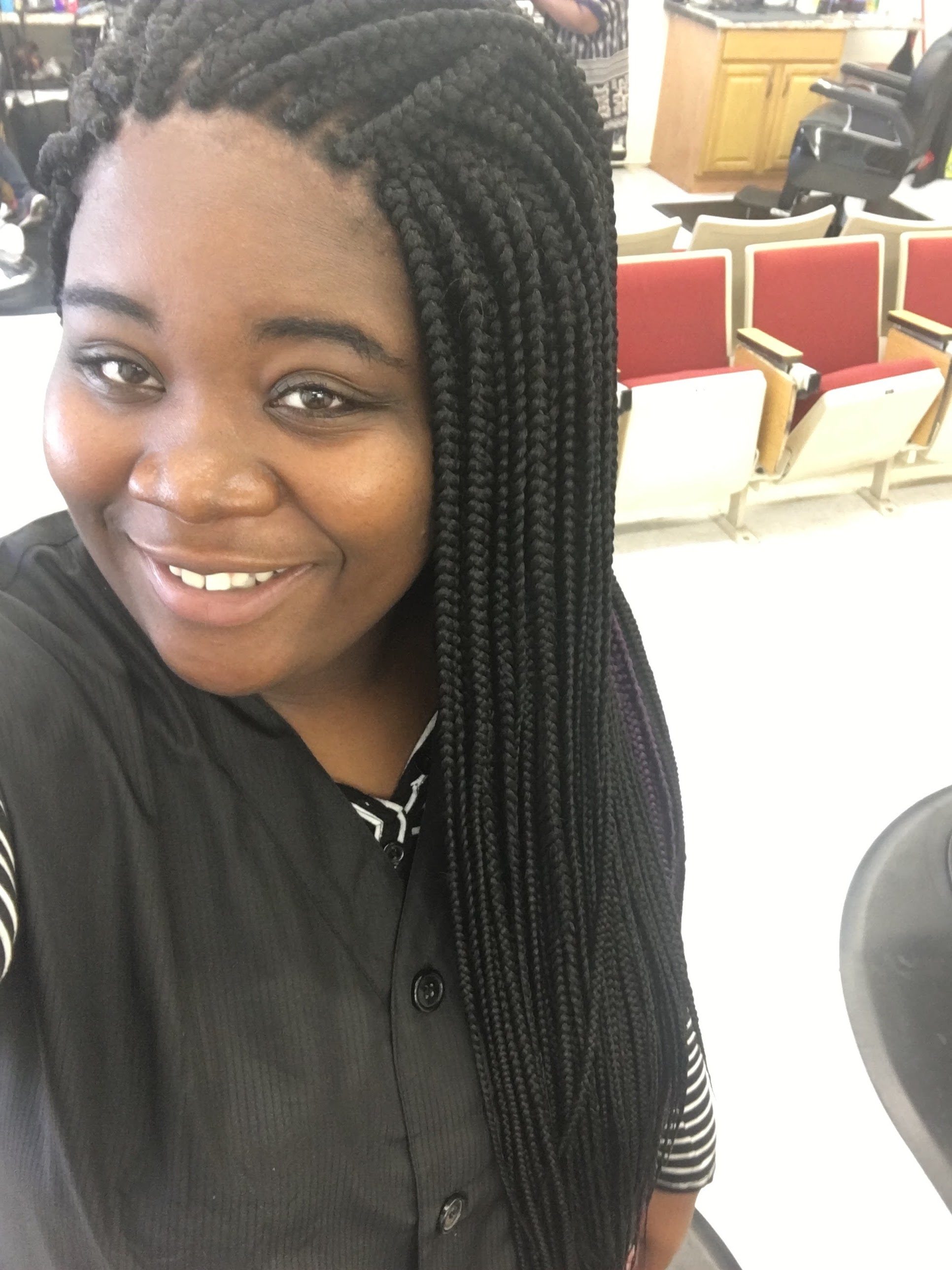
Euniqua Wade, 33, was one of seven children and grew up in foster care. She was exploited by a family member in Oakland when she was just 8 years old, who initially helped her learn trade skills like painting, but later began inappropriate touching.
“He knew that my mom was gone,” she said. “He knew we were homeless, and there were seven or ten of us living on the pallet in my aunt’s house.”
She later went to foster care.
“Of course, I had been raped at nine in one of my earlier foster homes,” she shared about another teenager who was about 15 or 16 years old.
Wade said things were transactional as she received clothes, food and money, and shared how at 12 she and an older family member, also an underage teen, were involved with men who gave them food and money for sex.
“She told me, ‘You can’t be scared,” Wade said. “You’ve got to be a big girl; if not, then you go back to the group home.”
Wade said she stayed at a group home near Camden St. and 60th Ave in Oakland, where she felt further abused by inappropriate touching. She said men in her life instructed her to look for “johns.”
“It was advised for us to go outside and work on International (International Boulevard), which is very close,” she recalled.
International Boulevard, also known as “East 14th Street,” is an area known for sex trafficking. According to a March 5 news release from the City of Oakland, 71 people were arrested by the Oakland Police Department as part of their anti-trafficking efforts leading up to and following Super Bowl LX.
She left her last group home at 15½-years-old in San Ramon, California, as she found a love of life and escaped the entanglements of trafficking through braiding hair. She said she received help from someone at a group home who kept her from traveling to Las Vegas.
“I wound up not going, because I encountered a staff member that day and I pretty much prayed with her,” she said. “I just made a vow to God and myself. I vowed not to prostitute.”
Wade said that from that point, she went back to school, volunteered, won scholarships, attended a four-year college, and later became an educator, a master hair braider, and the CEO of her own wellness company and non-profit.
Today, Wade feels she is a survivor and has a story of triumph. She advises youth who find themselves in an uncomfortable situation not to be afraid to tell a mandated reporter.
Oakland Fights Against Trafficking
Laila Dreidame, Vice President of Advancement and Development at the Boys and Girls Club of Oakland and an Oakland resident, worries about children there.
“We are intentionally placed in areas that police officers have deemed to be more dangerous or having more risks for young folks,” Dreidame said about the clubs.
She had not seen any campaigns regarding human trafficking awareness ahead of the World Cup tournament, which will have several matches in the San Francisco Bay area, but felt it was important.
“There are California legislators who have approved the Ebony Alert, and that’s specific to missing black people,” she said. “There’s also the National Human Trafficking hotline, so we also have those kinds of resources, but I think it’s prime time to kind of collaborate.”
The California Statewide Ebony Alert Program, which became law in 2024, is a resource available to law enforcement agencies investigating the suspicious or unexplained disappearance of a black woman or Black person.
“As a mother, I’m more interested in having as many resources as possible to protect our children and different channels to do that,” she said.
Dr. Akilah Cadet is a co-owner of American professional soccer teams Oakland Roots SC and Oakland Soul SC. Their training facility in Alameda was selected as the official base camp training site for the Australian National Team during the World Cup. Dr. Cadet said she is concerned about wealthy individuals who intend to misuse their financial power during the World Cup.
“We want everyone there to be as safe as one can be in a public space,” she said. “I have concerns because these giant events, All-Star, Super Bowl, World Cup, are nothing but capitalism. So with capitalism comes this abusive use of power, which is human trafficking, pedophilia, sex trafficking, because it’s a form of power and privilege.”
The Need For Ebony Alerts
The Ebony Act was introduced by State Rep. Gina Curry in 2024 and reintroduced in January 2025.
Francina Pendergrass, Executive Director of Hannah’s House, an emergency shelter in New Jersey that provides services to survivors of human trafficking, often from Philadelphia, believes the bill would be beneficial.
“We provide 24-7 safe nurturing, residential housing for women,” Pendergrass said.“I can say 92% of the girls who are usually at Hannah’s House at any given time are young girls of color.”
She has also helped survivors from Mexico, Thailand and Zimbabwe, who escaped trafficking after being promised work and education. She typically works with local women around 21 years old who have been on the street since they were 13 or 14. She said there is a preconceived notion that Black and brown girls who go missing are runaways.
“We’re usually considered to be the fresh girls — meaning the loose girls — so it’s not an urgency to look for them, to find them,” she said.
Dr. Ellyn Jo Waller, First Lady of Enon Tabernacle Baptist Church in Philadelphia, has been working against human trafficking for 22 years and holds an annual Trafficking Awareness conference to engage the Philadelphia community. She felt it was shameful that the bill had not passed.
“Brown and Black women, brown and Black girls, brown and black people are much more susceptible to these forms of victimization and exploitation and just harm,” Dr. Waller said.
She said people sometimes say victims give consent.
“Consent is irrelevant, particularly if the person is under the age of 18, because under the age of 18, you cannot consent.”
Dr. Waller became interested in the topic while conducting research for a church convention to determine how it can be effective in combating trafficking.
“At the time of my research, my daughters were 13 and 14, and that was the average age of entry, and so that is what literally compelled me beyond the calling that I felt from God to do so, to engage in the fight,” said Dr. Waller.
Pendergrass said recovery is a lifelong journey of healing.
“What I see now, as opposed to what I’ve seen before, is that the level of trauma has increased,” she said. “They suffer from depression and anxiety.”
She said they’re hungry, tired and have nightmares and Post-Traumatic Stress Disorder (PTSD). Hannah’s House aims to build the self-esteem of the girls suffering.
“Most of them have not been to any type of doctor or any type of dentist in years,” she said. “They’ll go to the hospital if they’re injured, if they have a sexually transmitted disease.”
How Criminal Justice Services Deal With Trafficking
Captain Trina Pendleton and Sergeant Brian King of the Philadelphia Police Department’s Special Victims Unit collaborate with different agencies regularly to identify and rescue victims of human trafficking. They join federal and local law enforcement agencies, the Department of Human Services (DHS), Philadelphia Children’s Alliance (PCA) and the Salvation Army to provide victim services. Sergeant King said the majority of victims are girls ages 12-17 and of multiple ethnicities. Captain Pendleton, she has not noticed increased numbers of human trafficking around the time of sporting events.
“During large events, we have a lot more travelers and visitors that come to town, and it’s such that they have a tendency to bring on that negative activity where they try to exploit or take advantage of individuals,” she said.
The Police Department has joined with local organizations and businesses to educate and train hospitality staff, implement signage at airports and stadiums, and partner with non-profits to protect victims ahead of the approaching World Cup.
“When you have more people coming into the city, more travelers, more visitors, more people going through the airports and train stations, you’re going to see an increase of not only trafficking, you’re going to see an increase of crimes, thefts, robberies, stolen cars, even car accidents,” Sergeant King said.
The Department of Aviation announced the launch of its comprehensive awareness campaign, “Freedom Starts Here,” to combat human trafficking ahead of the upcoming events in Philadelphia. Cassie Schmid, Chief Strategy Officer for the department in Philadelphia, said they started planning about a year ago.
“Knowing that 2026 was coming up and the influx of passengers that we were going to see from around the world and really knowing that a very large percentage of human trafficking does occur through airports, and it really is a heightened activity during these nationwide events, we wanted to be prepared,” Schmid said. “We really leaned into the universal hand sign.”
The signal is when one makes the number four with one’s hand and fingers. They trained about 18,000 badged employees within the PHL airport community.
“We did a very robust launch campaign of this, which not only included bathroom signage, digital signage, we have palm cards and flyers, there are break room slides,” she said. “Really making sure that they had not only the awareness, but also the means to go and learn more information.”
All staff received online and personal training from the Salvation Army.
Police say that to prevent some of the potential trafficking, it’s important to get involved with teens because many are becoming involved through apps.
“That’s why it’s so important that as parents we are involved in our children’s activities,” Captain Pendleton said. “They’re online. Set up parental control, just be involved with your kids to find out exactly what they are doing, who they are communicating with.”
Dr. Waller reaches the community with her annual Trafficking Awareness Conference in January and through partnerships with existing services and child advocates.
Councilmember Ahmad has presented at Dr. Waller’s conference.
“We cannot have people vilified and treated like slabs of meat,” Councilmember Ahmad said. “We need to be in churches, mosques and synagogues talking about it and saying there’ll be accountability.”
DHS shares you can report suspected human trafficking to federal law enforcement at 1-866-347-2423 or receive help from the National Human Trafficking Hotline at 1-888-373-7888 or text HELP or INFO to BeFree (233733).