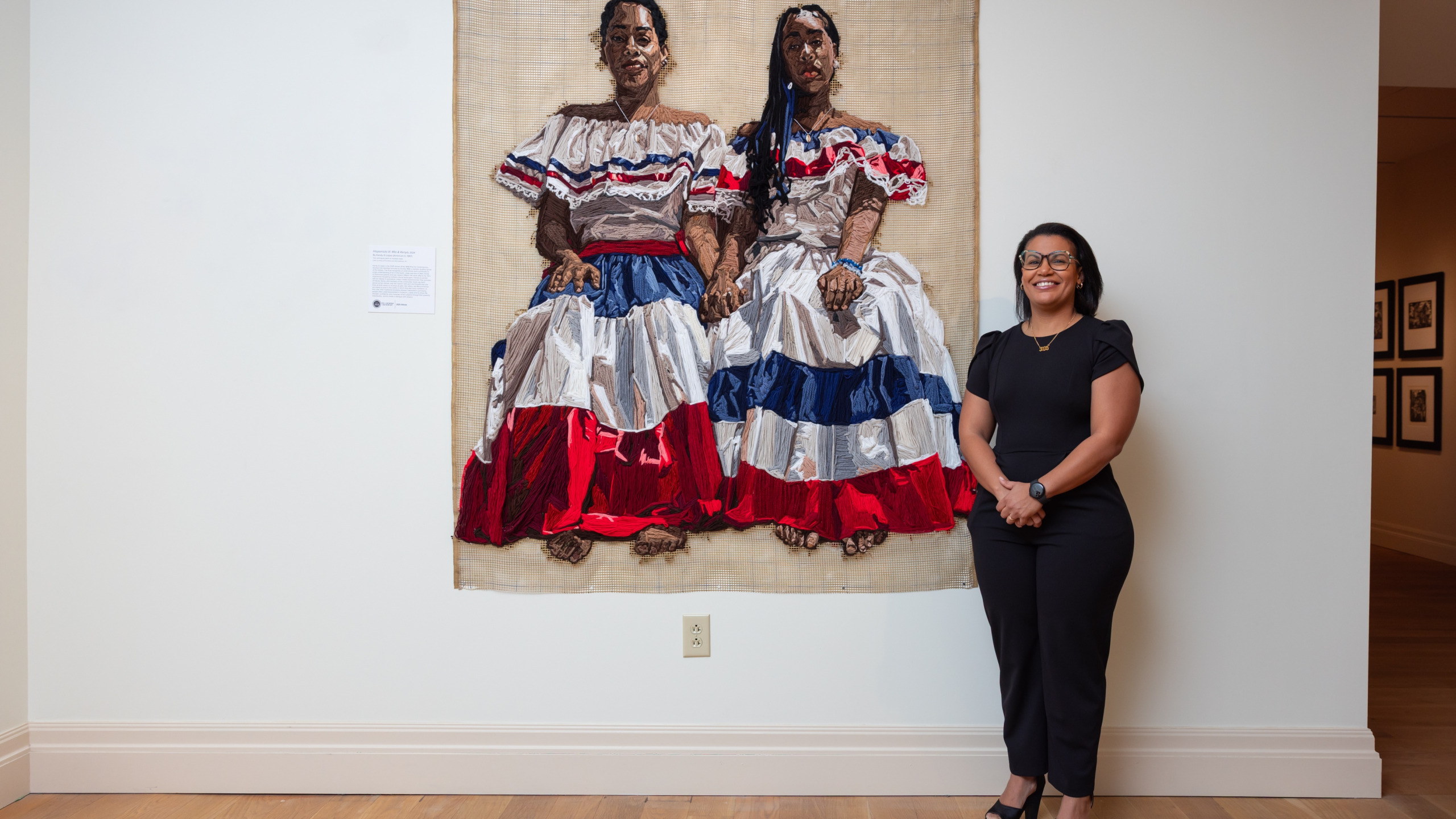
The South has always been a canvas for expression, and Kandy G. Lopez knew from a very early age the importance of exploring identity and power through mixed media. Born to Dominican parents, she draws from her experience navigating her upbringing as an inner city kid. “I understood that you can be taught how to see, and then you can be taught how to make something look like what it is that you’re looking at,” Lopez told EBONY.
“[I attended] an inner city school, so there was a lack of resources, so we had to learn how to make something look like fine art with cardboard, oil pastels and the cheapest watercolor set that you can, but it taught us the resilience of [knowing] you can make it wherever with whatever.”
Lopez finds her creative influences through her roots, engaging with themes while reflecting modern realities, infusing her work with deep emotional resonance and social commentary. She was recently named the 2025 recipient of the Society 1858 Prize for Contemporary Southern Art, which includes a $10,000 award and a yearlong museum exhibition.
“Growing up, I didn’t see Black artists getting any kind of recognition,” she said. “I want them to see that we’re humans, and want people to understand that there’s an intersection of every person. It’s not like we’re a one thing; there are many different layers to each individual person,” she said”
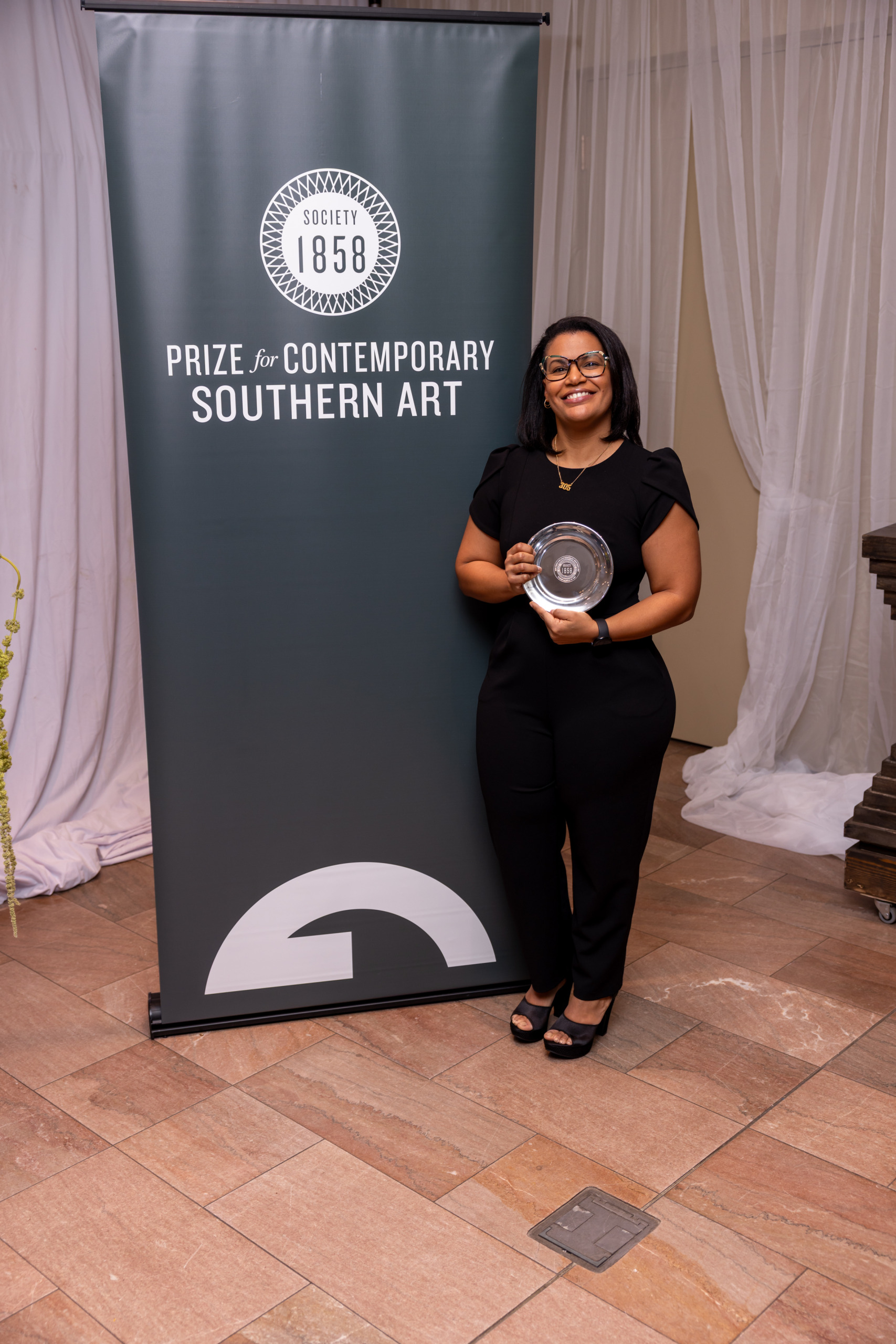
A vital aspect of this transformation is the reclamation and celebration of cultural heritage. By integrating Afro-Caribbean motifs, colors, and symbolism, these artists create a dialogue that resonates deeply within the Southern landscape, connecting local histories to global narratives. “My mission is to make the average person feel as important as celebrity culture,” Lopez said. “As a person who grew up in the inner city, I feel like the people who work in labor jobs and the average person are people who should also get love, respect and admiration and be seen, which is community.”
The Southern contemporary art scene is witnessing the emergence of hybrid art forms that bridge the past and the present, shaped by Afro-Caribbean cultures. Installations, performances, and mixed-media works incorporate elements of spiritual traditions, and making people feel seen. “Bringing people into spaces that they normally don’t feel like they belong in, as I did as a kid, is something that I strive for,” she said.
“I think that there are a lot of issues that are slowly changing within the demographics of who comes into spaces and who purchases works in museums and gallery spaces, and I think that bringing in community and making them feel invited and warm helps reassure that they belong.”
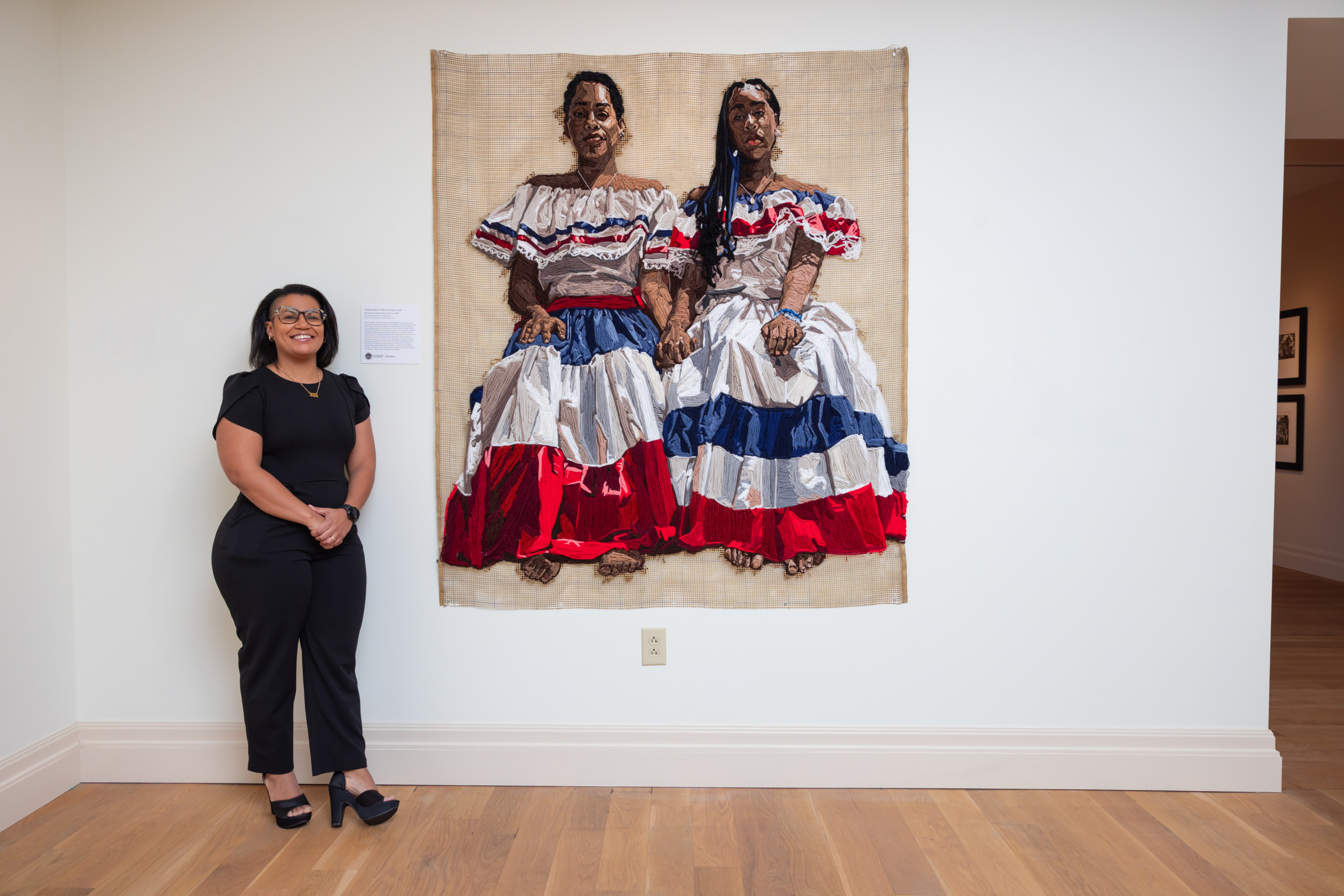
The shift in Southern contemporary art is also a response to the sociopolitical climate. Issues such as racial inequality and justice resonate strongly in her work as an artist. “Kandy’s portraits are striking not only for their scale and technical command, but also for the intentionality behind the work,” said Shane David Hall, co-chair of the Society 1858 Prize. “Her practice directly confronts issues of racial bias, underrepresentation, and systemic injustices, while simultaneously celebrating individuality and the human spirit. Her subjects are never reduced to mere symbols; they feel specific, personal, and deeply honorific.”
This institutional support is crucial in facilitating a deeper understanding and appreciation of the influences shaping contemporary art. Exhibitions featuring the work of artists like Lopez help move beyond traditional boundaries toward more inclusive representation. “Kandy’s work is timely and of the moment – particularly given the political landscape we find ourselves in,” Hall said. “Kandy’s work does not sacrifice emotional intimacy, and it strikes a delicate balance between advocacy and craft, which makes her work especially compelling.”
This ongoing evolution allows artists to create work that challenges preconceived notions of Southern-ness while highlighting the plurality of experiences within the region. This artistic movement not only advances the culture of the South but also serves as a testament to art’s power to connect, reflect, and transform.
“The work is really important,” Lopez said. “Not treating your passion as a hobby, but, treating it as a profession is something that I tell my students all the time. You have to show your work, because there are other people who are looking at your work, even if you don’t get into the show.”