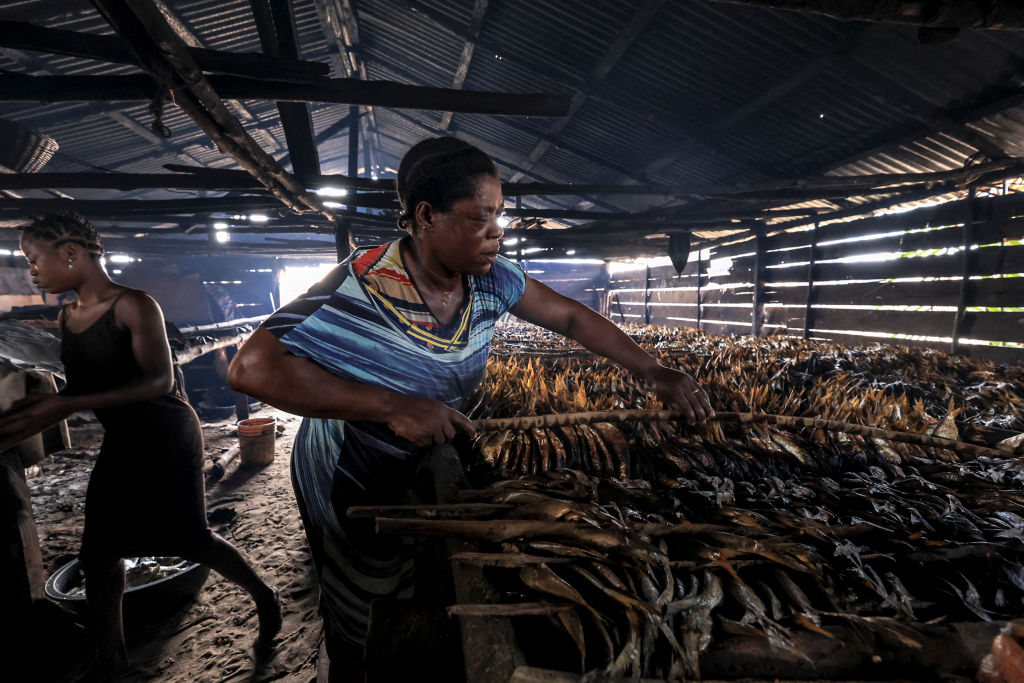
After years of using traditional fish-smoking systems that were hazardous to physical health and environmentally depleting, Gen Zers in Manoka and Douala, Cameroon, sought change. The partnership between the African Women’s Network for Community Management of Forests (REACOF) and the Women Organizing for Change In Agriculture and Natural Resource Management (WOCAN) helped to drive a sustainability movement in Cameroon that is showing generational impact.
“Right now, less than 1% of climate financing reaches women’s organizations at all levels. Yet, it is women who are at the forefront of climate solutions. Women are closest to the effects of climate change through their roles as the main community farmers, fish harvesters, and natural resources managers,” Dr. Jeannette Gurung, Founder and Executive Director of WOCAN, expressed in an interview with EBONY when speaking about the lack of female representation in the climate change arena.
Despite the health implications that women face with climate change, there are many who push for economic change on a global scale who are not recognized or heard of. WOCAN is an international women-led nonprofit membership organization dedicated to establishing sustainable environments on a global scale while amplifying female leadership representation and equity within the landscape.
The organization created the W+ Standard , a framework that’s designed for organizations to evaluate their sustainability efforts with metrics that strategically outline how they empower women across areas such as leadership, income, and health, to name a few.
“We have designed the W+ Standard to provide a way for individuals, companies, and investors to directly channel financial support to women’s groups and organizations engaged in project implementation, through the purchase of W+ credits. We believe that this provides an easy and transparent way for Gen Zers to show their support for person-to-person contributions that make real and measurable changes in women’s lives,” Dr. Gurung noted when explaining more about the training program.
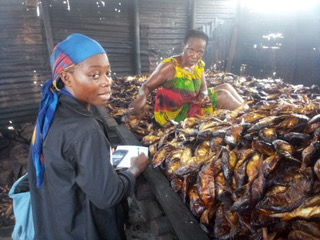
W+ Credits are offered by WOCAN and allow individuals, companies, or investors to financially support women’s organizations seeking to implement the W+ Standard in their projects. The purchase of W+ Credits helps global sustainability and female leadership efforts come to life by providing financial support, education, and empowerment to women. Outside of Cameroon, these credits have supported projects in India, Kenya, Cambodia, Indonesia, Nepal, and Mexico.
President and Founder of REACOF, Cecile B. Ndjebet, believed that protection was needed for women’s equality across parts of Africa as it pertained to advocacy for policies and practices for gender equality in environmentalism. After identifying men and women in Cameroon, as well as empowering their personal and economic development.
“The W+ project was the turning point of the great change we can observe today in Manoka, Mbenguè Dikoumè, Lonji, and in Campo beach as we developed two other initiatives based on lessons from Manoka women fish dryers,” Ndjebet said.
The partnership between WOCAN and REACOF birthed a new chapter for the organization through education, environmentally-friendly work alternatives, and compensation for their work that typically would go unnoticed. Their primary work activity of fish smoking initially included the use of mangrove wood, but has since shifted to metallic and clay models. This has helped eliminate previous issues including lack of temperature control, injury from burns, eye irritation, and respiratory issues.
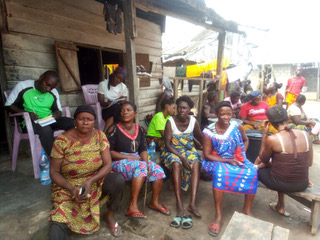
The W+ Standard allowed for 60 women to be directly trained with 80 additional women receiving a transfer of knowledge. Outside of significantly reducing mangrove wood use, these women also saw a 125% increase in their revenue after using the organization’s Income & Assets domain. As a result of implementing the training, they reduced wood consumption by 36% and the smoking time for fish-smoking systems by 18%, according to Dr.Gurung.
In turn, this improved the market value and quality of the fish, along with the sustainability and health impact of those using the machinery. Women in the area are now recognized as leaders in their community, providing restorative practices and shifting gender normalities in environmental leadership.
Now that they have quantifiable results of their sustainable efforts from the training, they can receive more support from grant makers and purchasers of W+ credits, which will allow them to enhance their efforts on a larger scale while championing women’s empowerment within the forests and mangroves of Cameroon.
While there are many platforms, organizations, and individuals that are supporting their counterparts in the fight for sustainability, Dr. Gurung recommends for those looking to support to take a closer look at who is truly taking care of the planet— women. Moreover, the importance of ecosystems that play a large role in climate protection to get a better understanding of how they lead these efforts in their own communities.
“By learning about and engaging with initiatives that measure and reward women’s environmental labor, such as the W+ Standard, they can help shift old models of aid toward genuine empowerment. Supporting these women means uplifting new leaders—many of whom have been underpaid or unpaid for their essential work sustaining our shared planet,” Dr. Gurung explained when speaking to what those in the United States, specifically Gen Z, can do to support their counterparts in coastal areas in the fight for environmental gender equality and sustainability.