
There was a time when the locker room stood as one of the most meaningful spaces in sports culture, not because it was hidden, but because it was protected.
It held relationships shaped by proximity, shared struggle, and unspoken understanding. It allowed athletes to confront tension, process pressure, and build trust without the added burden of performance for an audience. Not everything needed to be visible to be valid, and not every conversation required witnesses to carry weight.
And while that environment has not disappeared, it is now being reshaped by a culture that increasingly treats visibility as value.
When Connection Expands, It Also Transforms
Today, what once lived within the walls of the locker room now extends across digital platforms, where group chats, podcasts, and livestreams serve as new sites of connection. Platforms like Discord and WhatsApp enable constant communication, while athlete-led shows recreate the cadence of locker-room dialogue in public view.
Chris Moore, sports analyst and founder of the Moore Insight Podcast, situates this shift within both generational and structural change. “What we’re seeing is that relationships are being developed early on,” he explains, pointing to how those early bonds now carry into the professional ranks.
That evolution has softened traditional rivalries and introduced new forms of connection that extend beyond team affiliation. This camaraderie is no longer confined to shared jerseys. It now stretches across networks, brands, and business ventures.
But expansion is not neutral.
When connection moves into spaces shaped by algorithms and audience engagement, it does not simply grow; it adapts. Conversations become more intentional, not because they are false, but because they are aware. Athletes are now speaking within systems that reward resonance.
The Myth of Then and the Performance of Now
There is a tendency to treat the past as more authentic, to assume that earlier eras reflected a purer form of community. However, that assumption relies on incomplete information.
On the court, Michael Jordan and Scottie Pippen embodied cohesion, dominance, and trust. Their partnership appeared seamless, almost inevitable. It was not until the documentary The Last Dance that the public was invited into a more complex reality, one marked by tension, imbalance, and unresolved frustration. The locker room protected that contradiction.
Today’s athletes have far greater control over their narratives. That control creates access, but it also creates selection. What is revealed is no longer incidental. It is chosen, and if we misunderstood relationships, then because we could not see them, we should question why we are so confident in our understanding now, simply because we can.
Visibility as Both Liberation and Constraint
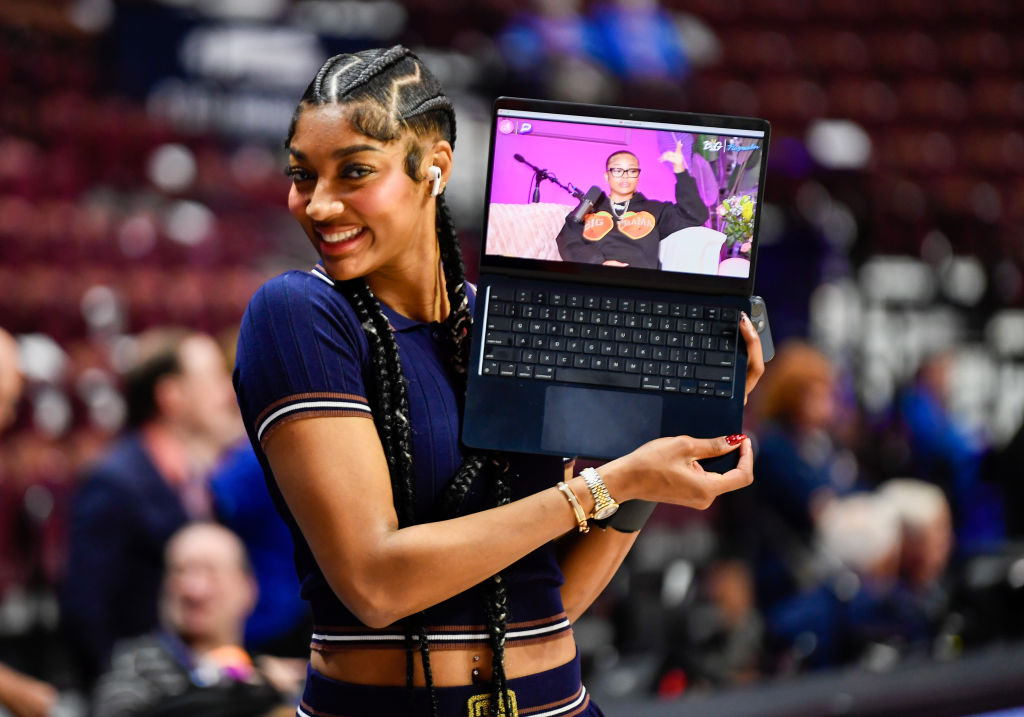
The rise of athlete-led platforms has opened new pathways for conversations around mental health, identity, and emotional well-being. Athletes like Kevin Love, Lauren Betts, Angel Resse, and DeMar DeRozan have shifted what vulnerability looks like in sports, offering language for experiences that were once suppressed.
“When they talked about what they were going through, I believe some people felt seen,” Moore says.
That visibility matters because it creates recognition and disrupts stigma. It signals that emotional struggle is not incompatible with strength, but visibility also introduces expectation.
“Performance anxiety isn’t just on game day anymore,” Moore explains. “It’s in every post, every comment, every stat line.”
Because once vulnerability enters a system that rewards engagement, it does not simply exist; it shapes and frames what is perceived as reality. It is, at times, calibrated for response, and that invites a more difficult line of inquiry.
Are we witnessing a deeper honesty, or a more acceptable version of it?
When Conversations Leave the Locker Room and Enters the Feed
When vulnerability becomes something that must be managed, timed, and interpreted in public, the boundary between what is personal and what is performative begins to shift in fundamental ways.
The 2022 physical altercation between Draymond Green and Jordan Poole illustrates this transformation. What would have once been addressed within the internal structure of a team was instead pulled into public circulation, reframed as content, and consumed through a lens of reaction.
What changes here is not just visibility, but the very framework through which conflict is understood, as moments once handled in context are now filtered through the expectations of a watching audience.
Within traditional team environments, conflict exists within a closed system, where accountability is negotiated through proximity and shared stakes. Once that same moment is removed from its context and placed into public discourse, it becomes fragmented and often simplified.
Not every conflict is meant to be publicly processed. Some require privacy to be honest. Others require distance from performance altogether to be meaningfully resolved. When those moments are converted into content, they cease to function as relational experiences. They become cultural artifacts, shaped by commentary and collective projection.
Authenticity in the Age of Incentive
The digital locker room does not operate outside of economics. It is embedded within it, and that positionality is where evolution makes things tricky.
Podcasts, livestreams, and athlete-led platforms are not just spaces for expression. They are systems of value creation. When personality becomes brand and conversation becomes content, the idea of authenticity, while still present, is now expressed within a framework that rewards visibility and consistency.
“There are some relationships that are performative,” Moore says, “but there is a genuine connection as well.”
Both can coexist.
The question is not whether authenticity exists, but how it is shaped when attention becomes currency. Monetization does not erase what is real, but it introduces incentive. And encourages the sustainability of presence, not just the sincerity of expression.
As Moore notes, it can “mess up a good thing” if intention is not grounded.
What Should Remain Unseen Still Matters
The digital age has expanded what we can see in the world of sports. It has humanized athletes, offering insight into how they think, relate, and navigate life beyond performance.
The tension we must wrestle with in an age of oversharing is: should everything that happens to and with public figures be made public?
Maybe some conversations require privacy, and some forms of growth require distance from the audience altogether. The locker room still matters, not because it hides, but because it holds.
And the question now is not whether the digital locker room is real. It is whether everything real is meant to be seen.