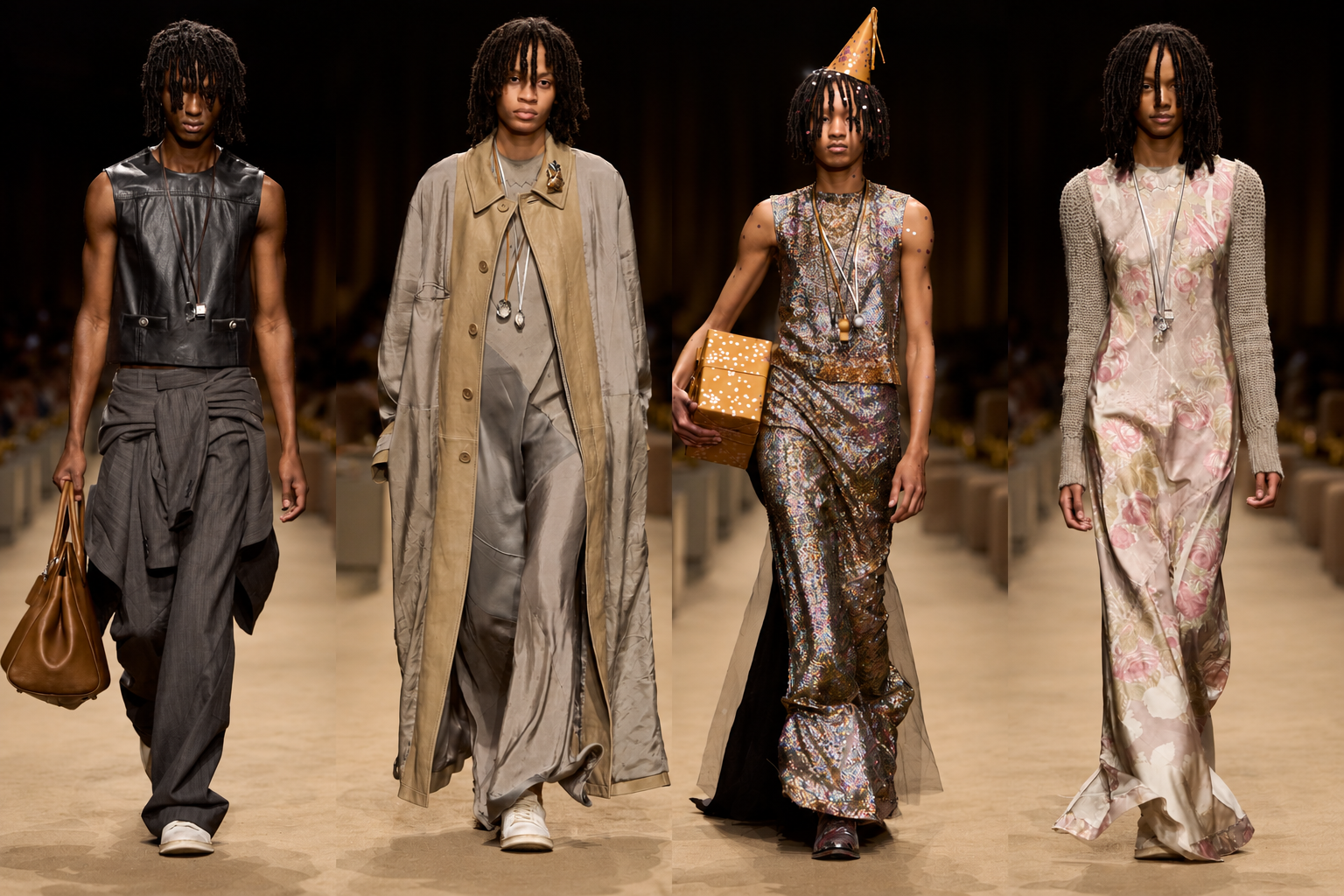
There are two ways a fashion house can celebrate turning 85. It can open the archives, pull out the greatest hits and spend an evening reminding everyone why it matters, or it can throw a birthday party, mess up its clothes and stay out a little too late. For Spring 2027, Coach chose the latter. Presented in downtown New York City, Stuart Vevers’s latest collection acknowledged the American house’s considerable history without becoming trapped by it, taking familiar Coach codes and pushing them through the lived-in, slightly rebellious lens that has defined his tenure.
“For Coach’s 85th anniversary, I was thinking about memory and the way familiar things change as we live with them,” Vevers said in the collection notes, adding that he “didn’t want to make a retrospective.” That decision proved important because Spring 2027 wasn’t particularly interested in pristine nostalgia. Instead, Vevers considered what happens to clothing after we actually own it: leather softens, tailoring wrinkles, hems drag against sidewalks and the jacket you started the evening wearing eventually ends up tied around your waist. These were clothes that seemed designed to get better after you stopped worrying about keeping them perfect.
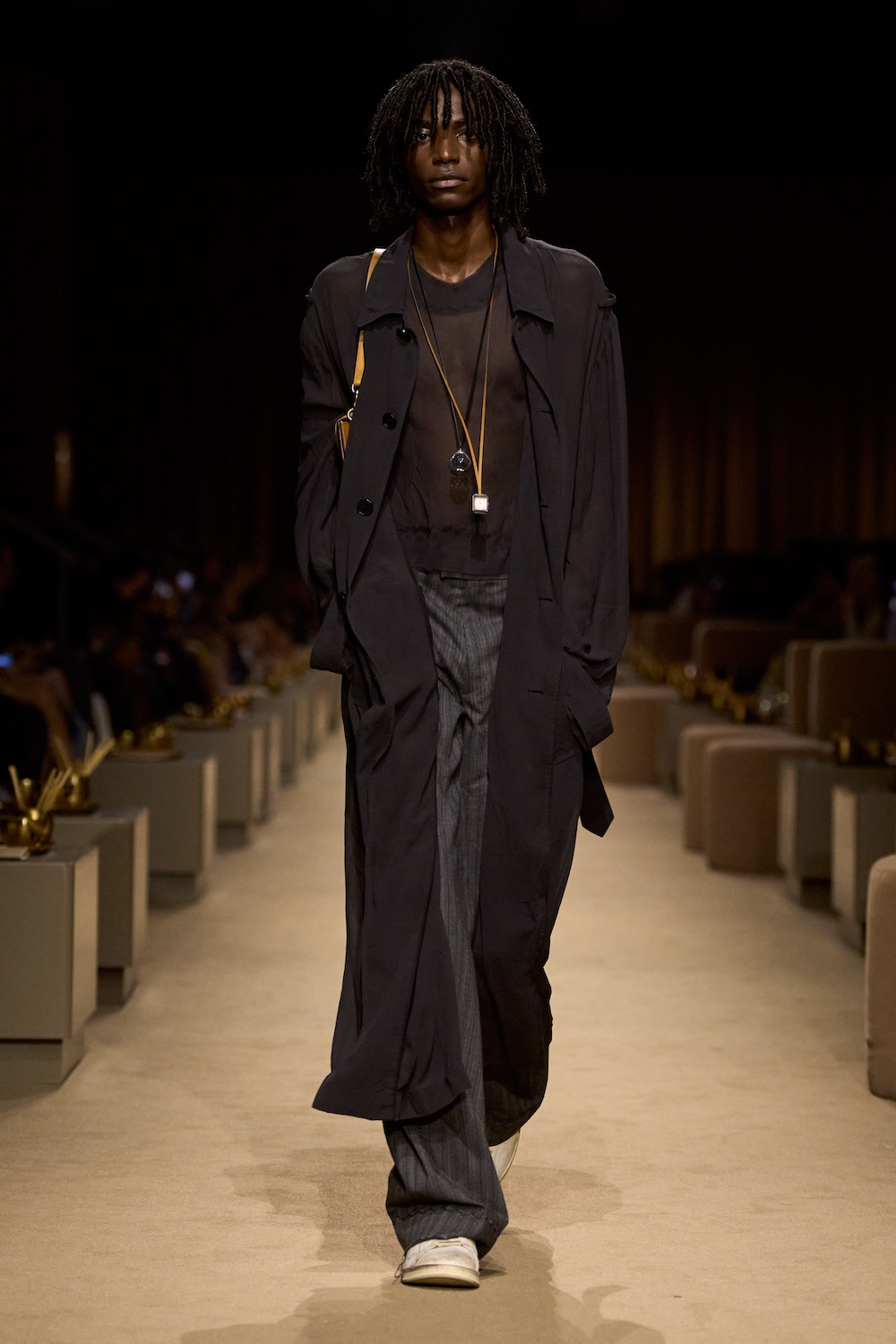
That sense of familiarity was strongest in the collection’s tailoring. Slim gray trousers pooled around white sneakers while suit jackets were knotted around the hips, taking some of the seriousness out of traditional suiting. Cropped sleeveless leather tops were paired with charcoal trousers and oversized caramel leather bags, while elongated black coats were layered over sheer tops and pinstriped pants. Pieces repeated throughout the collection, but that worked in its favor. Rather than presenting 50 completely different ideas, Vevers showed how the same wardrobe could shift depending on the person wearing it, which is closer to how people actually get dressed.
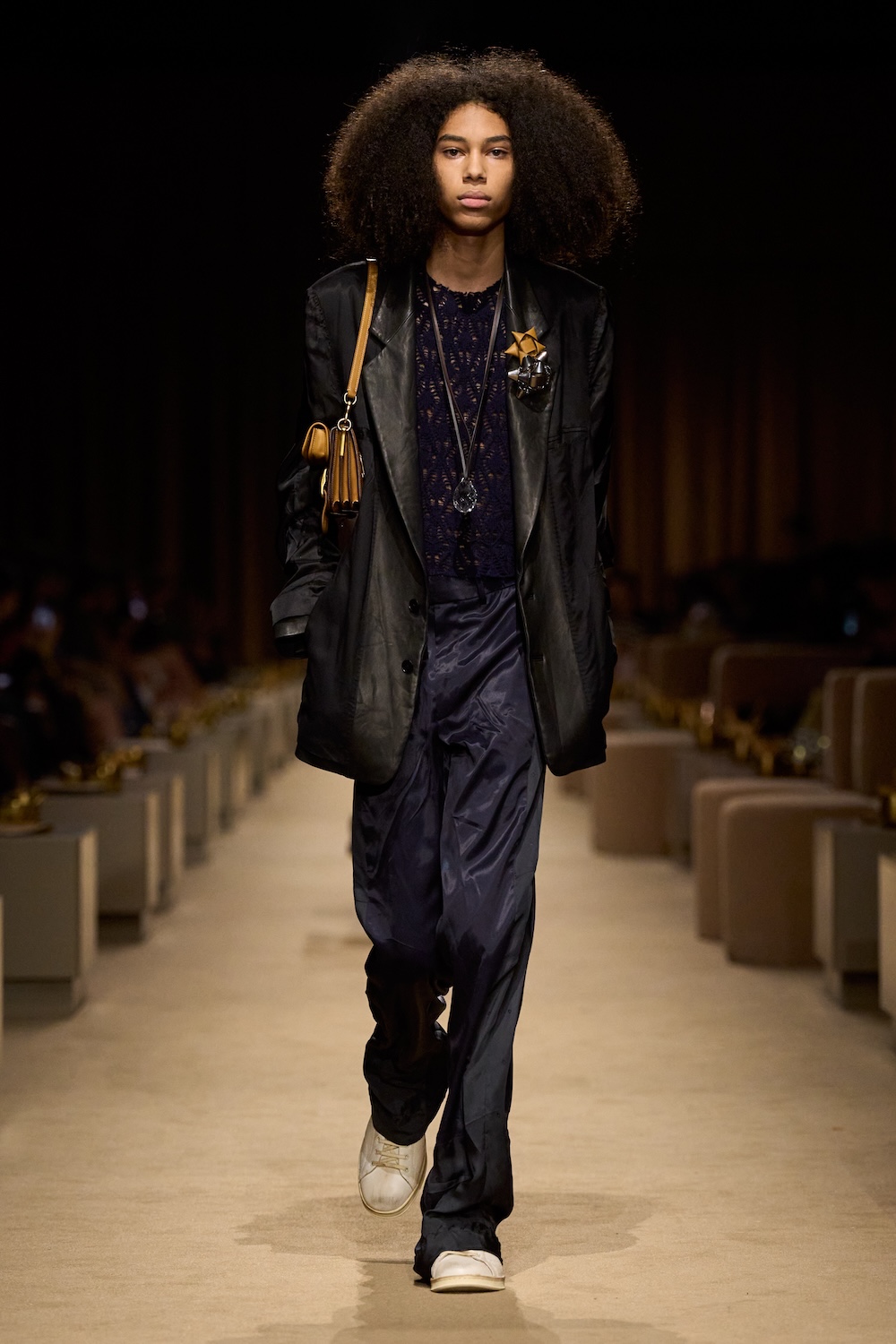
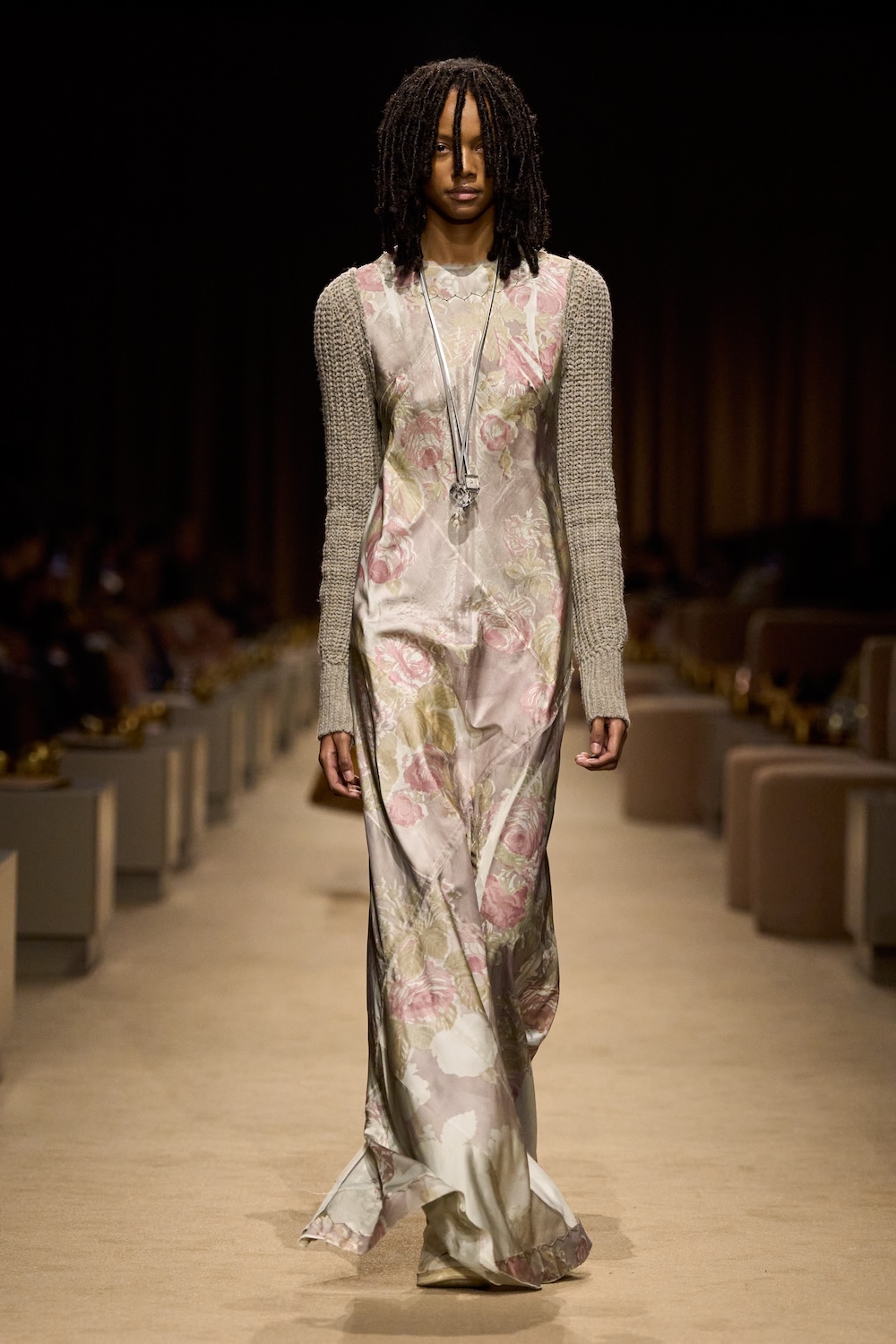
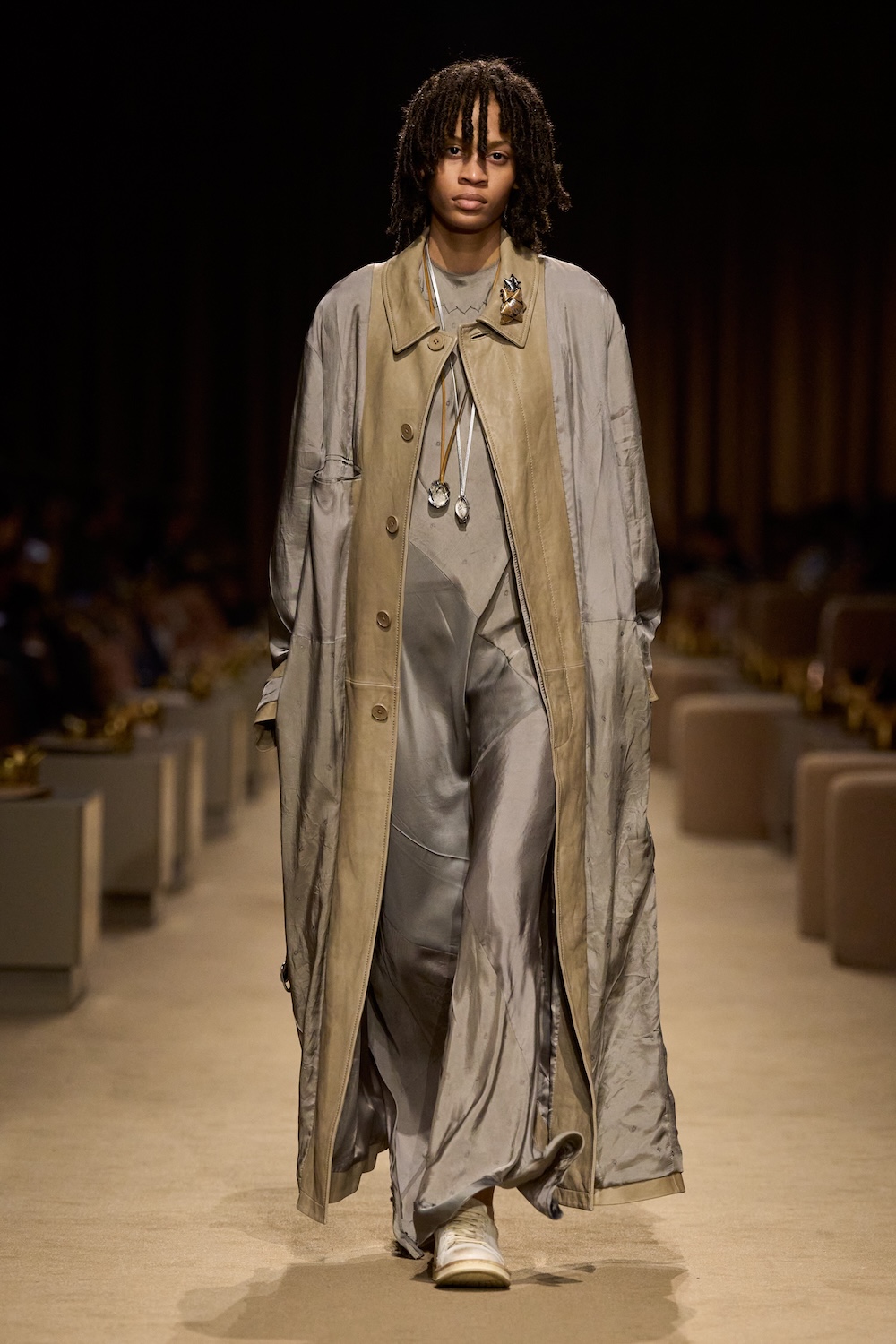
There was also an effortless fluidity to the styling. Leather vests, narrow trousers, long coats, sheer knits, satin and jewelry moved between bodies without the collection needing to make a grand statement about who was supposed to wear what. The softer moments followed the same philosophy. A faded floral bias-cut gown with chunky knitted sleeves looked like something discovered in an old trunk and made better because it wasn’t perfectly preserved, while a liquid silver ensemble disappeared beneath a sweeping taupe coat. Against all the black leather and charcoal gray, those pieces gave the collection some necessary softness.
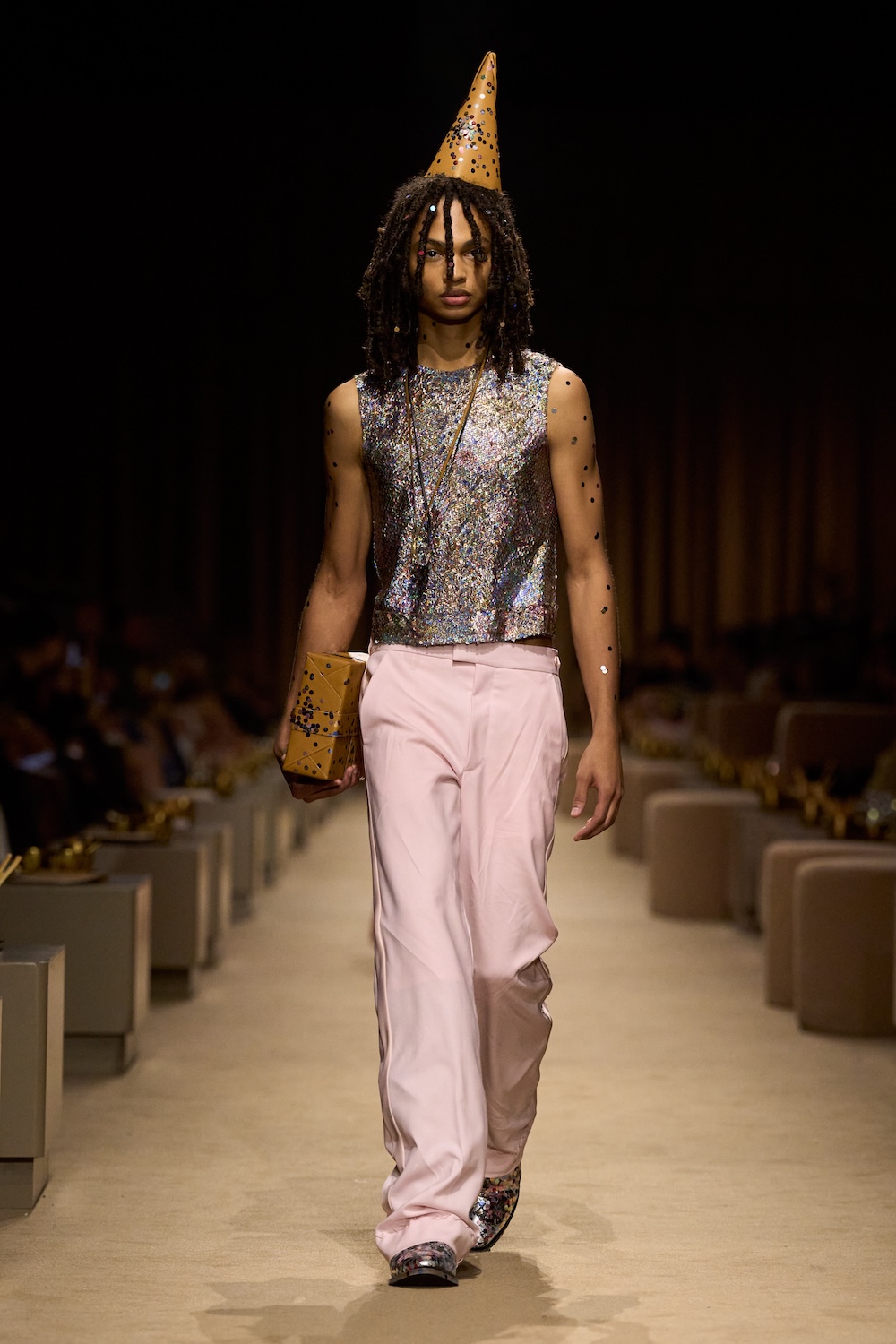
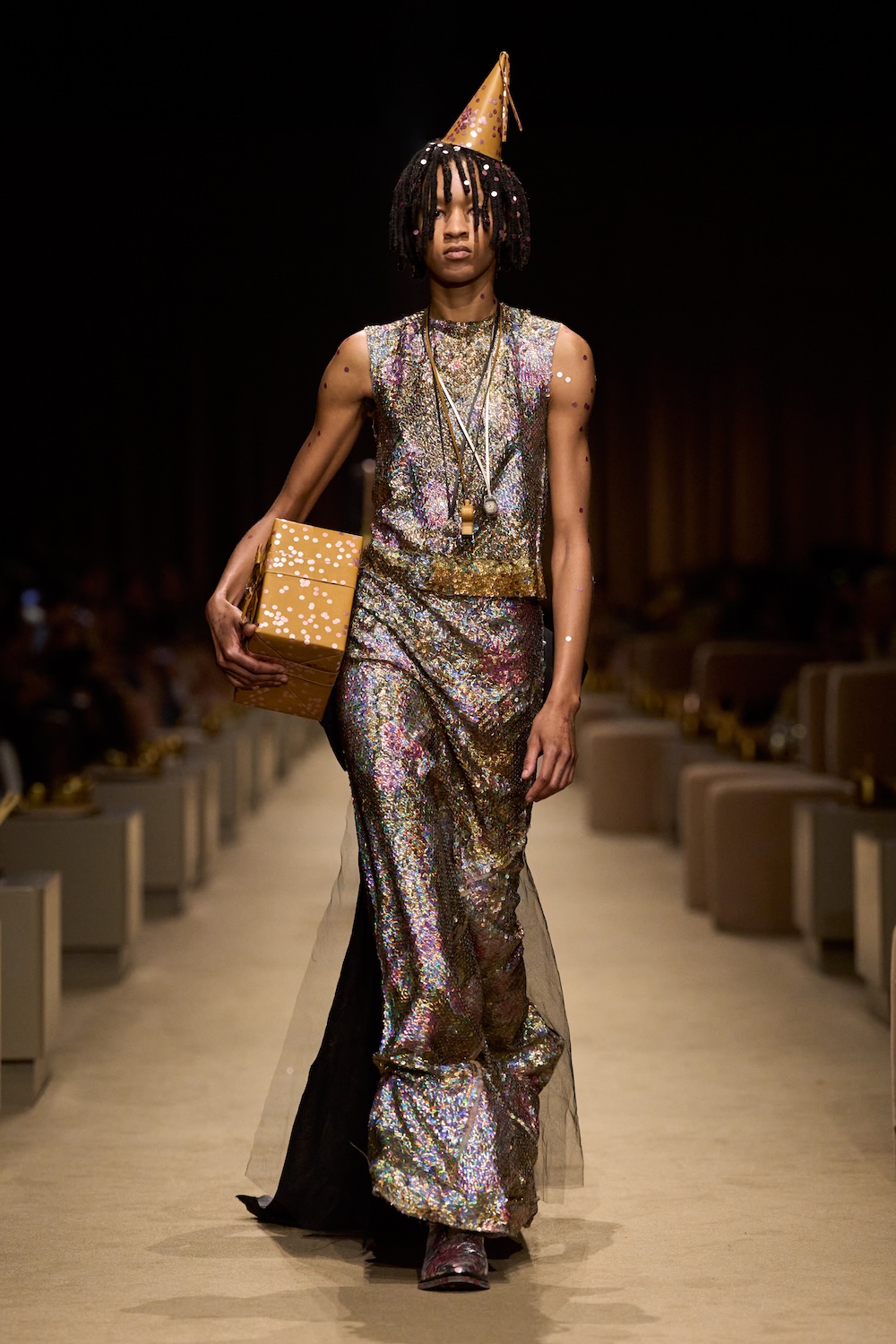
Then the birthday party started showing itself. Metallic sleeveless tops shimmered like crumpled wrapping paper, confetti appeared across bodies, shoes and leather goods and models walked in pointed party hats carrying gift-box clutches. Powder-pink trousers paired with a sparkling top brought some humor to all that gray, while a head-to-toe metallic look was gloriously excessive. What kept it from becoming gimmicky was the suggestion that the party had already happened. These weren’t simply clothes made for a celebration. They looked like clothes that had survived one, complete with the evidence still attached.
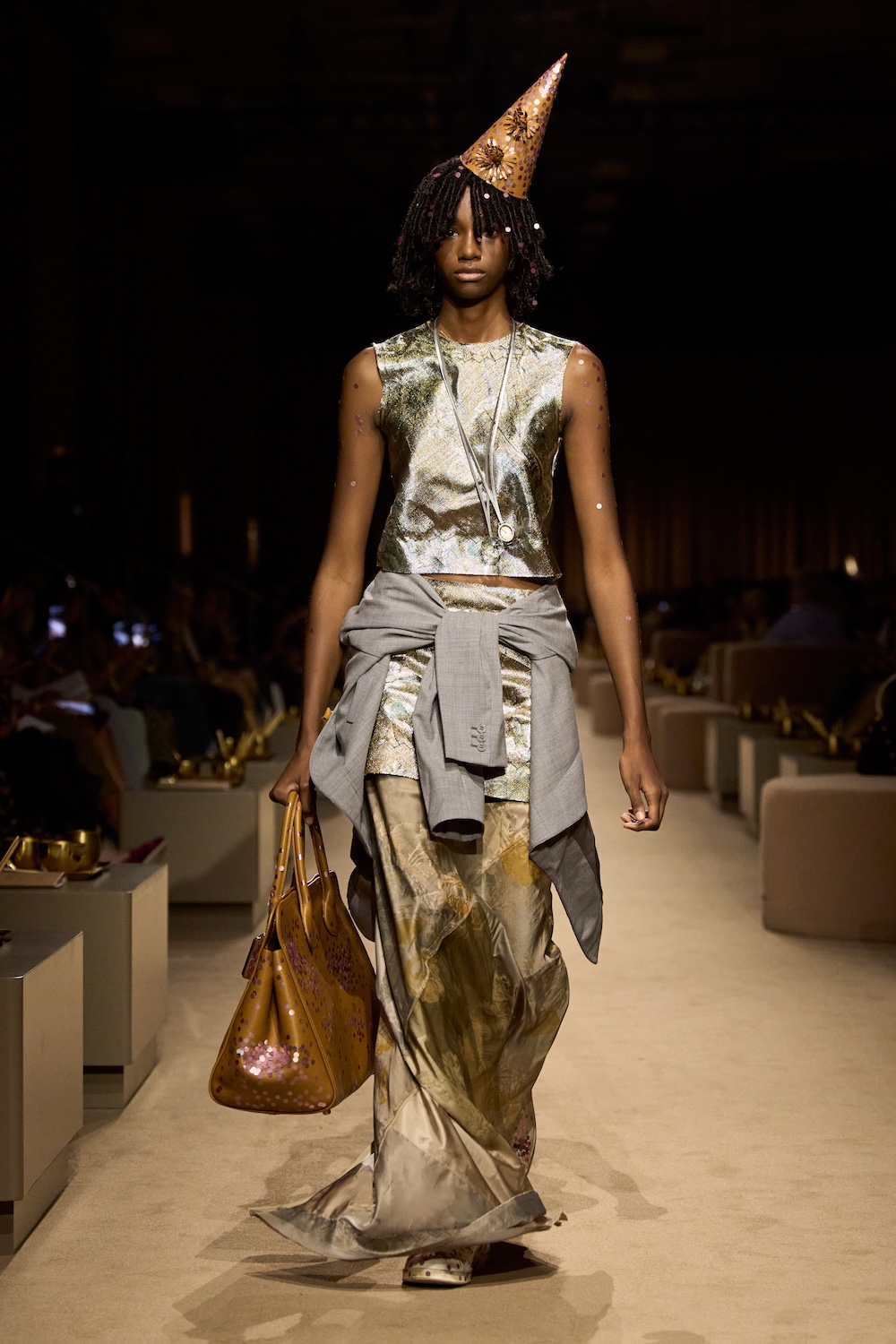
That idea extended to the accessories. Metallic foil was rubbed onto leather, glitter and nail polish created cracked hand-finished surfaces and confetti decorated bags and shoes. The new Turnlock Tote referenced a Coach design from 1970 and Bonnie Cashin’s historic turnlock hardware, while the Inside-Out Brooklyn exposed construction typically hidden from view. Vintage Coach pouches were even assembled into new bags, reinforcing the collection’s larger argument that heritage gets more interesting when you’re willing to mess with it instead of simply reproducing it.
By the finale, curtains lifted to reveal student musicians from UpBeat NYC performing “Love Is the Message” before models returned alongside eight voguing dancers directed by Arturo Lyons as confetti rained across the room. The moment felt celebratory and distinctly New York, but it also nodded toward the communities that have long made the city’s nightlife, dance floors and fashion scenes worth paying attention to. Voguing wasn’t treated as an accessory to the clothes, but as part of a larger celebration of movement, self-expression and the freedom to show up exactly as you are.
At 85, Coach doesn’t need to convince anyone it has history. The more interesting question is what you do with all that history once you have it. For Spring 2027, Vevers didn’t preserve it under glass. He loosened the seams, exposed the linings, scuffed the leather, threw some confetti on top and sent it back out into New York. Seems like maybe the best way to honor clothes people have loved for generations is to make sure the next generation actually wants to wear them.