“In that moment, we were all terrified.”
Last November, the Wicked: For Good cast was in full PR mode, crisscrossing the globe to promote the second installment of the movie adaptation. At the Asia-Pacific premiere at Universal Studios Singapore, a man jumped the barricade and grabbed Ariana Grande on the yellow carpet.
Cynthia Erivo, who was standing beside her co-star and close friend, instinctively stepped in to shield Grande from what could have become a dangerous situation. The moment lasted only seconds, more adrenaline-fueled reflex than a calculated response, but clips quickly spread across social media.
Some viewers praised Erivo for reacting exactly as a friend would in a tense moment. Others were far less generous. She was labeled “Ariana’s bodyguard,” while memes and parody videos flooded timelines. In some dark corners of the internet, Erivo was framed as aggressive toward fans rather than being protective of her friend.
Now, Erivo is speaking out.
Erivo Responds
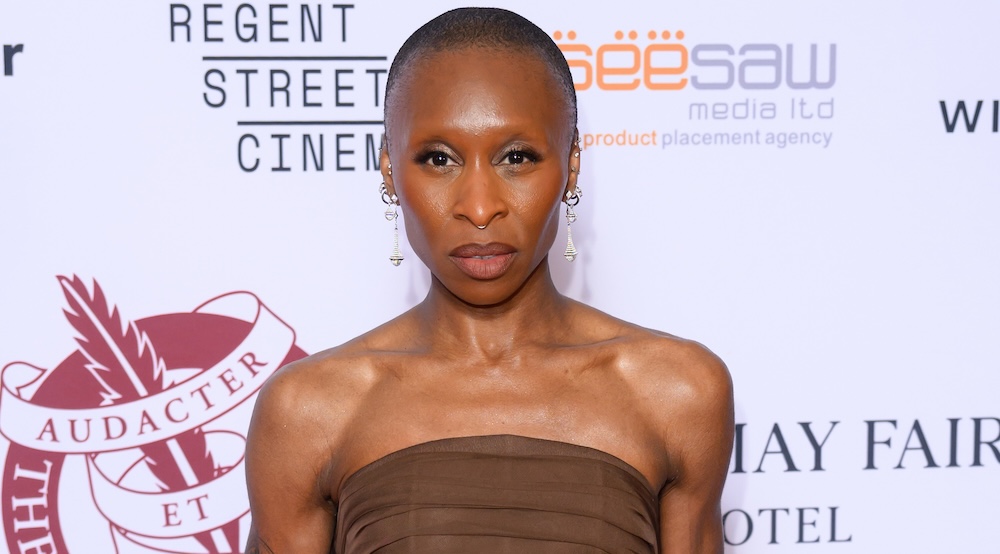
“I think that we haven’t really come to terms with the insidious nature of how we view Black women,” Erivo shared in a candid cover interview with Variety. “Because that’s what was being made fun of. It was my physique; it was my shape; it was the fact that I was bald; it was about what I looked like.”
Yes, people equated her appearance with the ideals of a protector. “There was this assumption that I was bigger than my co-star, and so I had to be controlling or protecting, and that was my role,” she said. “I would hazard a guess that it would not have been the same had it been the other way around.”
Why She Really Stepped In
“I moved because my brain went, ‘Get him away! Get him out of here!” Erivo recalled the frightening moment when the man would not release Grande. “My immediate reaction was, ‘Get him away from us.’ In that moment, we were all terrified.” It was an immediate human response to danger. But online, the moment was flattened into content. Another meme. Another projection of the “strong Black woman” archetype people celebrate until it asks them to confront the actual human being underneath it.
The History Behind the “Protector” Narrative
Black women have long been considered strong individuals who feel no pain and are often expected, if not demanded, to intervene when there is an issue, even if it’s at the expense of their own safety.
That perception does have historical roots. In the Kingdom of Dahomey, in present-day Benin, the Agojie, an all-female military regiment, served as royal guards and fierce defenders from the 17th through the 19th centuries. With her shaved head and commanding presence, some viewers subconsciously connected Erivo to that imagery.
But there is another history at play.
During enslavement in America, Black women were often expected not only to endure their own labor and suffering but also to emotionally and physically protect the white households they served. Generations later, that expectation still lingers in public imagination: Black women are resilient caretakers whose strength exists primarily in service to others.
As the famous meme goes to a newly minted immigrant in America, “If you get into trouble,” says his mother as he leaves, “find a Black woman to help you.”
That is why reducing Erivo to a “bodyguard” felt so unsettling. Beneath the memes sat a much deeper cultural expectation: that Black women are supposed to protect everyone else while their own fear, vulnerability and humanity go unacknowledged.
By speaking openly about the incident, Erivo reclaimed her narrative and showed how we all reclaim our softness — and our right to stand up when we need to.