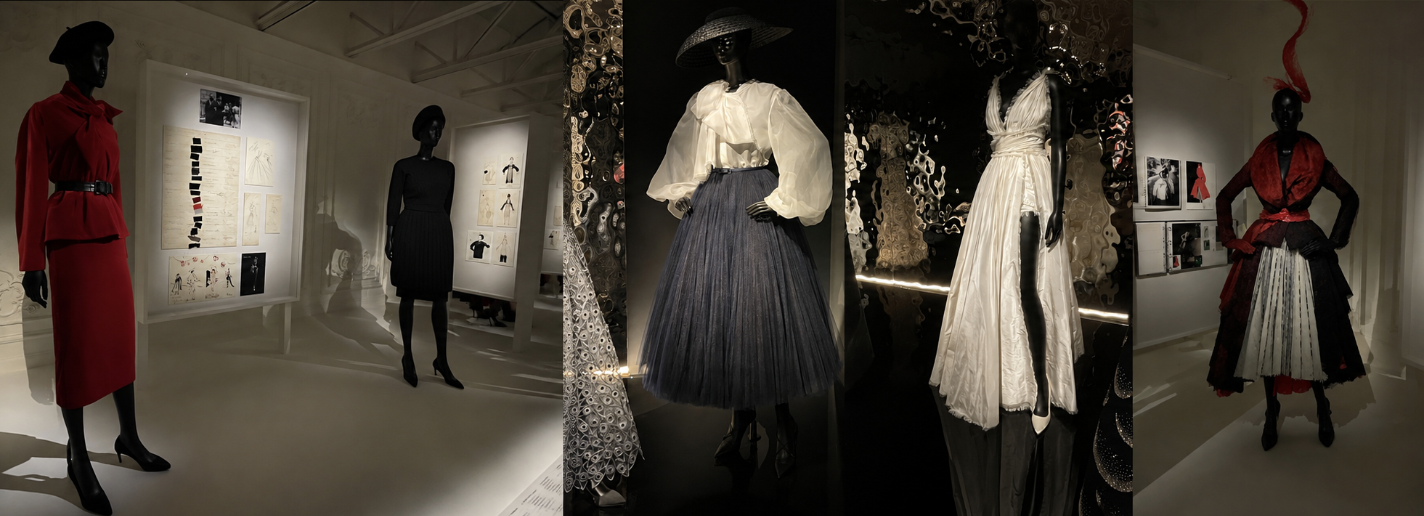
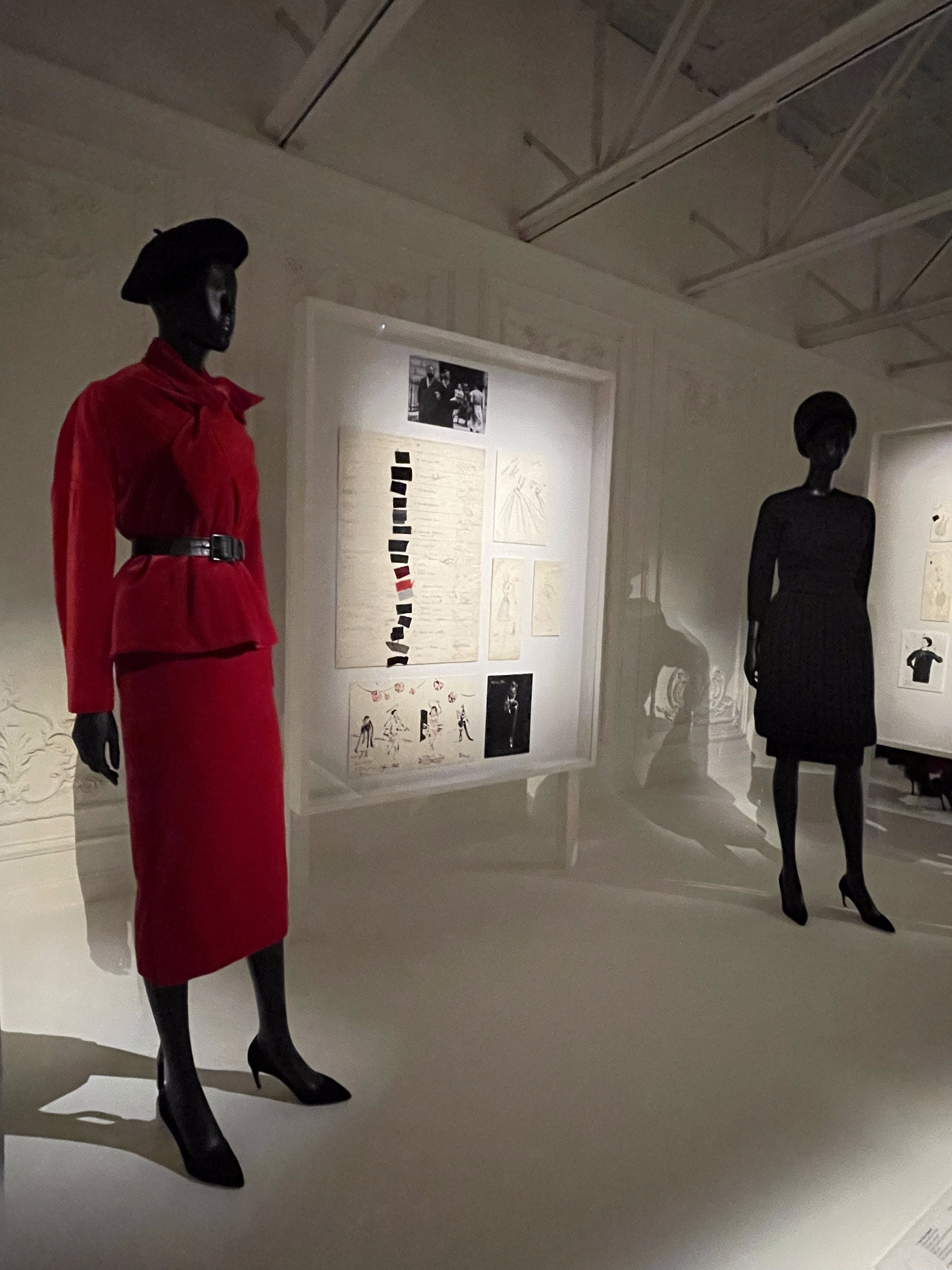
In 1949, Christian Dior made Dorothea Towles Church the first Black model in Paris haute couture, forcing Black American elegance into global white luxury.
At Atlanta’s SCAD FASH Museum of Fashion + Film, the National Black Arts Festival co-hosted “Black Beauty in Post-War Paris” alongside the museum’s Dior: Crafting Fashion exhibition. I shared the stage with Danny Dunson of Chicago’s DuSable Black History Museum in a panel moderated by SCAD FASH’s Alex Delotch Davis. Together, we examined how Church breached haute couture and introduced French fashion directly to Black Americans.
Born in 1922 in Texarkana, Texas, Dorothea Towles Church grew up in a “Jim Crow middle class” household that prioritized education. She graduated cum laude from Wiley College with a degree in biology and pre-med, then taught high school in Los Angeles before becoming the first Black student admitted to the Dorothy Farrier Charm and Modeling School.
In 1949, she bought a $300 ticket on a cargo flight to Paris to accompany her pianist sister on a Fisk University concert tour. Not long after landing, she sold the return ticket and informed her dentist husband that she was not returning to California. Christian Dior hired her on sight. For five years, she worked as a primary muse for Dior and a mannequin for Elsa Schiaparelli during the designer’s wildly creative last years. She was also a top model for Pierre Balmain. He requested that she dye her black hair platinum blonde because he wanted to create a dramatic contrast.
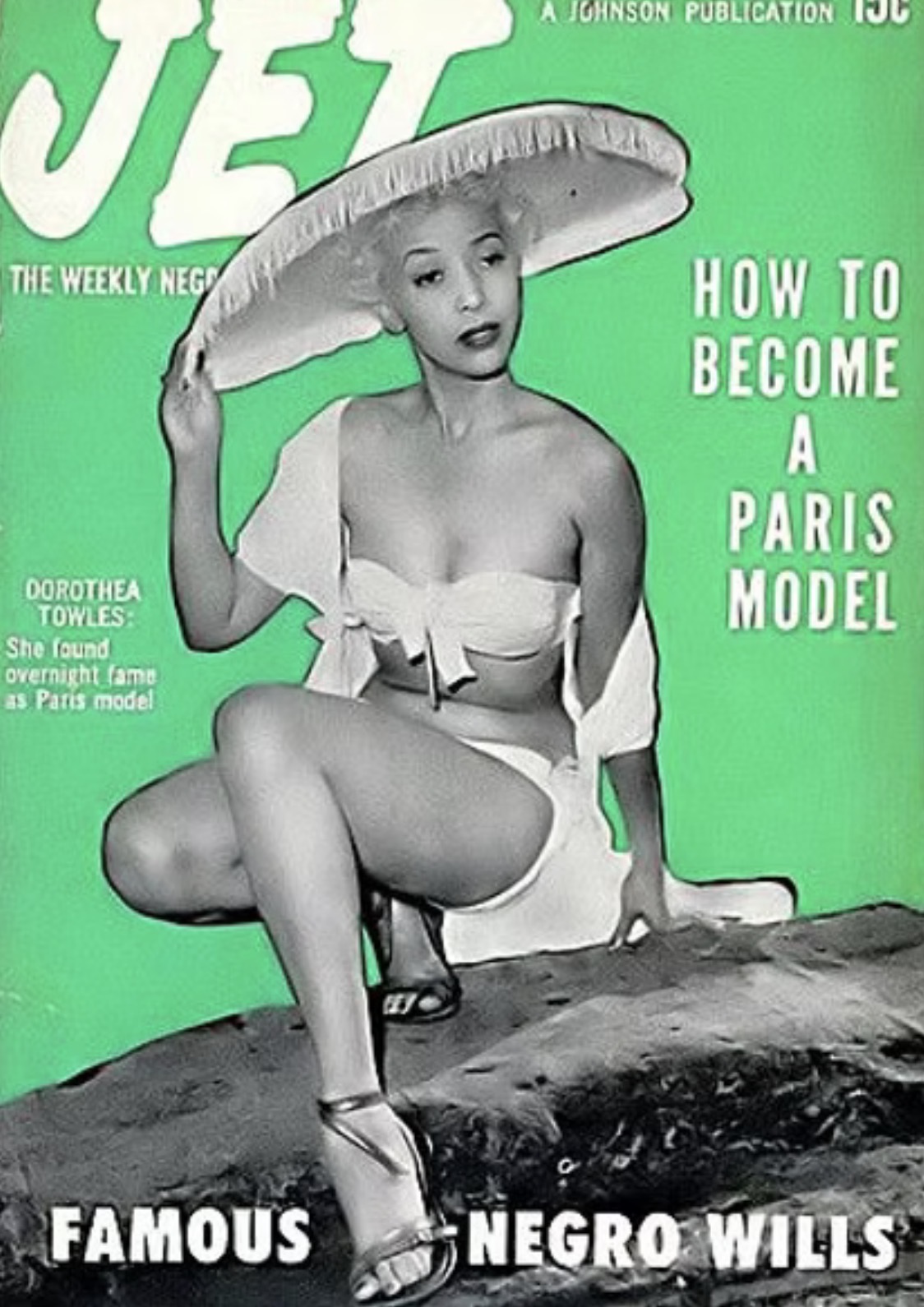
She appears on the cover of JET’s August 28, 1952, issue, with the headline “How To Become a Paris Model” and her blonde tresses intact. “This is a racy cover,” Dunson said. “It has edge, sex appeal, the bikini, the blonde hair—which is why it was on the cover of JET and not EBONY.”
In 1951, EBONY sent a team to Paris to shoot her in French couture. Balmain’s press office refused the request, claiming haute couture on a Black woman in a Black publication would alienate white clients.
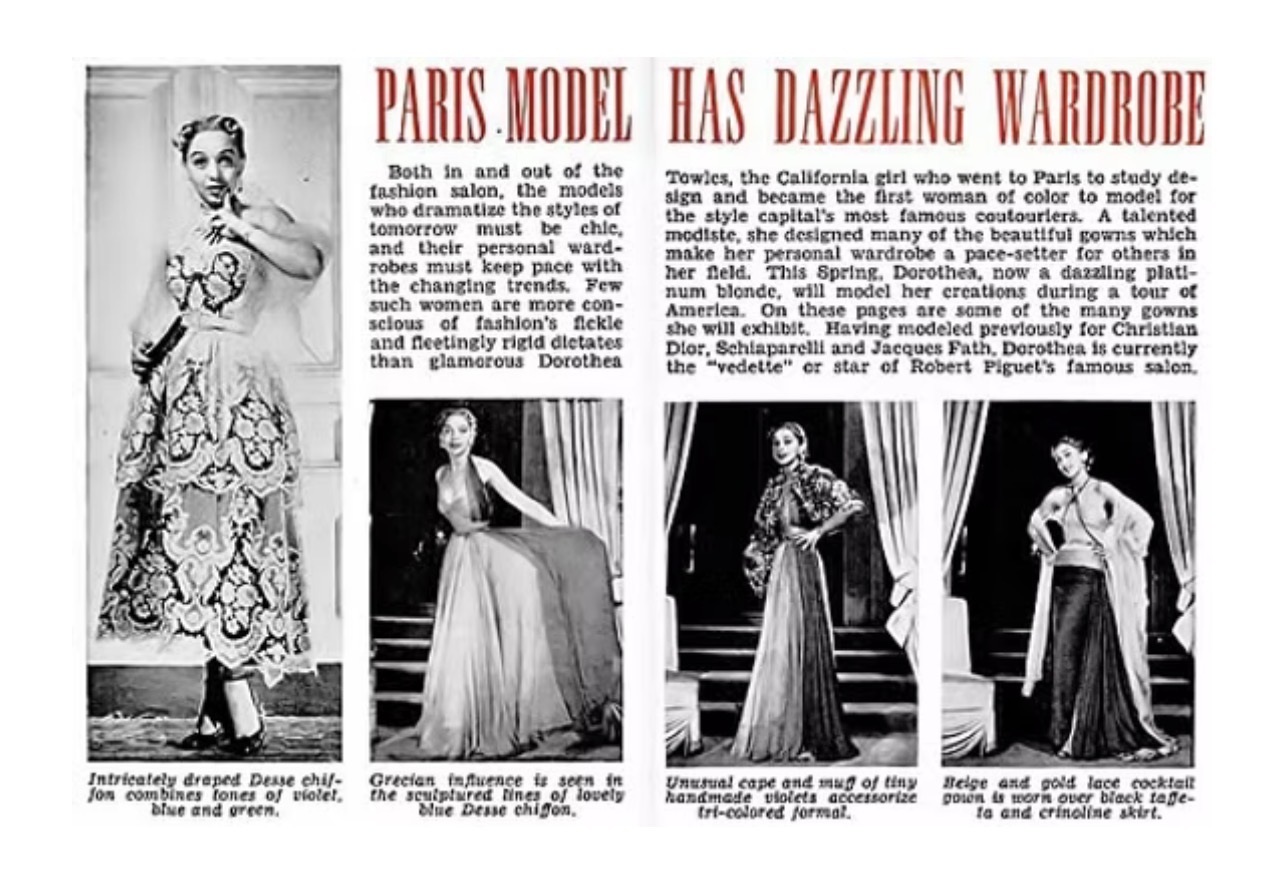
Models were allowed to borrow gowns for socializing, so Dorothea requested sample gowns under the pretense of wearing them to a private party and wore them for the EBONY shoot. The landmark feature ran in the April 1952 issue, introducing French haute couture to millions of Black readers across America.
Dorothea also recognized the value of owning the clothes outright. During her five years in Paris, she used her models’ discount to systematically purchase sample gowns directly from the ateliers, amassing fifty thousand dollars’ worth of haute couture—translating to over half a million dollars today.
She returned to the United States permanently in 1954 with wardrobe trunks loaded with French luxury. With that cache of couture, she launched a national fashion tour across HBCUs, raising scholarship funds for Alpha Kappa Alpha Sorority, Inc. This was four years before the launch of EBONY Fashion Fair. “I feel that my going all over America with my show had a great influence on American black women dressing differently and feeling good about themselves,” Towles told The New York Times in 2006. “I saw them dressing more creatively, more internationally. They could say, ‘If she can do it, I can do it, too.’”
She signed with the Grace Del Marco agency and went on the radio as a fashion commentator.
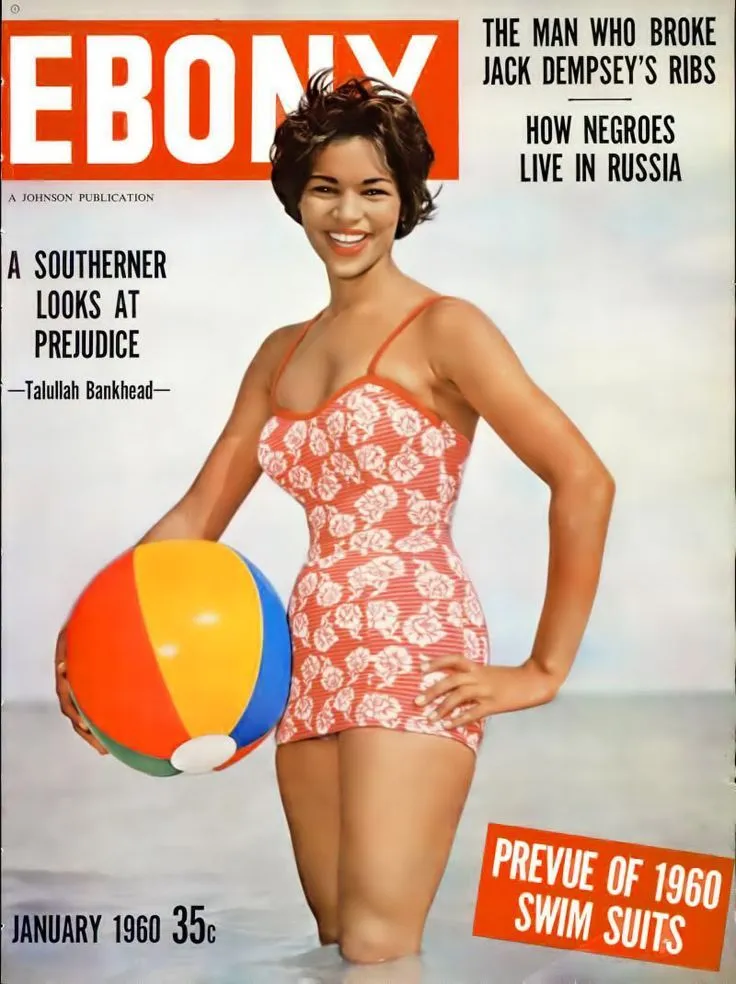
Twelve years after Dorothea opened the doors, Helen Williams stepped into Dior’s Paris ateliers. During our panel, we screened a rare 1960 archival short film titled Helen in Paris, courtesy of filmmaker Christopher Marlon. The film captures Williams during her chic year in The City of Light. “When Helen shows up, you know it’s a Black woman,” said Dunson, highlighting the shift from Dorothea’s lighter-skinned elegance. “Helen arrives in modeling just before the beginnings of the ‘Black is Beautiful’ movement, and there was eventually a cultural shift to embrace her.” “Paris was not free of racism,” I said. “It was just free enough to allow Black ambition.”
Donyale Luna, working a decade later, became the first Black model on the covers of Harper’s Bazaar in 1965 and British Vogue in 1966. By 1974, Beverly Johnson carried that authority into mainstream American publishing as the first Black woman on the cover of U.S. Vogue.
Audrey Smaltz—commentator for the EBONY Fashion Fair from 1970 to 1977 and founder of The Ground Crew, which anchored backstage operations for New York Fashion Week—knew Dorothea intimately. When I interviewed Smaltz, she painted the room for me: “Dorothea was extremely pretty and she had a penthouse on Riverside Drive in New York. I always wanted a penthouse after seeing hers and I finally got one too.”
While most surviving imagery of Williams is static print advertisements and column clippings, Helen in Paris shows her presence, authority, and physical technique—the exact same attributes Dorothea carried across the Atlantic. Neither Dior nor Paris created these women. Their identities redefined luxury itself.
“This isn’t about me,” Dorothea said later in life. “I just represent all the girls like me.”