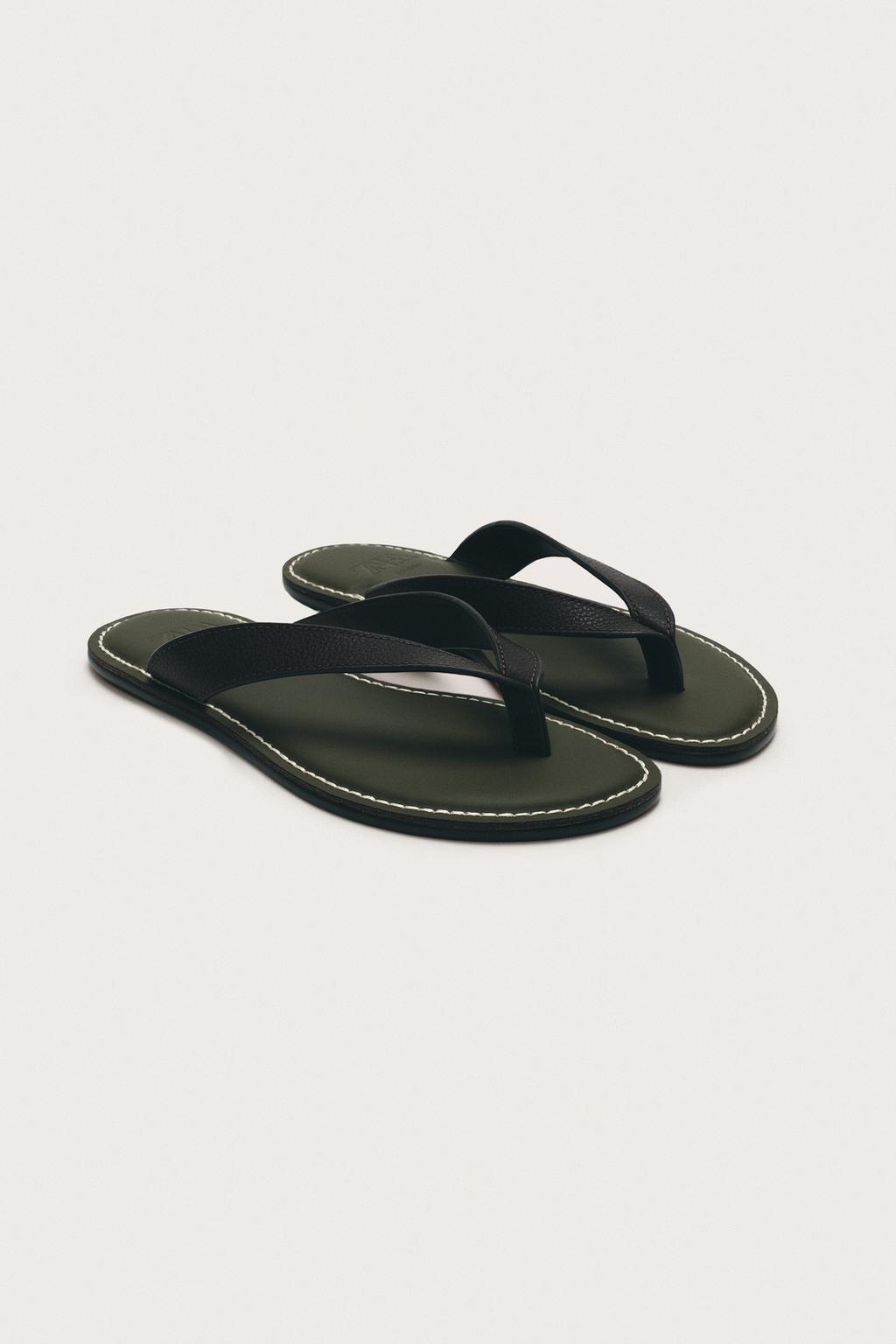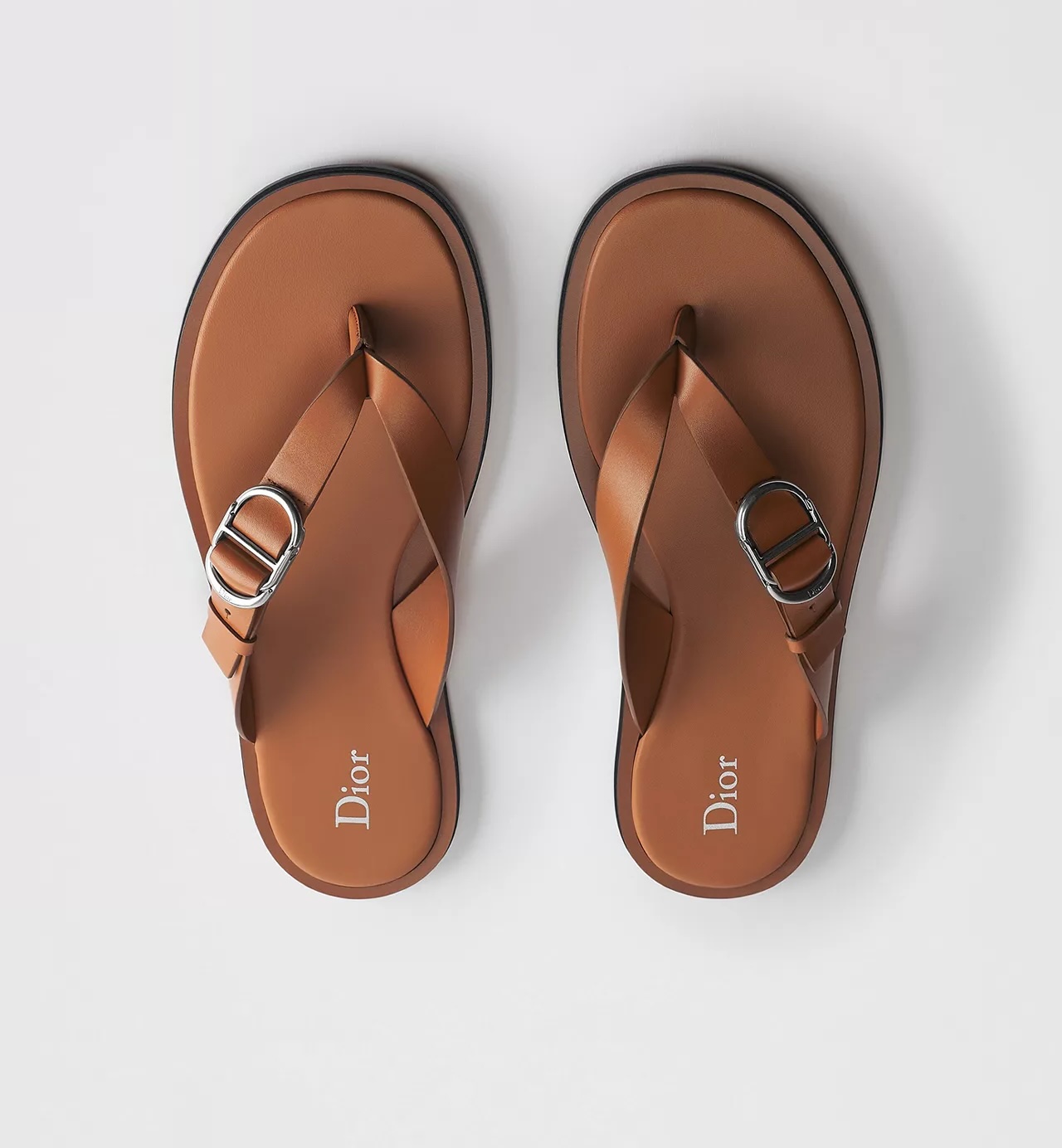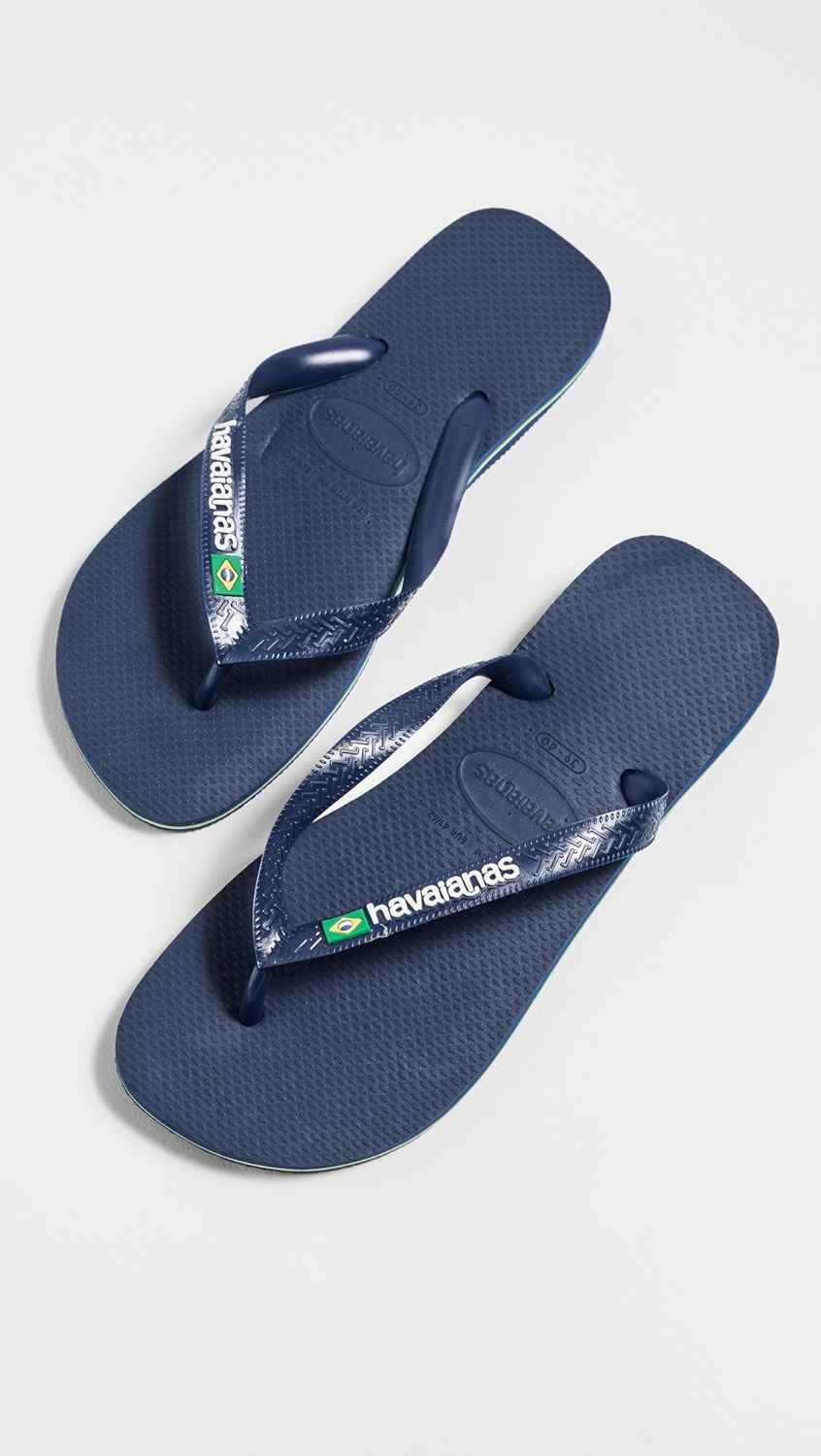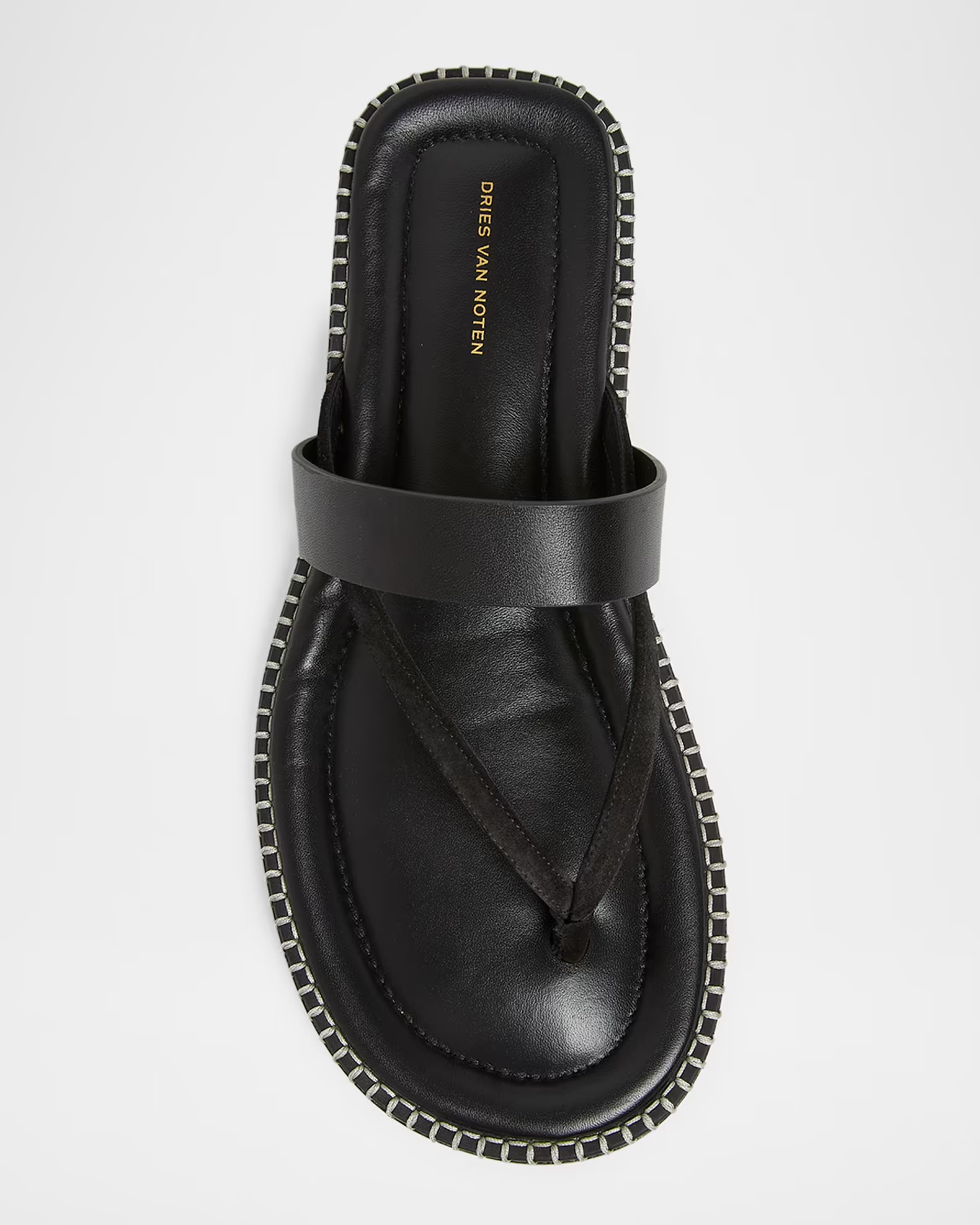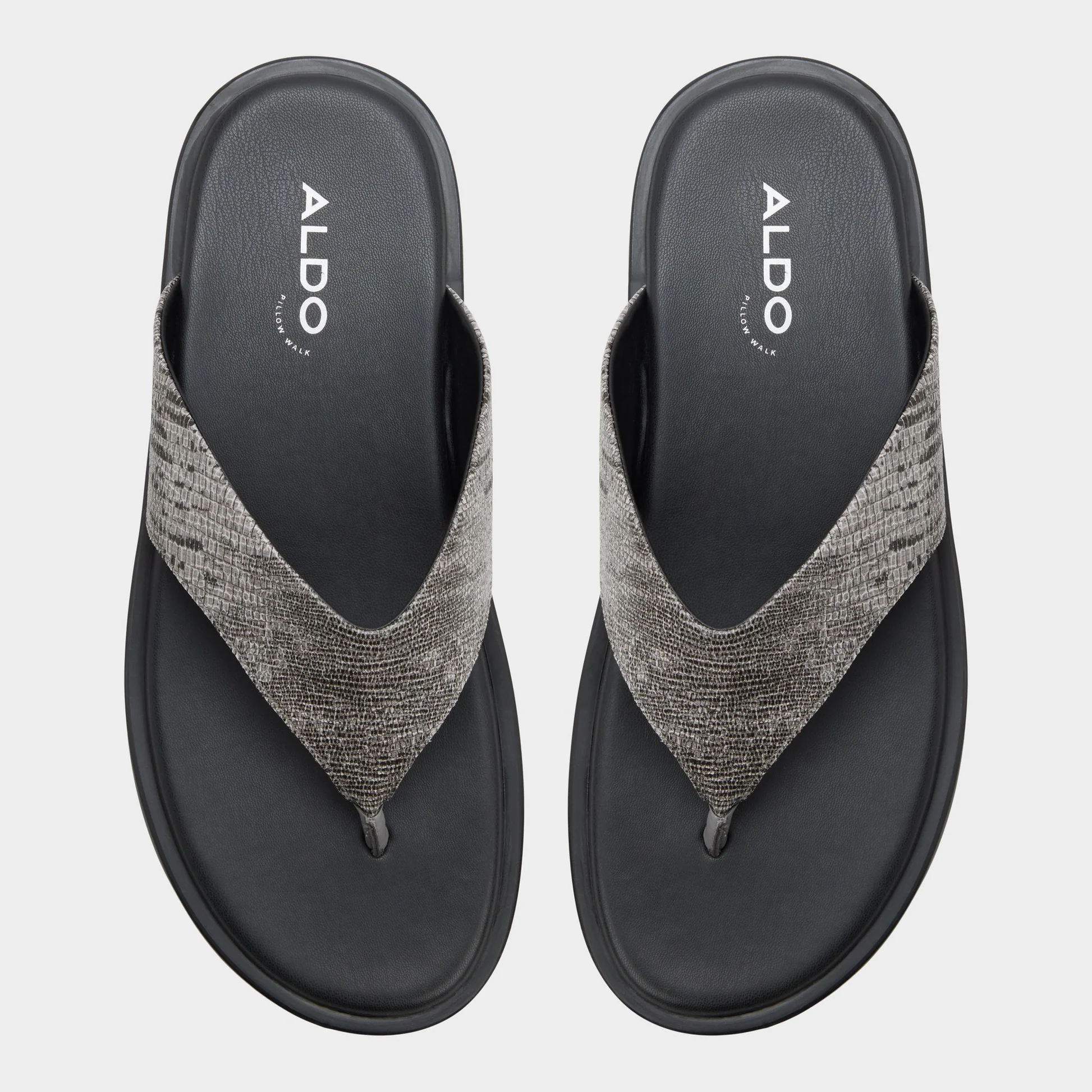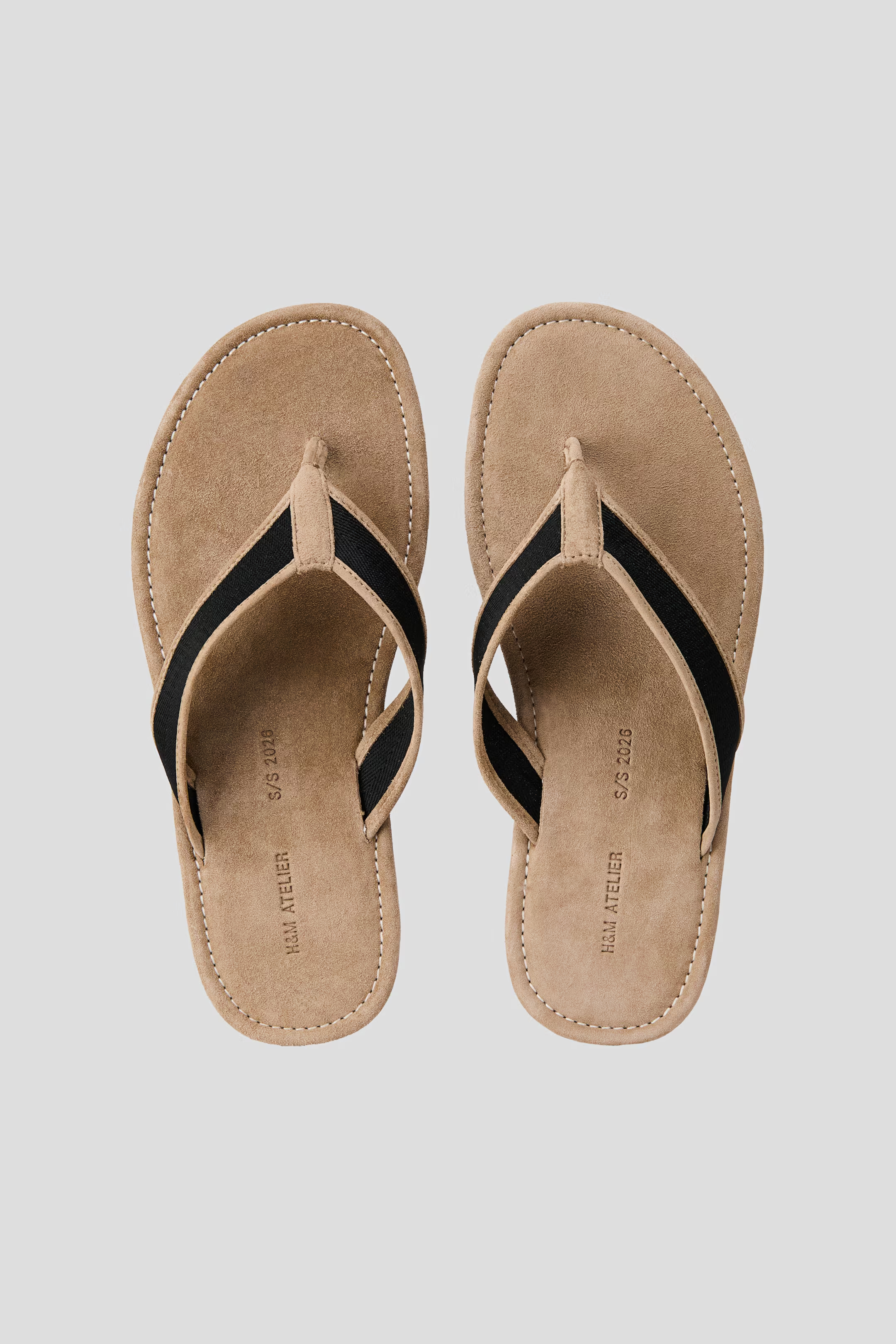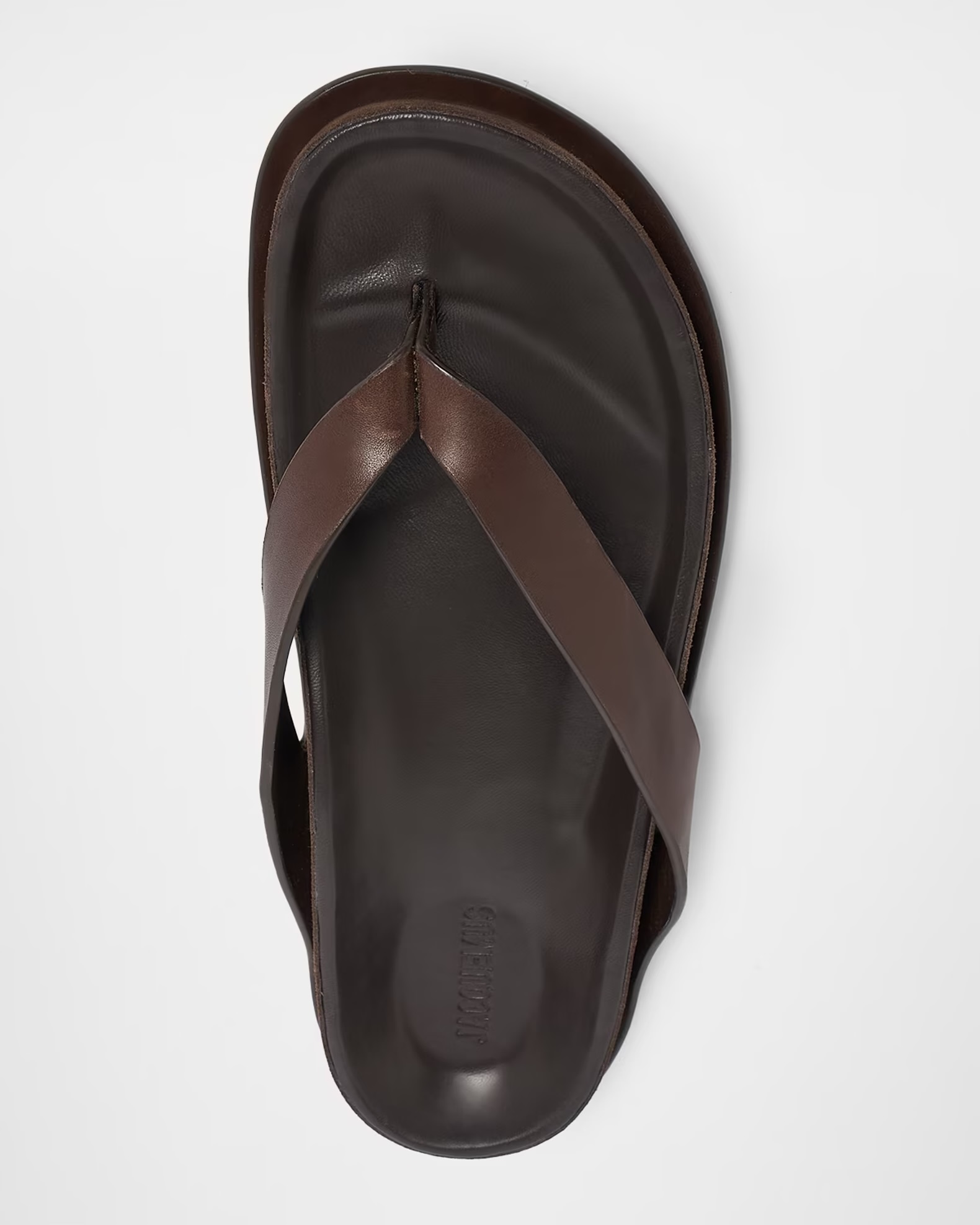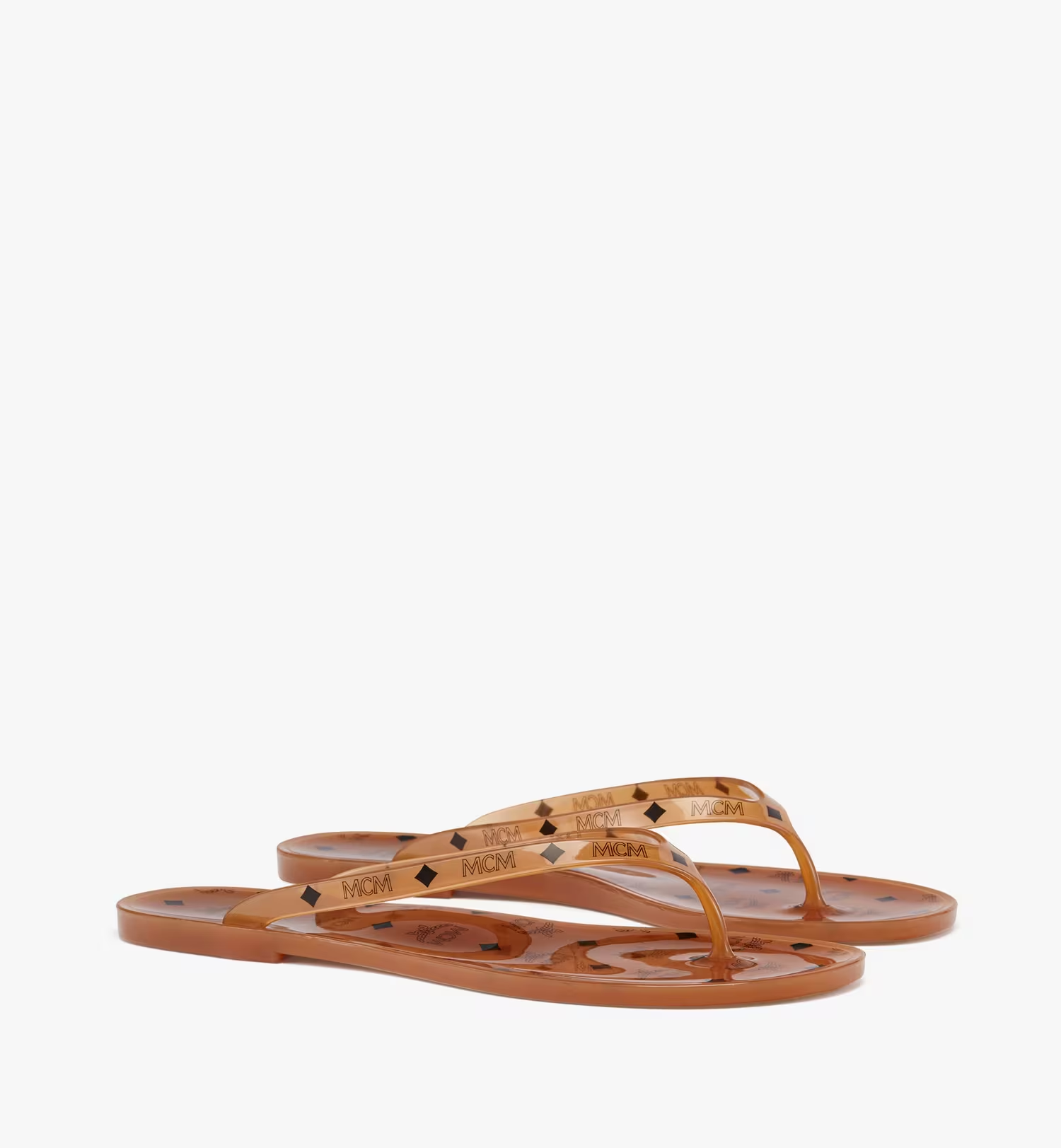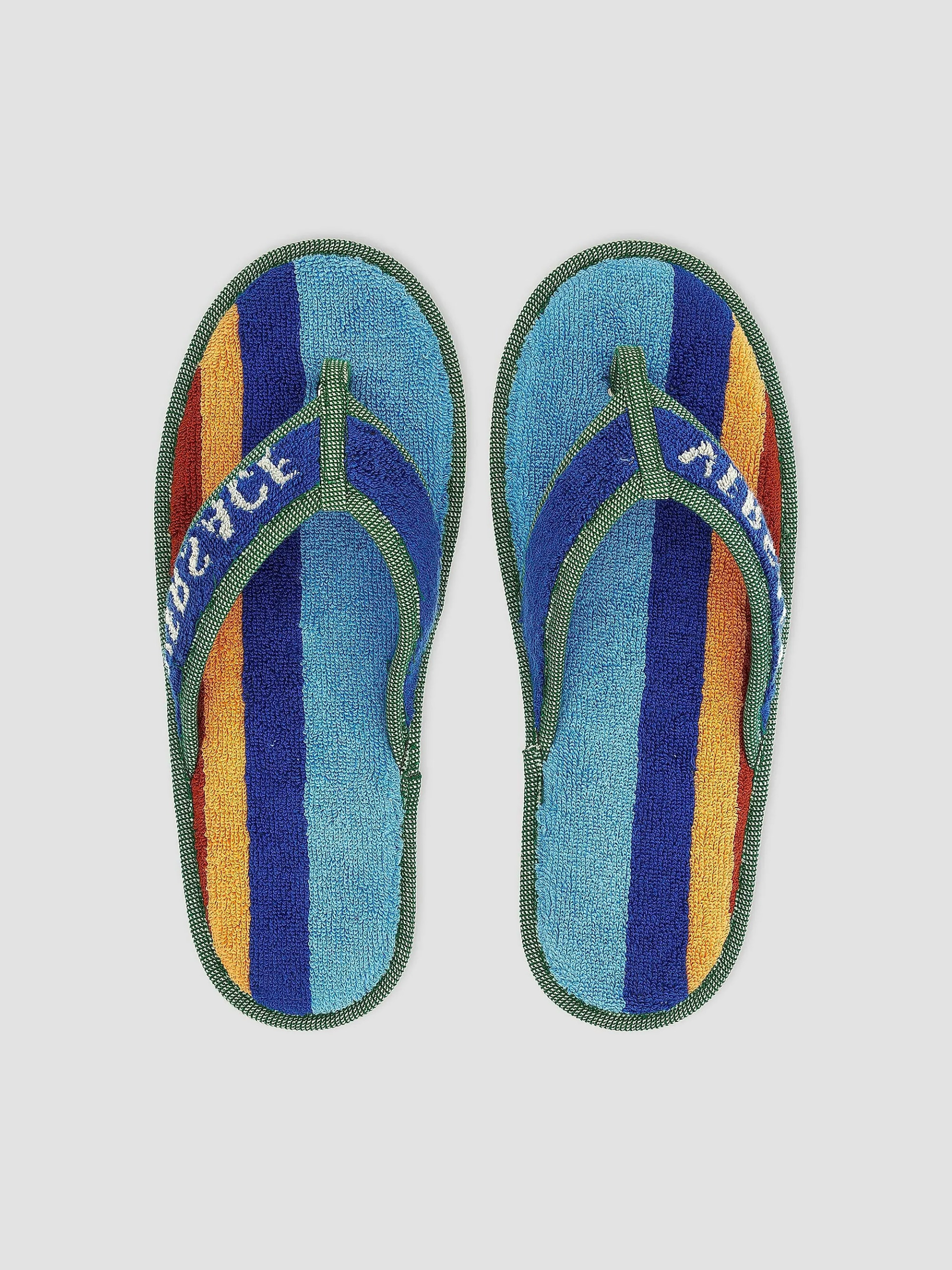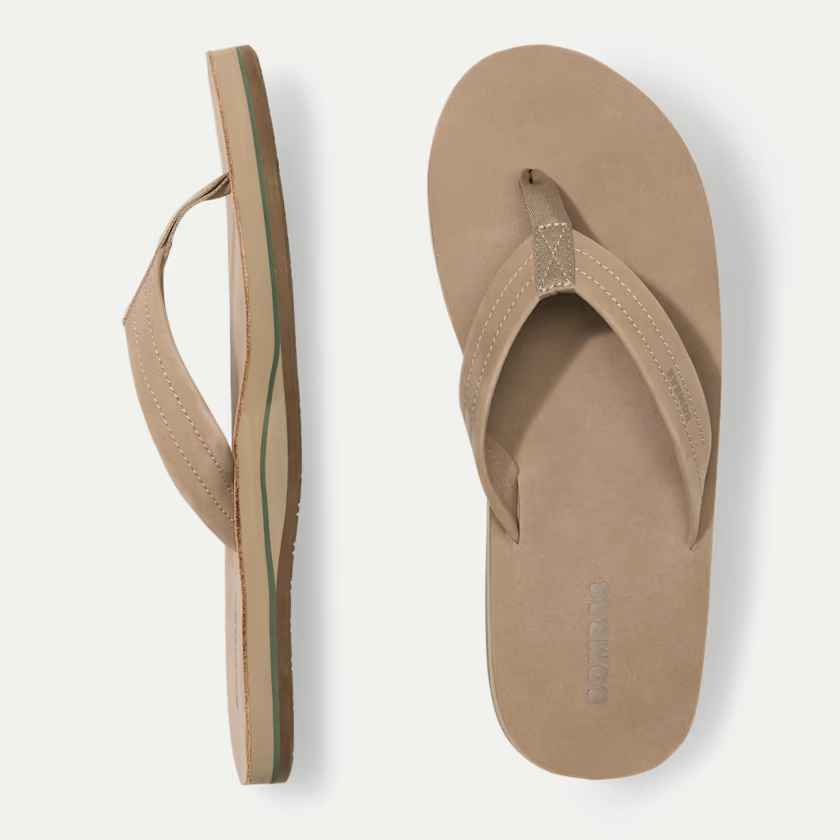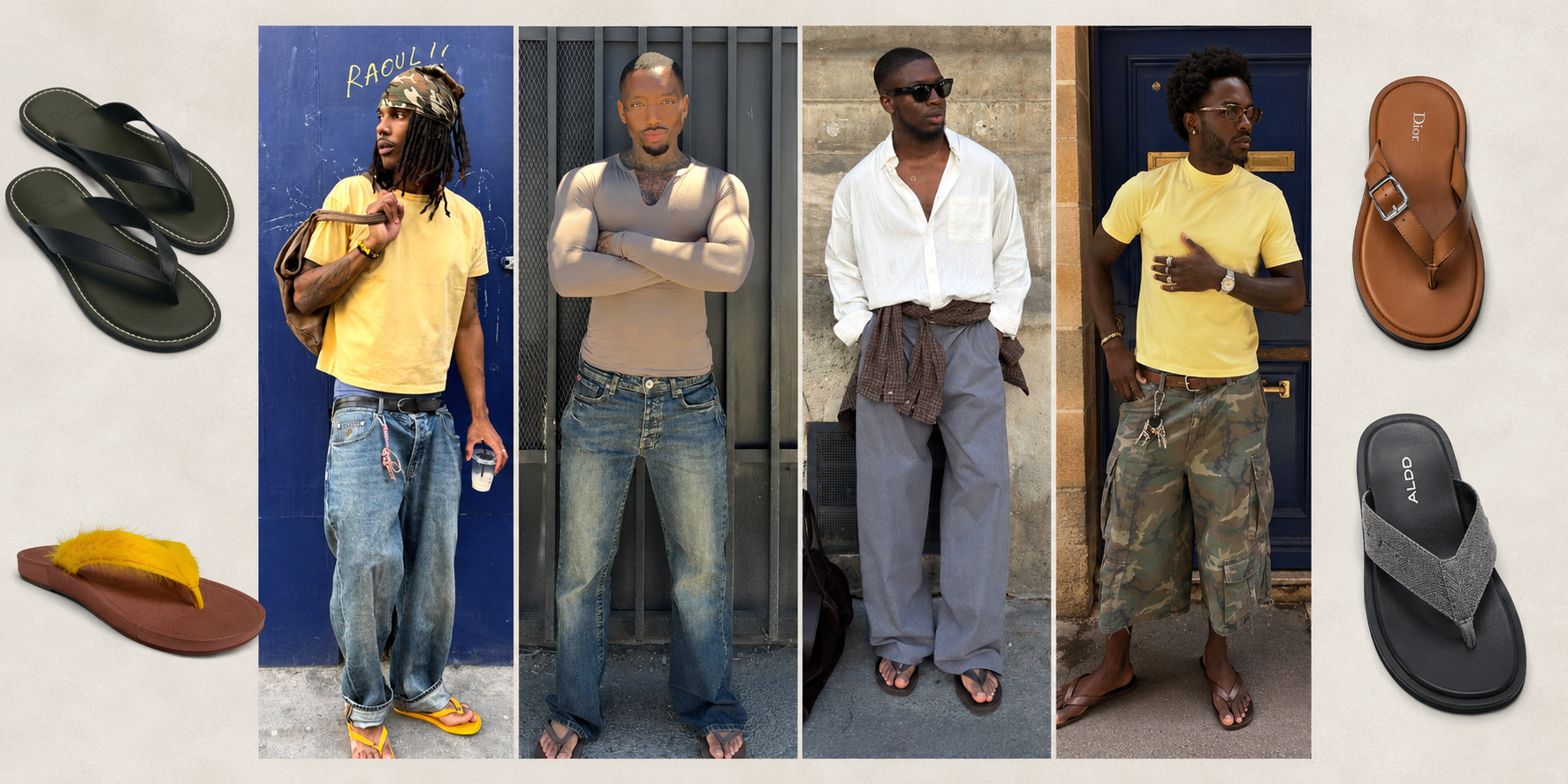
This summer, Black men have collectively decided that the toes are coming out. Not in the safety of a hotel pool. Not just on somebody’s annual birthday trip to Jamaica. We are talking outside-out. On city streets. At fashion week. With baggy denim, camouflage cargos, tiny tees, tanks, linen shirts, silver jewelry and a level of confidence that suggests the pedicure appointment was considered part of getting dressed. The thong sandal, perhaps menswear’s most unnecessarily controversial summer shoe, is having a particularly good 2026.
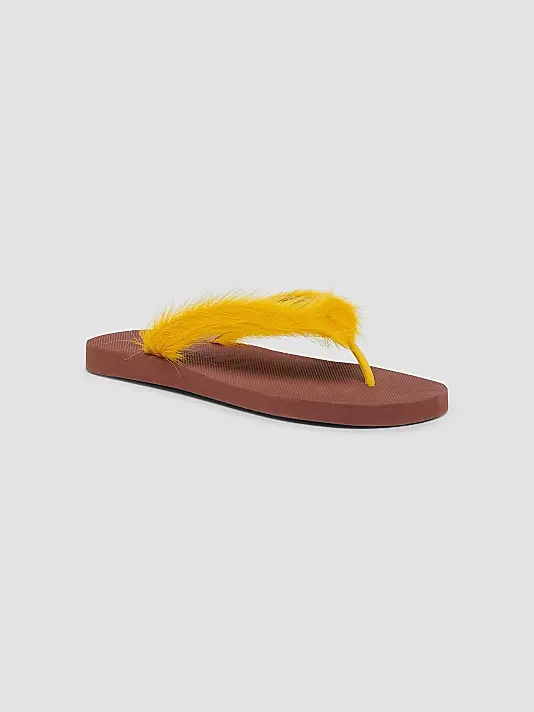
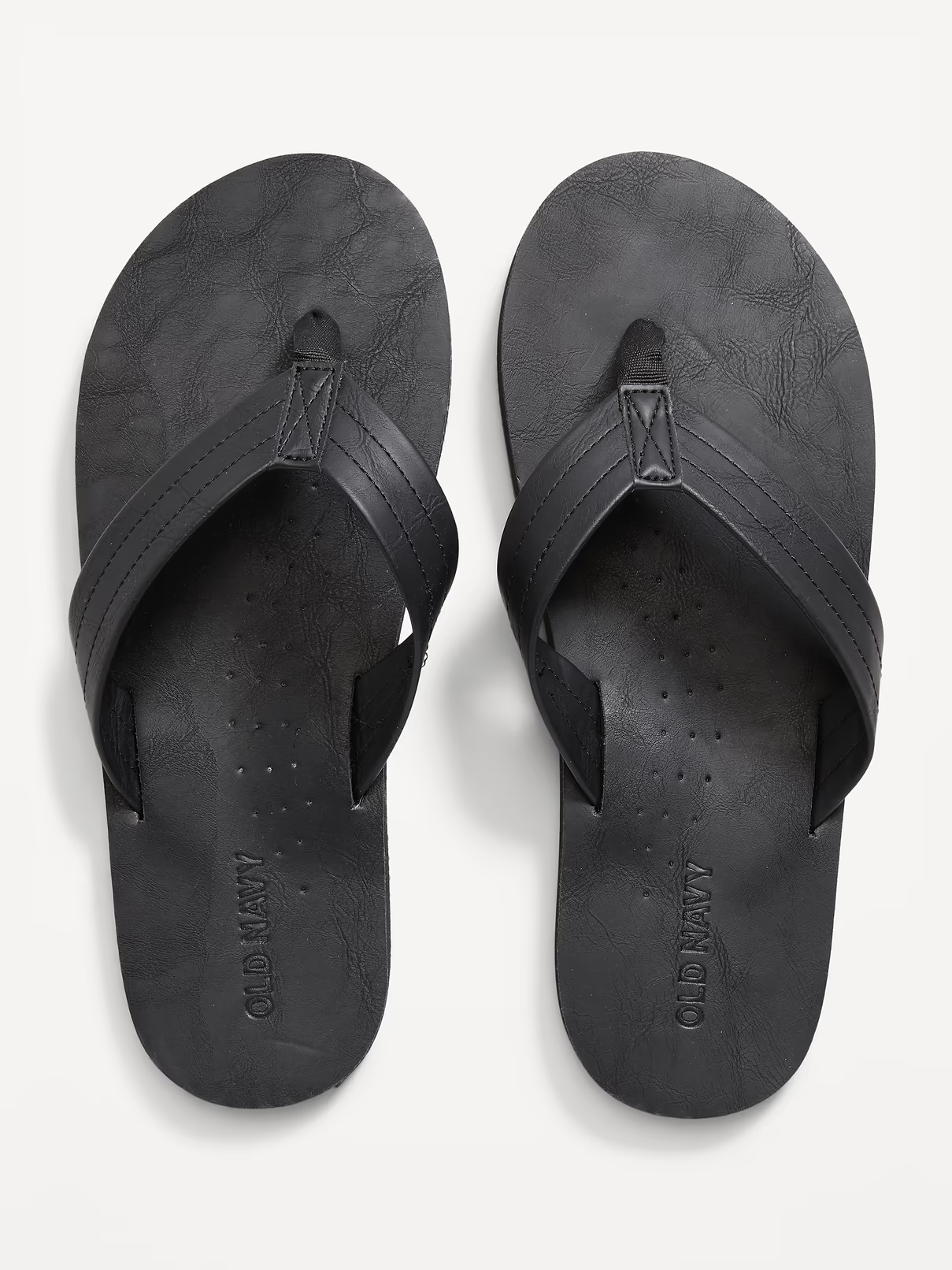
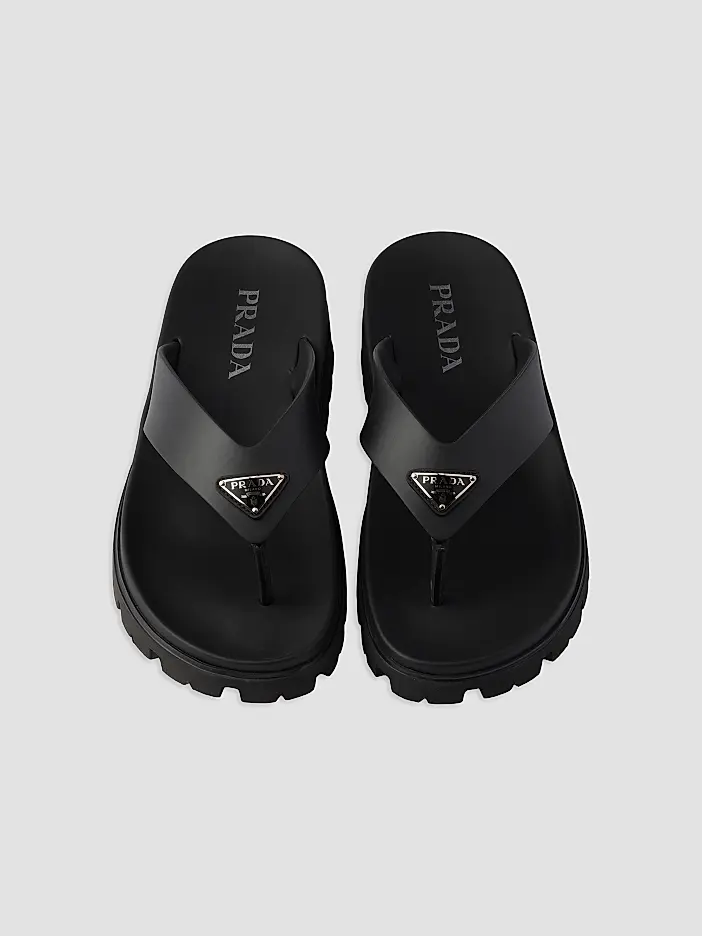
Look at the way Black men are wearing them now and there is no singular uniform. A substantial brown leather pair grounds faded, puddling jeans and a fitted long-sleeve shirt. Bright yellow flip-flops interrupt an otherwise familiar T-shirt-and-denim combination. Minimal black thongs peek from beneath generously cut trousers and a breezy white button-down. Elsewhere, barely-there sandals are worn with enormous camouflage shorts or chopped cargos and tanks. The proportions may change, but the message remains remarkably consistent: the sandal isn’t something you throw into your carry-on anymore. It is the outfit.
And, yes, Black men are showing toe.
The funny thing is that there really shouldn’t be anything radical about it.
Long before the contemporary menswear conversation began debating whether a man could wear a thong sandal without surrendering his masculinity at the ankle, men across Africa had been wearing open footwear for centuries. Sandals made from leather and other locally available materials developed across different regions of the continent, where climate, craftsmanship, occupation and status all influenced dress. There was nothing inherently feminine about a man’s exposed foot. A sandal was simply a shoe.
That context becomes particularly important when considering Black style because our relationship with the sandal does not follow one neat American fashion timeline. African traditions intersect with Caribbean dress, migration, resort culture and Black American ideas about leisure. Across warm-weather Caribbean nations, sandals and flip-flops have long been ordinary components of men’s wardrobes. They are practical first, but practicality has a funny way of becoming style once somebody wears it well enough.
As Caribbean communities established themselves throughout New York, Miami, London, Toronto and elsewhere, those sartorial codes traveled with them. Meanwhile, Black Americans were developing their own relationship with vacation dressing.
By the middle and latter half of the 20th century, the image of Black leisure was becoming increasingly visible despite the very real segregation and discrimination that had historically restricted where Black Americans could vacation, swim, dine and simply exist recreationally. As travel expanded, so did a wardrobe built around being somewhere other than work. Linen shirts opened a few extra buttons. Shorts got shorter. Gold chains met suntanned chests. Shoes disappeared in favor of sandals.
The foot was free.
There is something delicious about that when you consider how politically loaded Black leisure has always been. Generations of Black Americans lived within a country that attempted to regulate where they could go and how they could occupy public space. Vacationing, relaxing and dressing expressly for pleasure could carry meaning beyond frivolity. A sandal might be an extraordinarily small part of that history, but fashion is often where larger cultural shifts become visible.
Then somewhere along the way, American masculinity got weird about toes.
By the 1990s and early 2000s, the acceptable Black male footwear vocabulary had hardened considerably. Sneakers? Obviously. Timberlands? Practically sacred. Basketball slides with socks? You could walk directly from the locker room to the cookout without incident.
But slide that strap between your big toe and second toe and suddenly we needed to have a community meeting.
That contradiction says less about footwear than it does about the intense policing of Black masculinity. Black men have historically been expected to perform a particularly narrow version of manhood, and clothing has frequently served as one of its enforcement mechanisms. Certain colors became suspect. Silhouettes became suspect. Bags became suspect. Jewelry became suspect. And somewhere on that increasingly ridiculous list, the humble thong sandal became suspect too.
Fashion, thankfully, has a short memory.
Over the last decade, menswear has been systematically dismantling many of those rules. The sneaker’s cultural dominance hasn’t disappeared, but men have rediscovered loafers, ballet-inspired shoes, mules, fisherman sandals, clogs and increasingly minimal sandals. Luxury fashion helped accelerate the shift, but Black men aren’t merely following a runway directive. Today’s style ecosystem is considerably more global than the menswear landscape of 20 years ago. African fashion, Caribbean references, Japanese street style, European luxury, American workwear and Black streetwear can all show up in a single outfit without asking anyone’s permission.
That collision is exactly what makes the men in these photographs so compelling.
The sandals aren’t necessarily the loudest thing they’re wearing. In some cases, they are almost comically understated. That’s the point. A sliver of leather beneath a giant trouser feels cooler precisely because nobody is trying to convince you that it is cool. A cheap-looking rubber flip-flop paired with deliberately styled denim becomes an exercise in high-low dressing. A skinny black thong beneath oversized camouflage shorts makes the proportions feel even more extreme. Masculine and feminine aren’t particularly useful descriptors here. It’s just good styling.
And perhaps that is the real evolution.
The contemporary Black man wearing thong sandals isn’t necessarily attempting to make a statement about gender or masculinity. Sometimes a man just wants his toes out. But his ability to do so without treating the shoe as a punchline says something about where Black menswear is headed.
We have spent the last several years watching Black men loosen the sartorial restrictions previous generations inherited. Pearls came out. Handbags got bigger. Nail polish appeared. Crop tops returned. Short shorts came back with a vengeance. Silhouettes became wider, then smaller, then wider again. Now the thong sandal has joined the rotation, quietly sitting beneath the hem of a pair of enormous jeans.
So, no, Black men wearing flip-flops isn’t revolutionary. In many ways, it is the opposite. It is a return to something incredibly ordinary that fashion and masculinity once made unnecessarily complicated.
The toes were always there.
We just finally stopped acting scared of them.